
Up to three thousand people cross Shibuya's scramble in a single green light, then the side streets swallow them into lantern-lit lanes barely two metres wide. Tokyo runs on this contrast: the world's largest metropolis, engineered to the minute, hiding pocket shrines, jazz cafés and six-seat noodle counters in every fold of the map.
Tokyo is a quieter alternative. It's ready to explore in the Nuvoha app: set your budget and see complete Tokyo trips.
Why visit Tokyo
Nowhere layers scale and intimacy like Tokyo. Senso-ji's incense smoke and the Meiji Shrine's cedar-scented forest sit minutes from Akihabara's electronics canyons and immersive digital art museums. Food is a civic obsession: the city holds extraordinary fine dining, yet its greatest pleasures are a standing bowl of ramen or a convenience-store onigiri at two in the morning. Trains arrive to the second, streets feel safe at any hour, and each district reinvents the city: Harajuku's fashion tribes, Yanaka's old wooden houses, Shinjuku's neon gorges.
Essential Tokyo sights
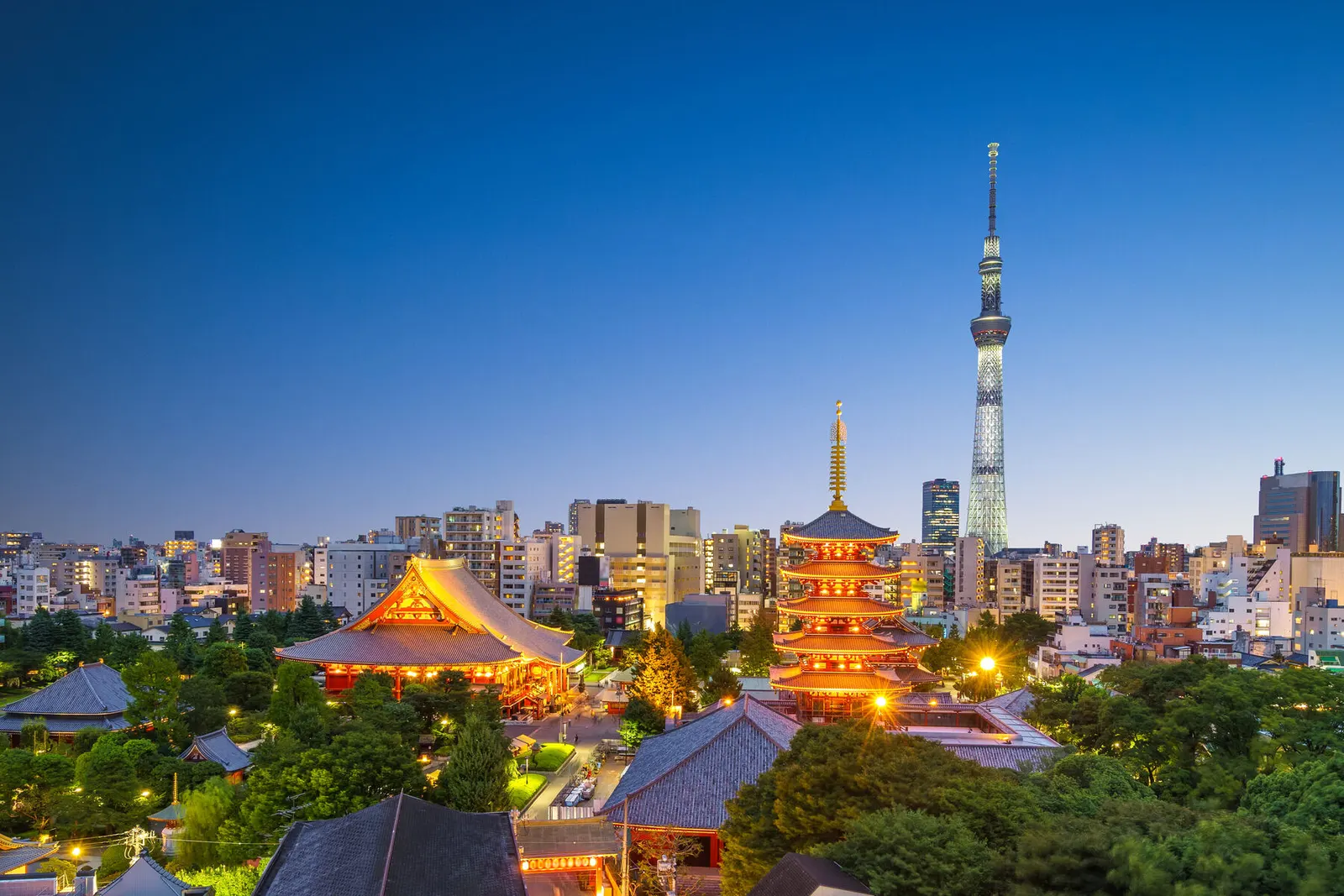
- Senso-ji: Tokyo's oldest temple, approached through the Kaminarimon gate and the Nakamise arcade in Asakusa.
- Meiji Jingu: A Shinto shrine set inside a forest of roughly 100,000 trees planted a century ago beside Harajuku.
- Shibuya Crossing: The famous scramble intersection, best watched from the surrounding towers at dusk.
- Tokyo Skytree: At 634 metres Japan's tallest structure, with observation decks over the endless cityscape.
- Tsukiji Outer Market: Lanes of knife shops, tamagoyaki stalls and seafood breakfasts that outlived the wholesale market's relocation.
- Shinjuku Gyoen: A vast garden mixing Japanese, French and English landscaping, spectacular in cherry-blossom season.
Districts to wander
- Shinjuku: Skyscrapers, the Golden Gai bar warren and the world's busiest railway station in a single district.
- Asakusa: The old shitamachi quarter around Senso-ji, with rickshaws and craftsman shops.
- Harajuku and Omotesando: Teen fashion on Takeshita Street giving way to architect-designed flagship stores.
- Yanaka: A low-rise survivor of old Tokyo: temple-lined lanes, resident cats and a famous cemetery.
- Ginza: The polished shopping district of department stores, galleries and kabuki theatre.
What to eat
Eating is Tokyo's true spectator sport. Slurp shoyu ramen at a ticket-machine counter, watch sushi chefs work Edomae-style over vinegared rice, or queue for tempura fried to lace. Izakayas serve yakitori skewers with cold beer, and department-store food halls (the depachika) are museums of bento and wagashi sweets. Monjayaki, the capital's runnier cousin of okonomiyaki, is the local badge of honour.
- Edomae sushi
- Shoyu ramen
- Tempura
- Yakitori
- Monjayaki
What Tokyo feels like
Ordered intensity. Rush-hour crowds move in silent, precise streams; then you turn into a yokocho alley and it is all charcoal smoke, laughter and clinking highballs. Politeness structures everything (queuing, bowing, the hush of train carriages) but the city is playful underneath, from capsule-toy machines to themed cafés. Seasons matter deeply: cherry-blossom picnics in spring, festival drums in summer, ginkgo-gold avenues in November.
Mastering the rail map
The rail network is the city's bloodstream: JR's Yamanote loop line rings the major hubs while Tokyo Metro and Toei subway lines fill the gaps between them. A rechargeable Suica or Pasmo IC card taps you through everything, including buses and convenience-store tills. Avoid the eight o'clock crush if you can, and note that most lines stop running soon after midnight. From Narita, the Narita Express reaches Tokyo Station in about an hour and the Keisei Skyliner reaches Ueno in around 45 minutes; from closer Haneda, the Tokyo Monorail and the Keikyu line take roughly 20 to 30 minutes into the city.
Before you go
- Tipping is not practised anywhere and may be politely refused; excellent service is simply the standard.
- Keep phone calls off trains and speak quietly: carriages are near-silent.
- Avoid eating while walking; stand aside or find a seat, and carry your rubbish, as public bins are rare.
- Slip shoes off where indicated: at temples, traditional inns and some restaurants.
- Carry some yen; card acceptance is broad, but small ramen shops and shrine offerings often run on cash or IC cards only.
- Convenience stores solve everything: meals, ATMs that accept foreign cards, parcel forwarding.
- Stand on the left of Tokyo escalators, the opposite of Osaka.
- The free observation decks of the Tokyo Metropolitan Government Building rival the paid towers.
- Reserve tickets for the Ghibli Museum and the big digital art museums well ahead: both sell out.
- A rail pass for the whole of Japan only pays off with long-distance travel, not for staying within Tokyo.
Best for
- City breaks
- Quieter travel
Key facts
| Country | Japan |
|---|---|
| Region | Asia |
| Airports | HND, NRT |
| Trip length fit | Short-trip friendly |
Tokyo essentials
| Currency | Japanese Yen (JPY) |
|---|---|
| Language | Japanese; English signage is good in cities and on transport, though spoken English is patchier |
| Time zone | Japan Standard Time (UTC+9), no daylight saving |
| Emergency number | 110 (police), 119 (fire and ambulance) |
| Driving side | Left |
| Tap water | Safe to drink nationwide, including from public fountains |
Climate & seasons
| Month | Typical range | Season |
|---|---|---|
| January | 2°C to 10°C | Cool dry winter |
| April | 10°C to 19°C | Mild spring |
| July | 23°C to 31°C | Hot humid summer |
| October | 15°C to 23°C | Mild autumn |
Typical stay
- Weekend-friendly
- Short break (2–5 days)
Tokyo works as a weekend break just as well as a longer stay.
Getting there
Tokyo is served by 2 airports, and Nuvoha covers all of them when building your trip.
- Haneda (HND)
- Narita (NRT)
- TYO (metro-area code)
Is it your kind of trip?
Ideal if…
- you like walkable city energy
- you like places before everyone else finds them
Maybe not if…
- a beach-first holiday is the priority
Pairs well with
Compare with
More in Asia
Near Tokyo
Travel style
- Short-trip friendly
- City
Frequently asked questions
Which airports serve Tokyo?
Tokyo is served by 2 airports, and Nuvoha covers all of them when building your trip. Haneda (HND), Narita (NRT), TYO (metro-area code).
Is Tokyo good for a weekend trip?
Yes, Tokyo works for a weekend as well as a longer stay.
What kind of trip is Tokyo best for?
Tokyo is best for city trips.
Which destinations pair well with Tokyo?
Within multi-city range: Osaka (402 km), Sapporo (832 km), Fukuoka (883 km).
Is language a barrier in Tokyo?
Less than feared. Rail signage, ticket machines and menus in visitor districts carry English, and translation apps bridge the rest. Learning konnichiwa and arigatou gozaimasu earns real warmth, and staff will patiently work through pointing and gestures.
Should I use cash or card in Tokyo?
Both. Cards and IC cards cover department stores, chains and transit, but small izakayas, temple offerings and some ticket machines still want cash. Withdraw yen at convenience-store or post-office ATMs, which reliably accept foreign cards.
Is Tokyo walkable, given its size?
Within districts, absolutely: Yanaka, Harajuku and Asakusa reward hours on foot. Between districts, take the train: distances deceive, and a single neighbourhood can outsize a European town. Plan each day around one or two areas.