
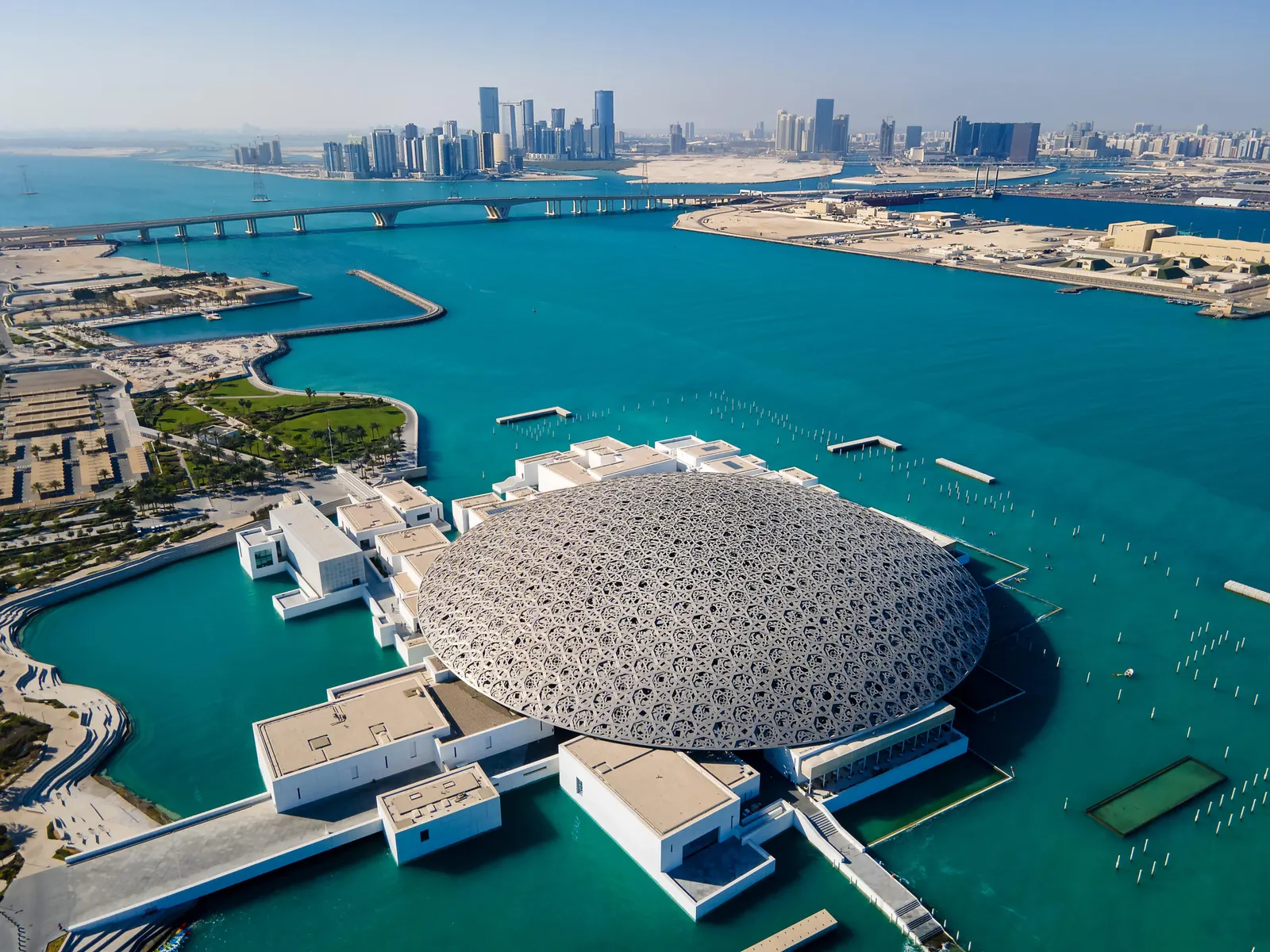
Dunes the colour of ground spice roll from the Empty Quarter down to a Gulf coastline lined with towers, and that contrast (emptiness on one side, engineering on the other) is the country's defining image. The United Arab Emirates is a federation of seven emirates on the Arabian Peninsula, each with its own character: Dubai builds tallest, Abu Dhabi holds the capital and the Louvre's Middle Eastern outpost, Sharjah keeps the museums, and the northern emirates keep mountains and quiet beaches. Travellers come for winter sun, sculpted resorts, gold and spice souks, and desert excursions that end with sunset over the sand. Distances are short, so a single trip can take in several emirates without much effort.
United Arab Emirates on Nuvoha spans 3 destinations: Abu Dhabi, Dubai, Sharjah. Set your budget and Nuvoha builds the complete trip: flights and hotels together.
Why visit United Arab Emirates
- Cities you can explore on foot, from headline sights to quiet neighbourhoods
- Coastline worth building a trip around
- Featured destinations to build a trip around
- Quieter alternatives beyond the obvious stops
- Easy to combine two cities in a single trip
Best known for
- Desert safaris and dune landscapes
- The Burj Khalifa and record-setting architecture
- Gold and spice souks
- Winter beach holidays
- Sheikh Zayed Grand Mosque
The seven emirates
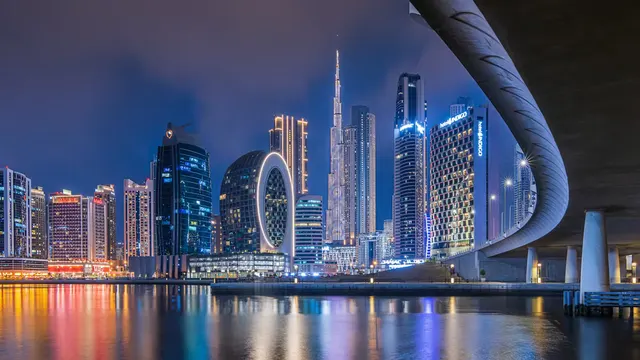
- Dubai: The federation's commercial engine, home to the Burj Khalifa and Palm Jumeirah. Old Dubai's creek, abra boats and souks survive alongside the superlatives.
- Abu Dhabi: The capital emirate and by far the largest, holding Sheikh Zayed Grand Mosque, Louvre Abu Dhabi and the Liwa desert on the edge of the Empty Quarter.
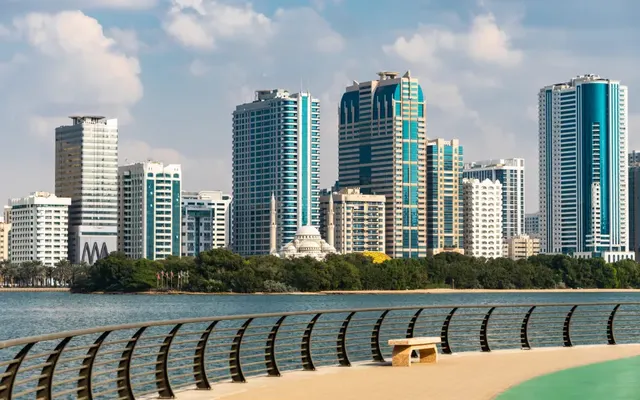
- Sharjah: A culture-first counterpart to its neighbour Dubai, recognised for its museums, heritage districts and restored souks.
- Ras Al Khaimah: The northern emirate beneath the Hajar Mountains, with Jebel Jais (the country's highest peak) and a growing reputation for mountain adventure sports.
- Fujairah: The only emirate facing the Gulf of Oman on the east coast, known for diving and the historic Al Bidya Mosque.
Where to go
Before you land
| Currency | UAE Dirham (AED) |
|---|---|
| Language | Arabic is the official language; English is spoken almost everywhere |
| Time zone | Gulf Standard Time (UTC+4), no daylight saving |
| Emergency number | 999 (police), 998 (ambulance), 997 (fire) |
| Driving side | Right |
| Tap water | A safe desalinated supply, though most residents drink bottled or filtered water |
Seasons at a glance in Abu Dhabi
| Month | Typical range | Season |
|---|---|---|
| January | 15°C to 25°C | Mild winter |
| April | 22°C to 35°C | Hot spring |
| July | 31°C to 43°C | Very hot summer |
| October | 25°C to 36°C | Hot autumn |
Seasons vary across United Arab Emirates. Each destination page has its own climate table.
How travellers explore United Arab Emirates
Dubai and Sharjah sit about 17 km apart, an easy pairing in one trip.
Abu Dhabi and Dubai sit about 116 km apart, an easy pairing in one trip.
More in Middle East & North Africa
More Middle East & North Africa country guides
Frequently asked questions
Which United Arab Emirates destinations can I book with Nuvoha?
Abu Dhabi, Dubai, Sharjah, each with complete flight and hotel trips built around your budget.
What kind of trips suit United Arab Emirates?
United Arab Emirates works for beach holidays and city breaks, and its cities pair well for multi-stop itineraries.
Which United Arab Emirates destinations does Nuvoha feature?
Abu Dhabi and Dubai are featured on Nuvoha.
How do you travel between Dubai and Abu Dhabi?
By road: about 90 minutes by intercity bus, taxi or hire car along the E11 motorway. There is no passenger rail link yet, so buses from Ibn Battuta or Al Ghubaiba stations are the usual public option.
What plug type does the UAE use?
Type G, the same three-pin plug as the UK, on 230 volts. Visitors from mainland Europe or North America need an adapter; hotels can often lend one.
Can you pay by card everywhere in the UAE?
Cards and contactless are accepted almost universally in malls, hotels and restaurants. Keep a little cash in dirhams for taxis, small souq stalls and tips.