
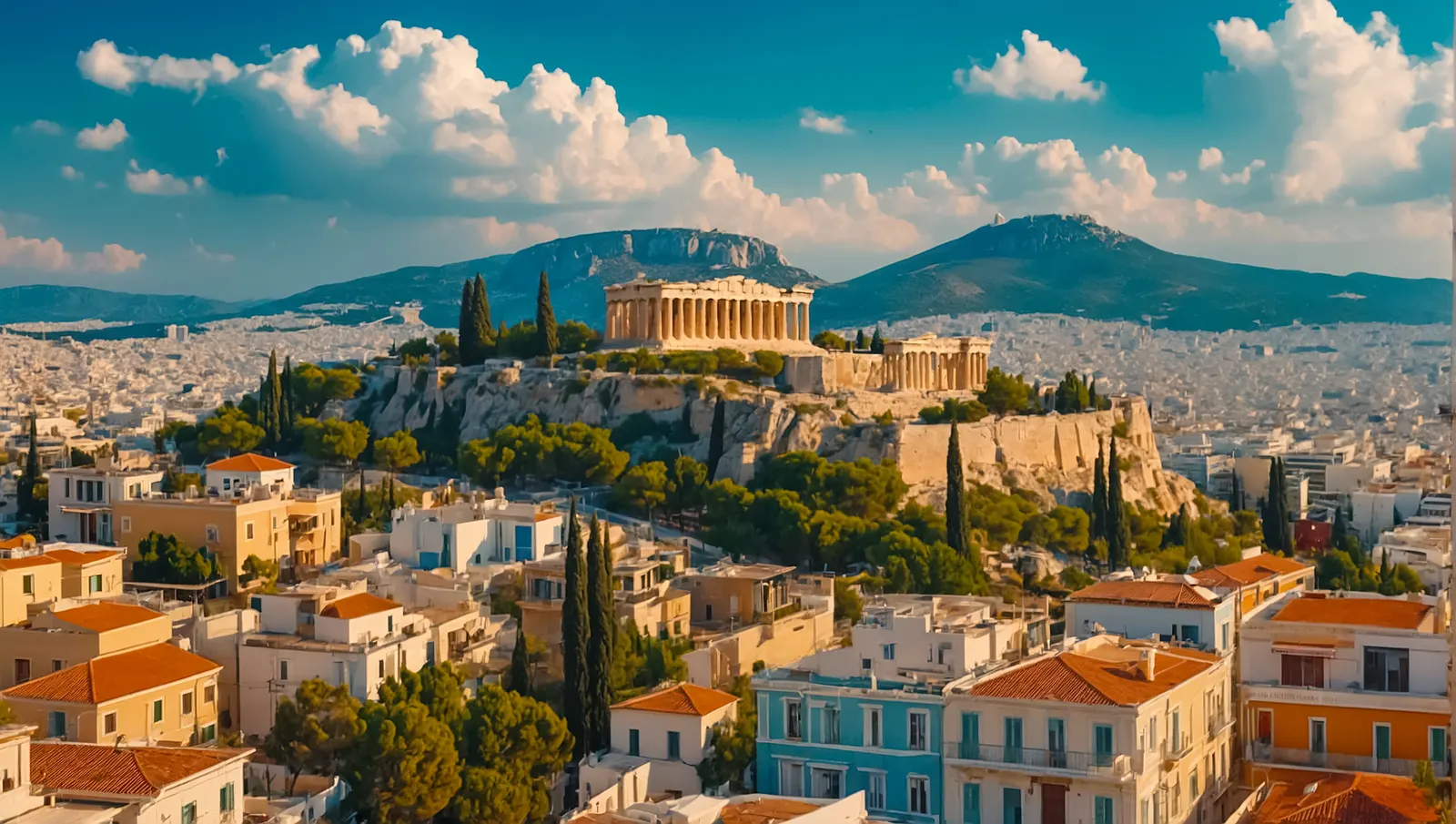
Around six thousand islands and islets scatter across the Aegean and Ionian seas, and only a couple of hundred are inhabited, which is why Greek travel so often means a ferry deck and a widening horizon. The mainland holds Athens with its Acropolis, the clifftop monasteries of Meteora and the ancient sites of the Peloponnese; the islands sort themselves into families, from the whitewashed Cyclades to the greener, more Venetian Ionians. Life happens outdoors: long lunches under vines, evening strolls along the harbour, swimming from the rocks well into autumn. Travellers come for the antiquity and stay for the light, which painters and photographers have been trying to capture for centuries.
Greece on Nuvoha spans 3 destinations: Athens, Mykonos, Santorini. Set your budget and Nuvoha builds the complete trip: flights and hotels together.
Why visit Greece
- Cities you can explore on foot, from headline sights to quiet neighbourhoods
- Coastline worth building a trip around
- Featured destinations to build a trip around
- Quieter alternatives beyond the obvious stops
- Easy to combine two cities in a single trip
Best known for
- Ancient ruins from the Acropolis to Delphi
- Island-hopping by ferry
- Whitewashed Cycladic villages
- Long taverna lunches
Mainland and island groups
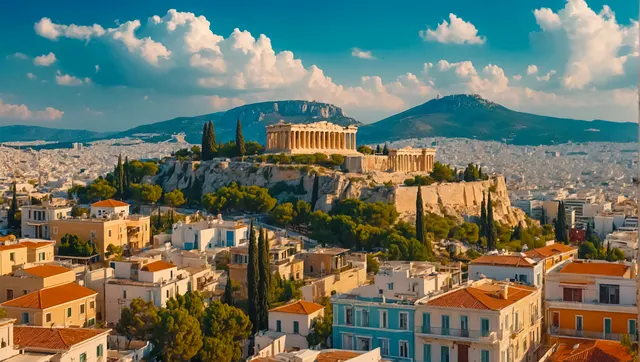
- Attica: Athens' region, where the Acropolis overlooks the city and the Temple of Poseidon stands at Cape Sounion, about an hour down the coast.
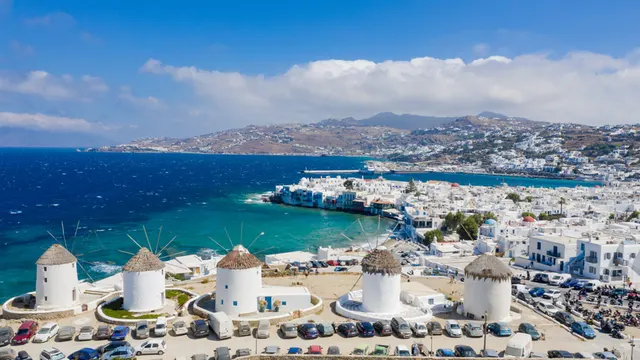
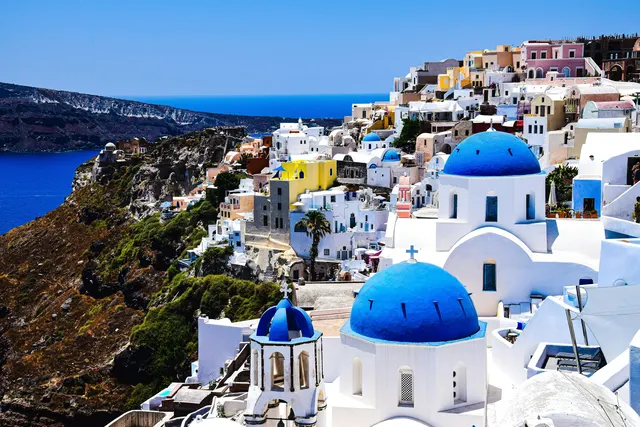
- Cyclades: The postcard Aegean group: Santorini's caldera cliffs, Mykonos' windmills, and quieter neighbours such as Naxos and Paros.
- Crete: Greece's largest island, with the Minoan palace of Knossos, the Samaria Gorge and a celebrated cuisine of its own.
- Peloponnese: A mainland peninsula rich in ancient sites (Olympia, Epidaurus and Mycenae) plus the stone tower houses of the Mani.
- Ionian Islands: Greener and more Venetian in character than the Aegean groups: Corfu's old town, Kefalonia's beaches and Zakynthos' shipwreck cove.
Where to go
Good to know
| Currency | Euro (EUR) |
|---|---|
| Language | Greek; English is widely spoken in tourism |
| Time zone | Eastern European Time (UTC+2, UTC+3 in summer) |
| Emergency number | 112 (general emergency) |
| Driving side | Right |
| Tap water | Safe in Athens and most of the mainland; on many islands locals prefer bottled water |
Seasons at a glance in Athens
| Month | Typical range | Season |
|---|---|---|
| January | 7°C to 14°C | Cool winter |
| April | 12°C to 21°C | Mild spring |
| July | 24°C to 34°C | Hot dry summer |
| October | 16°C to 25°C | Warm autumn |
Seasons vary across Greece. Each destination page has its own climate table.
How travellers explore Greece
Mykonos and Santorini sit about 116 km apart, an easy pairing in one trip.
Athens and Mykonos sit about 136 km apart, an easy pairing in one trip.
More in Europe
More Europe country guides
Frequently asked questions
Which Greece destinations can I book with Nuvoha?
Athens, Mykonos, Santorini, each with complete flight and hotel trips built around your budget.
What kind of trips suit Greece?
Greece works for city breaks and beach holidays, and its cities pair well for multi-stop itineraries.
Which Greece destinations does Nuvoha feature?
Athens is featured on Nuvoha.
How does island-hopping work in Greece?
Athens' port of Piraeus is the main ferry hub, with fast catamarans and conventional ships fanning out across the Aegean. In summer, popular islands such as Santorini and Mykonos also have direct flights from many European cities.
Are cards accepted in Greece?
Widely so in cities and on the main islands, but small tavernas, kiosks and island taxis often prefer cash, so carry some euros alongside your card.
What plug type does Greece use?
Types C and F, the round two-pin European sockets, at 230 volts. UK and North American visitors need an adapter, easily bought at airports and supermarkets.