
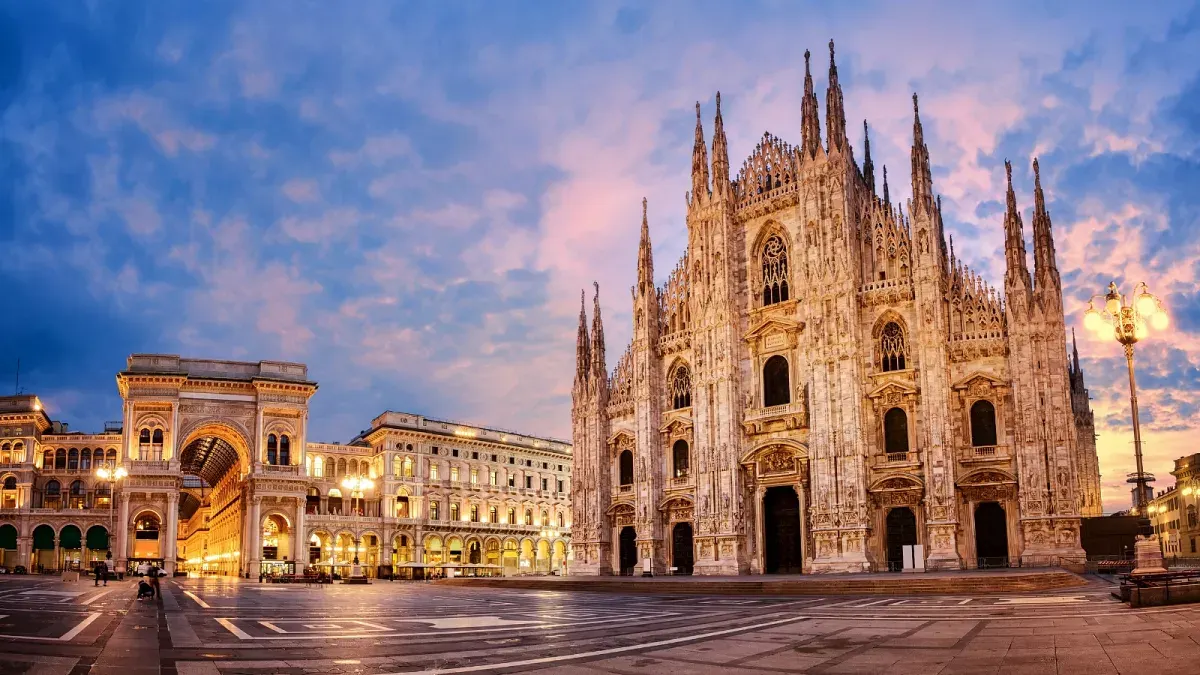
Before Italy unified in 1861 it was a patchwork of kingdoms and city-states, and it still eats like one: ragù in Bologna, pizza in Naples, risotto in Milan, and firm opinions everywhere about everyone else's version. The peninsula runs from Alpine lakes in the north, through the hill towns of Tuscany and Umbria, to the citrus terraces of the Amalfi Coast and the Greek temples of Sicily. Rome, Florence and Venice hold more art per square metre than almost anywhere on earth, yet much of the pleasure is ordinary: a morning espresso at the counter, an evening passeggiata, a lunch that refuses to be hurried. Fast trains link the big cities in a few hours.
Italy on Nuvoha spans 3 destinations: Milan, Rome, Venice. Set your budget and Nuvoha builds the complete trip: flights and hotels together.
Why visit Italy
- Cities you can explore on foot, from headline sights to quiet neighbourhoods
- Easy to combine two cities in a single trip
Best known for
- Renaissance art and architecture
- Regional cooking and espresso culture
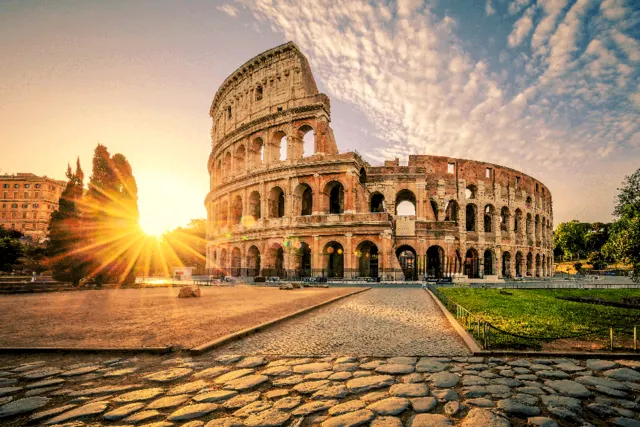
- Roman ruins
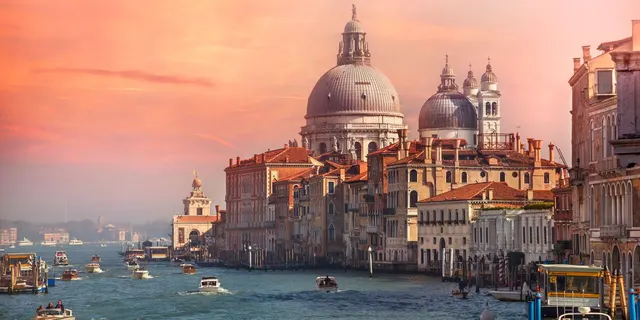
- Venice's canals
- Tuscan countryside
Regions of Italy
- Lazio: Rome's region, where the Colosseum, Vatican and Pantheon share the map with Etruscan tombs and the Castelli Romani hills.
- Veneto: Venice's lagoon, Palladian villas around Vicenza, Verona's Roman arena and the Prosecco hills north of Treviso.
- Lombardy: Milan's region, reaching from the fashion and design capital to Lake Como and Lake Garda's western shore beneath the Alps.
- Tuscany: Renaissance Florence, the towers of San Gimignano, Siena's shell-shaped Campo and the cypress-lined countryside of the Val d'Orcia.
- Campania: Naples, Pompeii and Vesuvius, plus the cliff-hung towns of the Amalfi Coast and the island of Capri.
- Sicily: The Mediterranean's largest island, layering Greek temples at Agrigento, Norman mosaics in Palermo and the slopes of Mount Etna.
Where to go
The practical part
| Currency | Euro (EUR) |
|---|---|
| Language | Italian; English is common in tourist cities, less so in the countryside |
| Time zone | Central European Time (UTC+1, UTC+2 in summer) |
| Emergency number | 112 (general emergency) |
| Driving side | Right |
| Tap water | Safe to drink; Rome's public 'nasoni' fountains run continuously with drinkable water |
Seasons at a glance in Milan
| Month | Typical range | Season |
|---|---|---|
| January | 0°C to 7°C | Cold winter |
| April | 9°C to 18°C | Mild spring |
| July | 20°C to 31°C | Hot summer |
| October | 11°C to 18°C | Cool autumn |
Seasons vary across Italy. Each destination page has its own climate table.
How travellers explore Italy
Milan and Venice sit about 282 km apart, an easy pairing in one trip.
Rome and Venice sit about 412 km apart, an easy pairing in one trip.
More in Europe
More Europe country guides
Frequently asked questions
Which Italy destinations can I book with Nuvoha?
Milan, Rome, Venice, each with complete flight and hotel trips built around your budget.
What kind of trips suit Italy?
Italy works for city breaks, and its cities pair well for multi-stop itineraries.
How do you travel between Italy's major cities?
Frecciarossa and Italo high-speed trains link Rome, Florence, Milan and Venice. Rome to Florence takes about 90 minutes. Reserve long routes ahead; slower regional trains need no reservation.
Is cash still needed in Italy?
Cards are accepted almost everywhere, though small bars and market stalls still prefer cash for tiny amounts. Keep coins handy for espresso counters and public toilets.
What plug type does Italy use?
Types C, F and L at 230 volts. The Italian type L has three pins in a row; most European two-pin plugs fit regardless, but UK and US visitors need an adapter.