
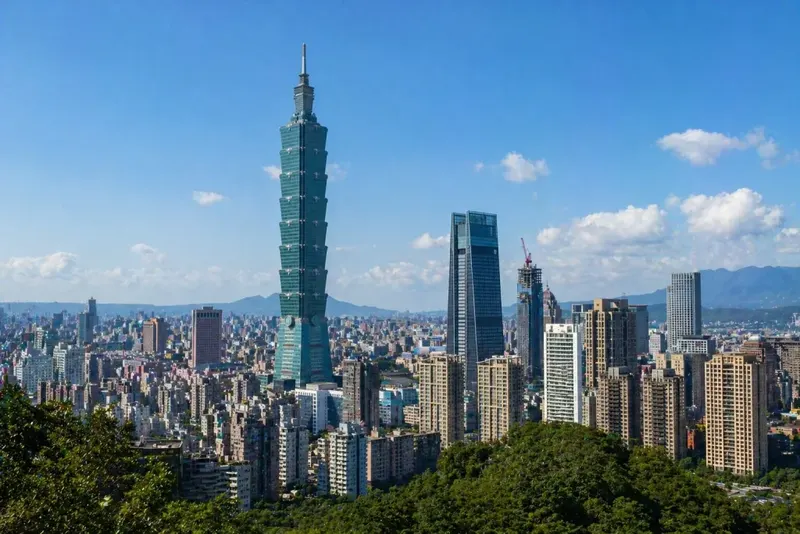
Taipei fills a green basin in the north of Taiwan, ringed by mountains and threaded by rivers, a city where the ultramodern and the traditional sit easily together. The record-breaking Taipei 101 tower rises over a grid of night markets, incense-filled temples and buzzing metro lines, while forested hills and steaming hot springs lie within the city limits. Friendly, safe and endlessly edible, it is one of Asia's most likeable capitals, and a fine introduction to Taiwan.
Taipei is a quieter alternative. It's ready to explore in the Nuvoha app: set your budget and see complete Taipei trips.
Why visit Taipei
Taipei rewards visitors with a rare mix of modern comfort, deep culture and easy access to nature. The National Palace Museum holds one of the world's greatest collections of Chinese art, carried across the strait in 1949, while temples such as Longshan and Bao'an keep older devotions alive amid the incense. Taipei 101 and the Xinyi district show the confident modern city, and the night markets, from Shilin to Raohe, are a national institution and among Asia's finest street-food scenes. Best of all, escape is close: the hot springs of Beitou, the tea terraces of Maokong and the hiking trails of Yangmingshan all lie within reach of the metro. The city is safe, welcoming and wonderfully convenient.
Sights to plan around
- Taipei 101: For years the world's tallest building, this 508-metre bamboo-inspired tower has an observatory near its summit and one of the world's fastest lifts to reach it.
- National Palace Museum: A vast treasury of Chinese imperial art, from jade and bronzes to painting and calligraphy, much of it moved from Beijing's Forbidden City in 1949.
- Longshan Temple: Taipei's most revered temple, founded in 1738 in the old Wanhua district, a working shrine wreathed in incense and packed with worshippers.
- Shilin Night Market: The largest and most famous of the city's night markets, a maze of food stalls and games where classics such as oyster omelette and giant fried chicken draw the crowds.
- Beitou hot springs: A valley of geothermal springs at the end of a metro branch, with public and private bathhouses, a green sulphur lake and a fine hot-spring museum.
- Chiang Kai-shek Memorial Hall: A monumental white hall above a grand plaza, its changing of the honour guard an hourly draw, flanked by the national theatre and concert hall.
Around the city
- Xinyi: The modern downtown around Taipei 101, a district of department stores, malls, cinemas and nightlife beneath the glass towers.
- Ximending: A pedestrianised youth and shopping quarter in the west, often likened to a compact Harajuku, busy with street performers, cinemas and cafes.
- Wanhua (Bangka): The oldest part of Taipei, home to Longshan Temple, the Bopiliao historic block and the traditional herb and snack streets around them.
- Datong and Dadaocheng: A historic northern district of old brick shophouses along Dihua Street, famous for its dried goods, tea and fabric trade and its Lunar New Year market.
- Zhongshan and Zhongzheng: Central districts of government buildings, hotels and galleries, taking in the Chiang Kai-shek Memorial and the main railway station.
- Beitou and Shilin: The green northern suburbs, with the hot springs of Beitou, the National Palace Museum and the sprawling Shilin Night Market.
The Taipei table
Taipei may be the finest eating city in the Chinese-speaking world, and much of the action happens on the street. The night markets griddle oyster omelettes, fry chicken cutlets the size of a face and ladle out pork-rib soups, while beef noodle soup, the unofficial city dish, simmers in shops on every block. Steamer baskets of soup dumplings, xiaolongbao, are a point of pride, and the island's bubble tea has conquered the world. Save room for shaved ice piled with mango in summer, and pineapple cakes to take home. Vegetarians are unusually well served, thanks to a strong Buddhist tradition.
- Beef noodle soup
- Xiaolongbao
- Oyster omelette
- Braised pork rice (lu rou fan)
- Bubble tea
- Mango shaved ice
What Taipei feels like
Taipei is a city of small pleasures and genuine warmth. Scooters swarm the junctions, yet the mood is calm and orderly, the metro spotless, and strangers unfailingly helpful. Days drift between temple courtyards thick with incense, tea houses on the hills and the glass towers of Xinyi, and the real life of the city comes out after dark, when the night markets fire up their griddles and the streets fill with the smell of grilled squid and stinky tofu. Rain is frequent and the summers are humid and hot, but a convenience store, a bowl of beef noodles or a hot-spring soak is never far away. It is a place that feels both cutting-edge and deeply rooted.
Getting from A to B
Taipei is a joy to get around. The clean, cheap and comprehensive MRT metro reaches most sights, paid for with a tap of the rechargeable EasyCard, which also works on buses and in convenience stores. An extensive bus network fills the gaps, and the YouBike public bicycles are handy for short hops. Taxis are plentiful and metered, and ride-hailing works well. For day trips, frequent trains and buses fan out from Taipei Main Station across the island. Most international flights use Taiwan Taoyuan International Airport (TPE), around forty kilometres west of the city and linked to Taipei Main Station by a dedicated Airport MRT in about forty minutes, as well as by bus and taxi. The smaller Songshan Airport (TSA), within the city, handles domestic and some regional flights.
Practical pointers
- Taiwan is famously polite and orderly: queue patiently, and on the MRT stand to the right on escalators and give up the priority seats.
- Eating and drinking are not allowed on the metro and its stations, and littering carries fines, so hold on to your rubbish.
- At temples, dress modestly and follow the lead of worshippers; it is fine to watch quietly, but ask before photographing people at prayer.
- Tipping is not expected in restaurants or taxis, and a service charge is usually already added at sit-down restaurants.
- Carry an EasyCard and a little cash, as night-market stalls and small shops may not take cards.
- Autumn, roughly October to December, brings the most settled weather; summers are hot, humid and prone to typhoons, and winters are mild but often wet.
- Buy an EasyCard on arrival for the metro, buses, bikes and convenience stores; it saves fumbling for change.
- The night markets are best after about seven in the evening, when the stalls are all open and the atmosphere builds.
- Beitou's hot springs and the trails of Yangmingshan National Park are easy half-day escapes on the metro and a short bus.
- The old gold-mining town of Jiufen and the volcanic coast at Yehliu make rewarding day trips from the city.
- Convenience stores are everywhere and genuinely useful, for tickets, snacks, cash and paying bills.
Best for
- City breaks
- Quieter travel
Key facts
| Country | Taiwan |
|---|---|
| Region | Asia |
| Airports | TPE |
| Trip length fit | Short-trip friendly |
Taipei essentials
| Currency | New Taiwan Dollar (TWD) |
|---|---|
| Language | Mandarin Chinese is the official language; Taiwanese Hokkien and Hakka are also widely spoken, and English appears on signage in the cities |
| Time zone | National Standard Time (UTC+8), no daylight saving |
| Emergency number | 110 (police), 119 (fire and ambulance) |
| Driving side | Right |
| Tap water | Not usually drunk straight from the tap; locals boil it, and most visitors choose bottled or filtered water |
Climate & seasons
| Month | Typical range | Season |
|---|---|---|
| January | 14°C to 19°C | Cool damp winter |
| April | 20°C to 27°C | Humid spring |
| July | 27°C to 34°C | Hot typhoon season |
| October | 22°C to 28°C | Warm autumn |
Typical stay
- Weekend-friendly
- Short break (2–5 days)
Taipei works as a weekend break just as well as a longer stay.
Getting there
Taipei is served via TPE.
- TPE
Is it your kind of trip?
Ideal if…
- you like walkable city energy
- you like places before everyone else finds them
Maybe not if…
- a beach-first holiday is the priority
Pairs well with
Compare with
More in Asia
Near Taipei
Travel style
- Short-trip friendly
- City
Frequently asked questions
Which airports serve Taipei?
Taipei is served via TPE.
Is Taipei good for a weekend trip?
Yes, Taipei works for a weekend as well as a longer stay.
What kind of trip is Taipei best for?
Taipei is best for city trips.
Which destinations pair well with Taipei?
Within multi-city range: Manila (1,176 km), Fukuoka (1,300 km), Seoul (1,462 km).
Is Taipei worth visiting?
Very much so. Taipei combines world-class museums and temples with some of Asia's best street food, excellent transport and easy access to hot springs and mountains. It is safe, affordable and welcoming, making it one of the region's most rewarding city breaks.
When is the best time to visit Taipei?
Autumn, from October to December, is generally the most comfortable, with warm days and lower humidity. Spring is pleasant but changeable, summer is hot, humid and subject to typhoons, and winter is mild though often grey and wet.
Do I need cash in Taipei?
Cards are widely accepted, but it is worth carrying some cash and an EasyCard. Night-market stalls, small eateries and temples often deal only in cash, while the EasyCard covers the metro, buses, bikes and convenience-store purchases.
How do I get from Taoyuan Airport into Taipei?
The Airport MRT runs directly from Taoyuan Airport to Taipei Main Station in around forty minutes, with buses and taxis as alternatives. From the smaller Songshan Airport, the city metro reaches the centre in minutes.