
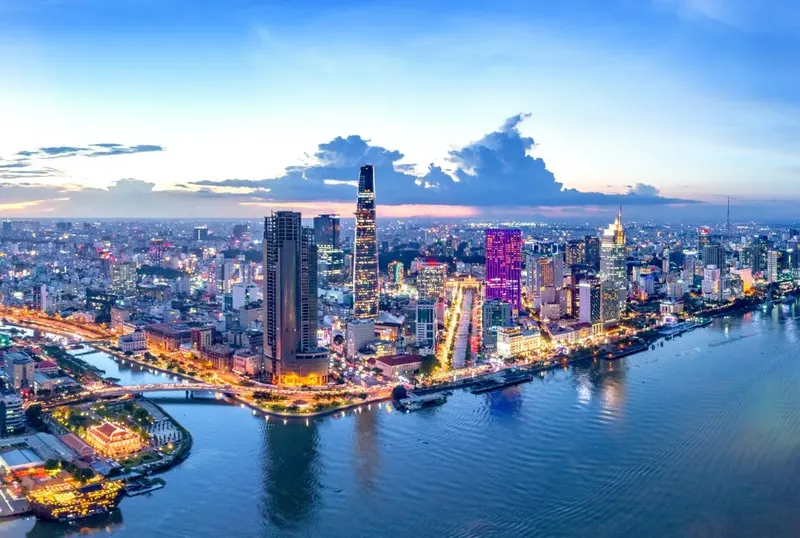
Ho Chi Minh City, still widely called Saigon, is Vietnam's largest city and its commercial heart. Where Hanoi feels historic and measured, the south moves fast, with a skyline of new towers rising above French colonial landmarks. District 1 holds most of the famous sights, from Ben Thanh Market to the old post office and cathedral. The climate is tropical and warm year round, split simply into a dry season and a wet one. It is a city of enterprise and appetite.
Ho Chi Minh is a quieter alternative. It's ready to explore in the Nuvoha app: set your budget and see complete Ho Chi Minh trips.
Why visit Ho Chi Minh
Much of the city's appeal lies in its twentieth-century history and its energy. The War Remnants Museum offers an unflinching account of the conflict, while the Reunification Palace stands frozen at the moment the war ended in 1975. A short trip out of town, the Cu Chi Tunnels reveal the vast underground network used during those years. Back in the centre, French landmarks such as the Notre-Dame Cathedral and the ornate Central Post Office sit near the Bitexco Tower and Landmark 81, the tallest building in the country. Between them run markets, rooftop bars and some of Vietnam's best street food, from banh mi to com tam.
Highlights
- War Remnants Museum: A powerful and confronting museum documenting the Vietnam War through photographs, aircraft and personal accounts.
- Reunification Palace: The former South Vietnamese presidential palace, preserved much as it was in 1975, with period interiors and underground bunkers.
- Ben Thanh Market: A landmark covered market in District 1, selling everything from fabric and souvenirs to cooked food, busiest in the cooler evening hours.
- Notre-Dame Cathedral and Central Post Office: Two neighbouring French colonial set pieces, a twin-towered brick cathedral and a grand, vaulted post hall still in daily use.
- Cu Chi Tunnels: An extensive network of wartime tunnels northwest of the city, where visitors can crawl through preserved sections and learn how they were used.
- Landmark 81 and the riverfront: Vietnam's tallest tower, rising over the Saigon River in Binh Thanh, with a viewing deck and a growing riverside district below.
Areas to know
- District 1: The central district and main destination for visitors, holding the major landmarks, hotels, riverfront and the Dong Khoi shopping street.
- District 3: A leafier, largely residential district next to District 1, known for cafes, villas and local restaurants.
- District 5 (Cho Lon): The historic Chinatown, dense with Chinese temples, herbal shops and the sprawling Binh Tay wholesale market.
- Binh Thanh: A large district along the river, home to Landmark 81 and a fast-changing skyline of new towers.
- Thao Dien: A riverside area east of the centre, popular with international residents for its cafes, galleries and greenery.
Food & drink
Southern Vietnamese food leans sweeter and more herb-heavy than the north, shaped by the fertile Mekong Delta nearby. The city is closely tied to banh mi, the baguette sandwich left behind by the French and reinvented with pate, pickles, chilli and coriander. Com tam, or broken rice, served with grilled pork and a fried egg, is a working lunch staple. Fresh spring rolls, hearty noodle soups and endless iced coffee round out a scene that runs from dawn carts to late-night stalls.
- Banh mi (filled baguette)
- Com tam (broken rice with grilled pork)
- Goi cuon (fresh spring rolls)
- Hu tieu (southern noodle soup)
- Banh xeo (crispy savoury pancake)
- Ca phe sua da (iced milk coffee)
What Ho Chi Minh feels like
Saigon runs on motion. Rivers of motorbikes fill the boulevards, horns and engines forming a constant background, and pavements double as parking, kitchens and workshops. District 1 layers glass towers over tamarind-shaded colonial streets, while nearby Cho Lon, the old Chinatown, keeps a denser, more traditional rhythm around its temples and wholesale markets. The heat rarely lets up, and afternoon downpours in the wet season clear the air for a few hours. Come evening, the city turns to its tables: iced coffee, cold beer, seafood and skewers. It feels forward-looking and commercial, yet the past is never far below the surface.
Getting around
Ho Chi Minh City is spread out and hot, so most visitors mix walking within District 1 with ride-hailing. Grab is widely used for both cars and motorbike taxis, and metered taxis are common. The city's first metro line, running from the centre out to the east, opened recently and gives an alternative for one busy corridor. Traffic is heavy and pavements are often blocked, so short hops by app are usually easier than long walks. Tan Son Nhat International Airport sits just a few kilometres northwest of the centre, unusually close for a major city. Even so, traffic around it can be slow, and the run into District 1 may take anywhere from twenty minutes to well over an hour at peak times. Ride-hailing cars, taxis and hotel transfers all serve the terminals.
Good to know
- Cover shoulders and knees when visiting temples and pagodas, and remove your shoes where signs or custom require it.
- Keep a light hold on your bag and phone in crowded areas and when near passing motorbikes.
- Ask before photographing people, market vendors and religious ceremonies.
- The war remains a sensitive subject; approach museums and memorials with respect and restraint.
- Passing items or money with both hands is a courteous gesture, especially with older people.
- Plan indoor sights or a long cafe break for the early afternoon, when heat and humidity peak.
- In the wet season, carry a light rain layer for the short, heavy downpours that arrive most afternoons.
- Prefer ride-hailing apps for short trips, as they set the route clearly and spare you negotiating at the roadside.
- Stay alert with phones and bags near the kerb, where opportunistic snatching from motorbikes can happen.
- Keep cash for street food and small shops, which often do not take cards.
Best for
- City breaks
- Quieter travel
Key facts
| Country | Vietnam |
|---|---|
| Region | Asia |
| Airports | SGN |
| Trip length fit | Short-trip friendly |
Ho Chi Minh essentials
| Currency | Vietnamese dong (VND) |
|---|---|
| Language | Vietnamese; English is understood in tourist areas |
| Time zone | Indochina Time (UTC+7) |
| Emergency number | 113 police, 114 fire, 115 ambulance |
| Driving side | Right |
| Tap water | Not considered safe to drink; use bottled or filtered water |
Climate & seasons
| Month | Typical range | Season |
|---|---|---|
| January | 22°C to 32°C | Warm dry season |
| April | 26°C to 35°C | Hottest season |
| July | 25°C to 32°C | Rainy season |
| October | 24°C to 31°C | Late rainy season |
Typical stay
- Weekend-friendly
- Short break (2–5 days)
Ho Chi Minh works as a weekend break just as well as a longer stay.
Getting there
Ho Chi Minh is served via SGN.
- SGN
Is it your kind of trip?
Ideal if…
- you like walkable city energy
- you like places before everyone else finds them
Maybe not if…
- a beach-first holiday is the priority
Pairs well with
Compare with
More in Asia
Near Ho Chi Minh
Travel style
- Short-trip friendly
- City
Frequently asked questions
Which airports serve Ho Chi Minh?
Ho Chi Minh is served via SGN.
Is Ho Chi Minh good for a weekend trip?
Yes, Ho Chi Minh works for a weekend as well as a longer stay.
What kind of trip is Ho Chi Minh best for?
Ho Chi Minh is best for city trips.
Which destinations pair well with Ho Chi Minh?
Within multi-city range: Da Nang (605 km), Bangkok (716 km), Koh Samui (735 km).
Is it called Ho Chi Minh City or Saigon?
Both are in common use. Ho Chi Minh City has been the official name since 1976, but locals and visitors alike still widely say Saigon, which more strictly refers to the central District 1 area. You will see both on signs, tickets and in everyday speech.
How many days should I spend in Ho Chi Minh City?
Two full days cover the main museums, markets and colonial landmarks in and around District 1. A third day allows a trip to the Cu Chi Tunnels or into the Mekong Delta, both popular excursions from the city.
What is the best time to visit?
The dry season, roughly December to April, is the most comfortable, with lower humidity and little rain. The wet season brings warm days and short, intense afternoon showers rather than all-day rain, so travel remains straightforward.
How does it compare to Hanoi?
The two cities make a natural contrast. Hanoi is older, cooler in winter and more traditional, while Ho Chi Minh City is larger, hotter, faster and more commercial. Many travellers visit both, flying between them or working their way along the coast through the centre of the country.