
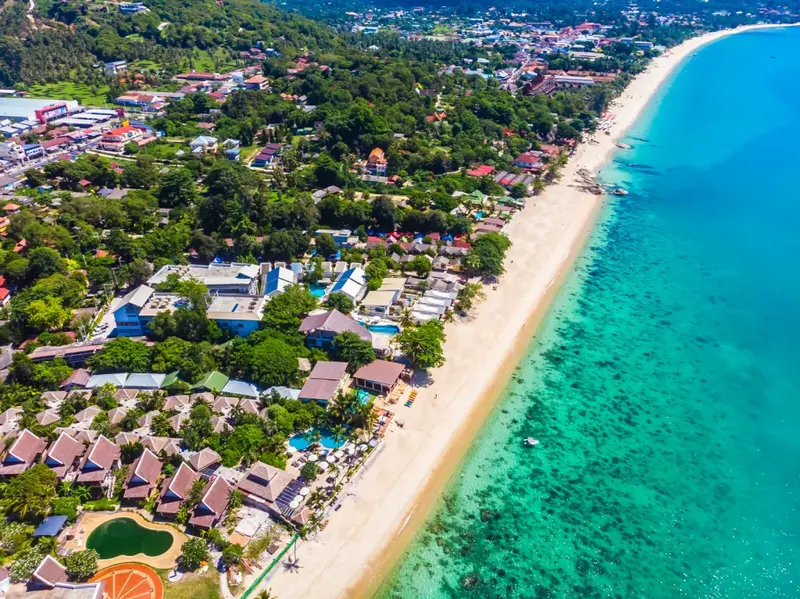
Koh Samui sits in the Gulf of Thailand, a rounded island of palm-backed beaches, forested hills and old coconut plantations. Chaweng and Lamai draw most visitors to the sheltered east coast, where fine sand meets warm, shallow water, while the quieter north and west keep a slower village feel. Golden temples, a giant seated Buddha and a national marine park of limestone islands lie within easy reach. It is Thailand's beach life at an island scale, tropical and unhurried.
Koh Samui is made for unwinding. It's ready to explore in the Nuvoha app: set your budget and see complete Koh Samui trips.
Why visit Koh Samui
Koh Samui balances easy beach days with enough to explore between them. Chaweng offers the longest stretch of sand and the liveliest scene, Lamai a slightly calmer alternative, and the northern bays around Bophut and Maenam a gentler pace still. Inland, coconut groves climb to waterfalls and viewpoints, while the island's temples repay a visit: the golden Big Buddha above the northeast coast and the colourful Guanyin figures of Wat Plai Laem. Offshore lies the Ang Thong Marine Park, a scatter of limestone islands and quiet lagoons reached on a day's boat trip. Neighbouring Koh Pha Ngan and Koh Tao are a short ferry away.
What Koh Samui feels like
Samui runs on island time. Days drift between the beach, the pool and long lunches of grilled seafood, and the heat eases into warm evenings scented with frangipani and barbecue smoke. Chaweng brings the energy after dark, with bars and night markets, while Bophut's Fisherman's Village and the northern beaches stay softer and more low-key. Away from the shore, the interior is surprisingly wild: forested hills, waterfalls and plantations threaded by narrow roads. The mood is relaxed and welcoming, shaped equally by Thai hospitality, a long-settled travel scene and the ever-present sea. Sunsets belong to the west coast.
Sights to plan around
- Big Buddha (Wat Phra Yai): A twelve-metre golden Buddha seated on a small causeway island in the northeast, visible from the air and approached up a naga-flanked stair.
- Wat Plai Laem: A vivid temple complex with an eighteen-armed image of Guanyin and a laughing Buddha, set around a lake full of fish.
- Ang Thong National Marine Park: An archipelago of some forty limestone islands with sea caves, viewpoints and a hidden emerald lagoon, visited by boat from Samui.
- Fisherman's Village, Bophut: A lane of old Chinese-Thai shophouses turned to restaurants and shops, with a busy walking-street market on Friday evenings.
- Na Muang Waterfalls: Two inland falls tumbling over rock in the forested interior, the upper one reached by a walk through the trees.
- Hin Ta and Hin Yai: The Grandfather and Grandmother Rocks near Lamai, curious sea-worn formations and a favourite photo stop along the coast.
Beach by beach
- Chaweng: The island's longest and busiest beach on the east coast, backed by hotels, malls, night markets and the main nightlife strip.
- Lamai: The second-largest beach, just south of Chaweng, a touch quieter but still well served, near the Grandfather and Grandmother Rocks.
- Bophut and Fisherman's Village: A north-coast bay with a restored old-town lane of restaurants and shops, calmer sand and views toward Koh Pha Ngan.
- Maenam and Bang Po: Long, quiet north-coast beaches with a village feel, shallow water and a scattering of low-key resorts.
- Choeng Mon: A sheltered cove in the northeast near the airport, calm and family-friendly, with fine sand and easy swimming.
- The west coast: Quieter, sunset-facing shores around Lipa Noi and Taling Ngam, with the main pier for ferries to the mainland.
The island table
Samui's kitchens make the most of the sea and the island's own coconuts. Southern Thai cooking runs hotter and often turmeric-yellow, built around fresh fish, prawns and squid grilled at beachside stalls or simmered into fragrant curries. Coconut sweetens and softens many dishes, and the markets pile high with tropical fruit. Alongside the local table you will find Thai standards from every region and, given the island's long draw for visitors, plenty of international cooking too.
- Grilled seafood
- Massaman curry
- Som tam
- Tom yum
- Coconut desserts
Getting around the island
A ring road circles the island, and shared songthaew pickups run set routes along it, the local way to hop between beaches. Metered taxis are scarce, so agree a fare first or use a ride-hailing app where available. Many visitors rent a scooter or car for the freedom it brings, though the hilly, busy roads call for care and proper insurance. Resorts often run their own shuttles to the main beaches and to the airport. Samui International Airport sits in the northeast near Chaweng and Bophut, an unusual open-air airport of garden pavilions served mainly by Bangkok Airways, with connections from Bangkok and a handful of regional cities. An alternative is to fly to Surat Thani on the mainland and continue by bus and ferry.
Practical pointers
- Cover shoulders and knees at temples, remove your shoes before entering, and keep beachwear for the beach.
- Women should never touch a monk, and everyone should avoid pointing their feet at people or Buddha images.
- The head is considered sacred, so do not touch anyone's head, even a child's.
- Treat images of the King and the royal family with respect; disrespect is taken very seriously and is against the law.
- A gentle smile and a wai, palms pressed together, are the warm way to greet and thank people.
- Look after the reefs and marine park: do not stand on coral or take shells and marine life.
- Samui's driest, sunniest stretch runs roughly from January to April; the heaviest rain comes late in the year, around October to December.
- The Ang Thong Marine Park is a full-day boat trip; seas are calmest and trips most reliable outside the wet months.
- Agree taxi and songthaew fares before setting off, as meters are rare on the island.
- The Friday walking street at Bophut's Fisherman's Village is a highlight among the island's night markets.
- If you ride a scooter, wear a helmet and carry the right licence, as roads are hilly and accidents are common.
- Ferries link Samui with Koh Pha Ngan and the diving island of Koh Tao for easy day trips or onward hops.
Best for
- Beach time
- Unwinding
Key facts
| Country | Thailand |
|---|---|
| Region | Asia |
| Airports | USM |
| Trip length fit | Short-trip friendly |
Koh Samui essentials
| Currency | Thai Baht (THB) |
|---|---|
| Language | Thai; English is workable in tourist areas and hotels |
| Time zone | Indochina Time (UTC+7), no daylight saving |
| Emergency number | 191 (police), 1669 (ambulance), 1155 (tourist police) |
| Driving side | Left |
| Tap water | Not for drinking: use bottled or filtered water; restaurant ice is generally factory-made and fine |
Climate & seasons
| Month | Typical range | Season |
|---|---|---|
| April | 26°C to 33°C | Hot season |
Koh Samui is one of Nuvoha's winter-sun picks.
Typical stay
- Weekend-friendly
- Short break (2–5 days)
Koh Samui works as a weekend break just as well as a longer stay.
Getting there
Koh Samui is served via USM.
- USM
Is it your kind of trip?
Ideal if…
- time on the coast is the point of the trip
- you want to slow down and reset
Maybe not if…
- you want big-city energy around the clock
Pairs well with
Compare with
More in Asia
Near Koh Samui
Travel style
- Winter sun
- Short-trip friendly
- Beach
Frequently asked questions
Which airports serve Koh Samui?
Koh Samui is served via USM.
Is Koh Samui good for a weekend trip?
Yes, Koh Samui works for a weekend as well as a longer stay.
What kind of trip is Koh Samui best for?
Koh Samui is best for beach trips, popular for unwinding.
Which destinations pair well with Koh Samui?
Within multi-city range: Phuket (250 km), Bangkok (467 km), Ho Chi Minh (735 km).
When is the best time to visit Koh Samui?
Koh Samui's weather differs from Thailand's Andaman coast. The driest, sunniest months are roughly January to April, while the heaviest rain falls late in the year, around October to December. The island stays warm year-round.
Which beach should I choose on Koh Samui?
Chaweng has the longest sand and the liveliest scene, Lamai is a little calmer, and the northern bays around Bophut, Maenam and Choeng Mon are quieter and more family-friendly. The west-coast shores are best for sunsets and ferries.
How do you get to Koh Samui?
Most visitors fly into Samui International Airport, served mainly by Bangkok Airways. A more economical route is to fly to Surat Thani on the mainland, or take the overnight train there, then continue by bus and ferry to the island.
Is Koh Samui good for families?
Yes. The calmer northern and northeastern beaches such as Maenam, Bophut and Choeng Mon have shallow, sheltered water well suited to children, alongside temples, waterfalls and boat trips that appeal to all ages.