
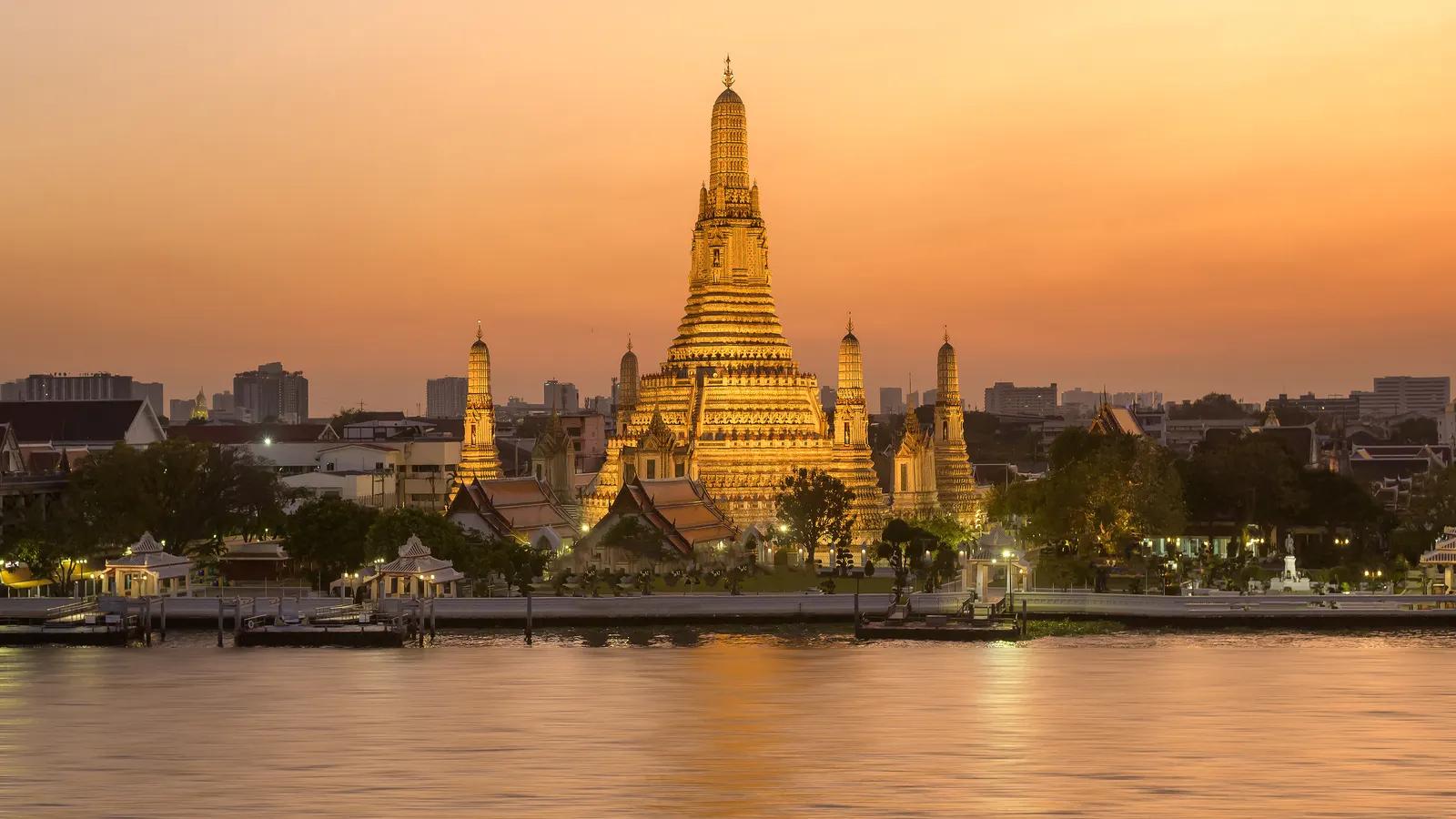
The smell of lemongrass and charcoal drifts from street stalls at almost every hour, in almost every town. Thai food culture alone justifies the flight. The country stretches from the misty mountains of the north around Chiang Mai, through Bangkok's canals and gilded temples, down a long peninsula flanked by two coasts: the Andaman Sea with its limestone karsts and the Gulf of Thailand with its island arcs. Buddhism shapes the daily rhythm, from dawn alms rounds to hilltop stupas. Travellers arrive for beaches and temples, then discover a gentle social code (the wai greeting, respect for the monarchy, shoes off at thresholds) that rewards a little preparation.
Thailand on Nuvoha spans 4 destinations: Bangkok, Chiang Rai, Koh Samui, Phuket. Set your budget and Nuvoha builds the complete trip: flights and hotels together.
Why visit Thailand
- Cities you can explore on foot, from headline sights to quiet neighbourhoods
- Coastline worth building a trip around
- Nature within easy reach of your base
- Featured destinations to build a trip around
- Quieter alternatives beyond the obvious stops
- Easy to combine two cities in a single trip
Best known for
- Street food
- Buddhist temples
- Limestone island seascapes
- Thai massage
- Floating and night markets
From mountains to two coasts
- Central Thailand: Bangkok's Grand Palace, canal networks and street-food districts, with the temple ruins of Ayutthaya an easy trip north of the capital.
- Northern Thailand: The mountainous region around Chiang Mai and Chiang Rai, known for hillside temples, night markets and cooler winter air.
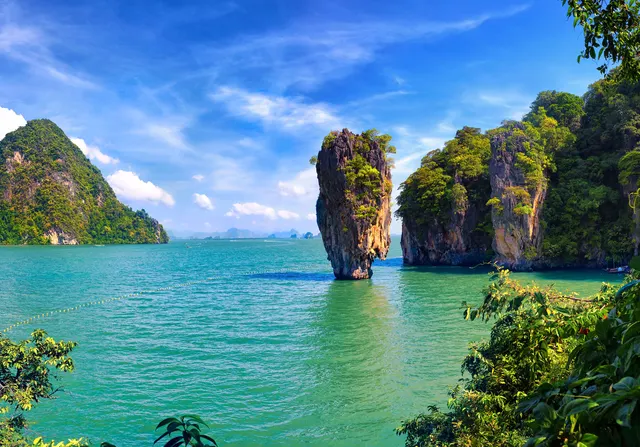
- Andaman Coast: The west-facing coast of limestone karsts and clear water, taking in Phuket, Krabi and the Phi Phi islands.
- Gulf Coast and Islands: Koh Samui, Koh Phangan and Koh Tao off the eastern seaboard, plus the seaside town of Hua Hin favoured by Bangkok weekenders.
- Isaan: The rural north-east along the Mekong, with Khmer temple ruins and some of Thailand's spiciest cooking. Few foreign visitors make it here.
Where to go
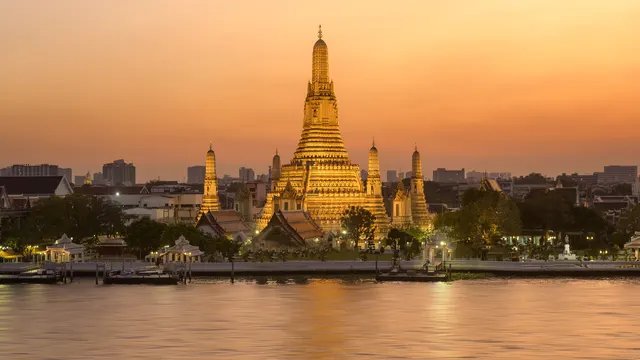
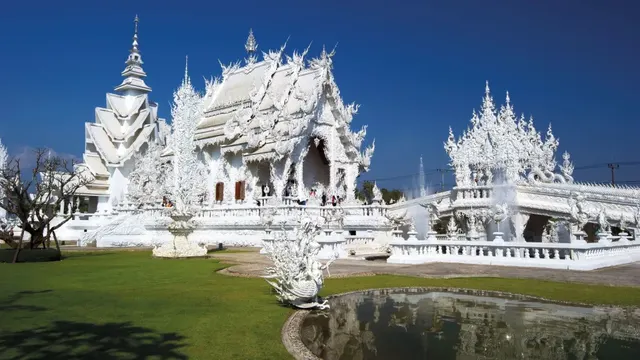
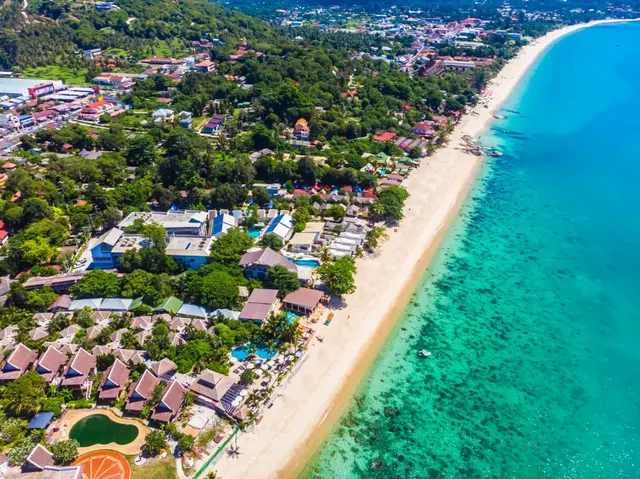
Nuts and bolts
| Currency | Thai Baht (THB) |
|---|---|
| Language | Thai; English is workable in tourist areas and hotels |
| Time zone | Indochina Time (UTC+7), no daylight saving |
| Emergency number | 191 (police), 1669 (ambulance), 1155 (tourist police) |
| Driving side | Left |
| Tap water | Not for drinking: use bottled or filtered water; restaurant ice is generally factory-made and fine |
Seasons at a glance in Bangkok
| Month | Typical range | Season |
|---|---|---|
| January | 22°C to 32°C | Warm dry season |
| April | 27°C to 36°C | Very hot season |
| July | 26°C to 34°C | Humid rainy season |
| October | 25°C to 32°C | Late rainy season |
Seasons vary across Thailand. Each destination page has its own climate table.
How travellers explore Thailand
Koh Samui and Phuket sit about 250 km apart, an easy pairing in one trip.
Bangkok and Koh Samui sit about 467 km apart, an easy pairing in one trip.
More in Asia
More Asia country guides
Frequently asked questions
Which Thailand destinations can I book with Nuvoha?
Bangkok, Chiang Rai, Koh Samui, Phuket, each with complete flight and hotel trips built around your budget.
What kind of trips suit Thailand?
Thailand works for city breaks, nature trips and beach holidays, and its cities pair well for multi-stop itineraries.
Which Thailand destinations does Nuvoha feature?
Bangkok and Phuket are featured on Nuvoha.
How do you get from Bangkok to the islands?
Domestic flights are the quick way (Bangkok to Phuket takes about 80 minutes), while overnight trains run south towards Surat Thani for the Gulf islands, followed by a ferry connection.
Cash or card in Thailand?
Bangkok's malls and hotels take cards readily, but street food, markets, taxis and island transport run on cash. ATMs are everywhere; small-denomination notes are the most useful.
What plug type does Thailand use?
Types A, B and C are all common, often in combined sockets accepting both flat and round two-pin plugs, at 230 volts. UK visitors need an adapter.