
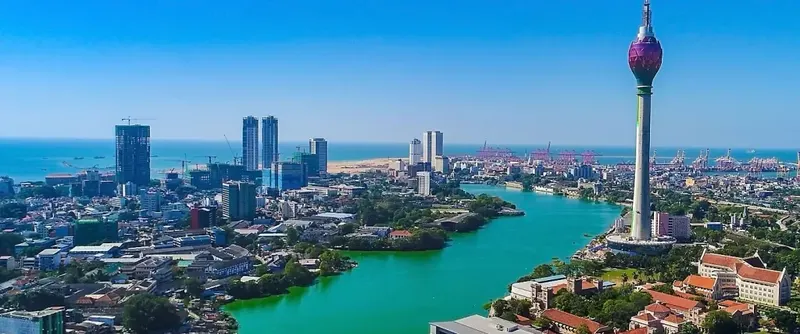
Colombo is Sri Lanka's largest city and commercial capital, spread along the island's west coast where the land meets the Indian Ocean. It is a working port city rather than a beach resort, though the sea is never far, from the open lawns of Galle Face Green to the sands of Mount Lavinia in the south. Colonial-era arcades, Buddhist and Hindu temples, colourful mosques and glassy new towers sit close together. For many, it is the island's gateway and first taste of the tropics.
Colombo is a quieter alternative, made for unwinding. It's ready to explore in the Nuvoha app: set your budget and see complete Colombo trips.
Why visit Colombo
Colombo is a city to explore between beaches and hill country rather than a resort in itself, and it rewards a day or two of unhurried wandering. Galle Face Green draws families and kite-flyers to the oceanfront each evening, with a line of street-food carts along the shore. The old Fort and Pettah districts hold Dutch and British colonial buildings, the striped Red Mosque and the bustle of covered bazaars. Serene lakeside temples such as Gangaramaya and Seema Malaka sit near the modern core. Add museums, leafy Cinnamon Gardens and the Old Dutch Hospital's shops and restaurants, and the city gives a rounded introduction to the island.
What Colombo feels like
Colombo mixes South Asian energy with a slower, ocean-facing calm. Traffic and tuk-tuks fill the day, and the Fort and Pettah districts hum with commerce, yet the pace eases along the seafront, especially at sunset when Galle Face fills with families, cricket games and the smell of grilling snacks. The city wears its history openly, with Buddhist, Hindu, Muslim and Christian places of worship often within a few streets of each other. Newer towers and reclaimed land are reshaping the skyline near the port, while older quarters keep their trees, verandahs and faded colonial grandeur. Warm and humid year round, it invites early starts and shaded afternoons.
Highlights
- Galle Face Green: A wide oceanfront lawn and promenade in the city centre, at its best around sunset when food carts, kite-sellers and families gather by the sea.
- Gangaramaya Temple: One of Colombo's most important Buddhist temples, a working monastery crowded with statues, relics and an eclectic museum collection.
- Pettah Market and the Red Mosque: A dense grid of trading streets selling everything imaginable, crowned by the candy-striped brickwork of the Jami Ul-Alfar Mosque.
- Fort district: The historic colonial and commercial core, where Dutch and British buildings, including the restored Old Dutch Hospital, stand among banks and offices.
- Colombo National Museum: The country's largest museum, set in a colonnaded colonial building, tracing Sri Lankan history from ancient kingdoms to the colonial era.
- Seema Malaka and Beira Lake: A serene set of pavilions floating on Beira Lake, designed by the architect Geoffrey Bawa as a meditation retreat linked to Gangaramaya.
Areas to know
- Fort (Colombo 1): The old colonial and business district by the harbour, mixing government buildings and banks with heritage landmarks and the seafront.
- Pettah (Colombo 11): A frenetic market quarter east of Fort, its streets each given over to particular trades, from textiles to electronics and spices.
- Kollupitiya (Colombo 3): The seafront strip south of Fort, taking in Galle Face, grand hotels and a growing line of shops and offices.
- Cinnamon Gardens (Colombo 7): The city's most gracious district, with tree-lined streets, colonial mansions, embassies, parks and museums.
- Mount Lavinia: A southern coastal suburb with the city's best-known beach and a colonial-era headland hotel, popular for seafood by the shore.
- Slave Island (Kompanna Veediya): A central district beside Beira Lake, a mixed and historic neighbourhood now flanked by new high-rise development.
Food & drink
Sri Lankan food is built around rice and curry, a spread of small, boldly spiced dishes eaten with a mound of rice, and Colombo is the ideal place to explore it. Coconut, curry leaves, chilli and Ceylon spices define the flavours. Hoppers, bowl-shaped pancakes of fermented rice and coconut, are a breakfast and supper favourite, often served with an egg. Kottu, roti chopped and stir-fried on a hot griddle with vegetables and meat, is the sound and taste of the city at night. Seafood, short eats and strong tea complete the picture.
- Rice and curry
- Egg hoppers (appa)
- String hoppers (idiyappam)
- Kottu roti
- Lamprais
- Wattalappam (spiced coconut custard)
Getting around
Colombo spreads out along the coast, so getting around usually means motorised transport. Metered three-wheelers, or tuk-tuks, are everywhere, and ride-hailing apps such as PickMe and Uber are widely used and take the guesswork out of arranging them. Air-conditioned taxis are easy to organise too. A coastal railway line runs through the city and down the west and south coasts, giving a scenic and characterful way to reach the beaches. Traffic is heavy, so allow time at peak hours. Bandaranaike International Airport, the country's main gateway, lies well to the north of Colombo near Katunayake and Negombo, around thirty-five kilometres from the city centre. An expressway links the airport to the city, and the drive usually takes about an hour, though it varies with traffic. Many arrivals stay their first or last night in nearby Negombo, by the beach, rather than driving straight into the city.
Good to know
- Dress modestly at temples, covering shoulders and knees, and remove shoes and hats before entering; this applies at Buddhist, Hindu and Muslim sites alike.
- Never pose with your back to a Buddha statue for photographs, and avoid touching statues or sacred objects.
- Buddha tattoos and images worn disrespectfully can cause genuine offence and legal trouble, so keep them covered.
- Use your right hand for giving, receiving and eating, as the left is considered unclean.
- Ask before photographing people, and dress with a little care in the more conservative areas.
- Head to Galle Face Green in the late afternoon, when the heat eases and the food carts and kite-sellers come out.
- Carry water and sun protection, and plan indoor stops like museums or temples for the hottest hours.
- Arrange a tuk-tuk through an app where you can, to keep the trip straightforward.
- Combine a Colombo stay with a coastal train ride south, which is one of the island's most scenic journeys.
- Keep a scarf or light layer to cover shoulders for temple visits.
Best for
- Beach time
- Unwinding
- Quieter travel
Key facts
| Country | Sri Lanka |
|---|---|
| Region | Asia |
| Airports | CMB |
| Trip length fit | Short-trip friendly |
Colombo essentials
| Currency | Sri Lankan rupee (LKR) |
|---|---|
| Language | Sinhala and Tamil, with English widely spoken |
| Time zone | Sri Lanka Standard Time (UTC+5:30) |
| Emergency number | 119 police, 1990 for the Suwa Seriya ambulance service |
| Driving side | Left |
| Tap water | Not considered safe to drink; use bottled or filtered water |
Climate & seasons
| Month | Typical range | Season |
|---|---|---|
| January | 24°C to 31°C | Warm drier season |
Colombo is one of Nuvoha's winter-sun picks.
Typical stay
- Weekend-friendly
- Short break (2–5 days)
Colombo works as a weekend break just as well as a longer stay.
Getting there
Colombo is served via CMB.
- CMB
Is it your kind of trip?
Ideal if…
- time on the coast is the point of the trip
- you want to slow down and reset
- you like places before everyone else finds them
Maybe not if…
- you want big-city energy around the clock
Pairs well with
Compare with
More in Asia
Near Colombo
Travel style
- Winter sun
- Short-trip friendly
- Beach
Frequently asked questions
Which airports serve Colombo?
Colombo is served via CMB.
Is Colombo good for a weekend trip?
Yes, Colombo works for a weekend as well as a longer stay.
What kind of trip is Colombo best for?
Colombo is best for beach trips, popular for unwinding.
Which destinations pair well with Colombo?
Within multi-city range: Thiruvananthapuram (357 km), Kochi (506 km), Chennai (658 km).
Is Colombo worth visiting?
Colombo is worth a day or two for its colonial architecture, temples, museums and seafront, and as a gateway to the rest of the island. It is a city rather than a beach destination, so many travellers use it as a start or end point rather than a place to linger for a full holiday.
Does Colombo have beaches?
The city itself is more oceanfront than beach, with Galle Face Green offering a promenade rather than swimming. The nearest proper beach is at Mount Lavinia, a southern suburb, while the classic west-coast sands lie further out at Negombo to the north and Bentota and beyond to the south.
How many days do you need in Colombo?
One to two days is enough to see the main sights at a comfortable pace. That allows time for Fort and Pettah, a temple or two, a museum and an evening at Galle Face before moving on to the hill country, the Cultural Triangle or the southern beaches.
When is the best time to visit Colombo?
Colombo is on the west coast, which is driest and sunniest roughly from December to March. The southwest monsoon brings heavier rain around May to September, though showers are often short. The city is warm and humid throughout the year, so light clothing is sensible whenever you go.