
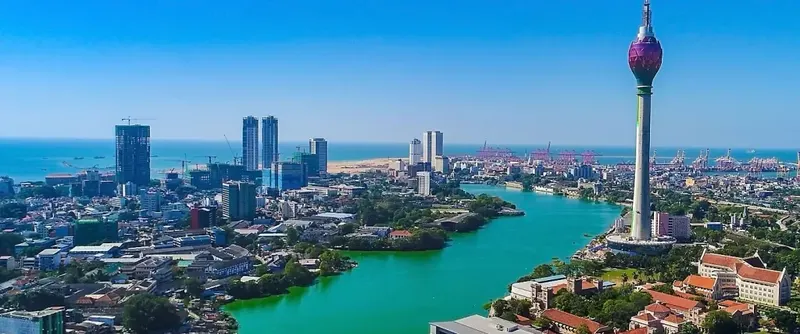
Sri Lanka is an island nation in the Indian Ocean, set just off the southern tip of India and shaped, as it is often said, like a teardrop. For its modest size it holds remarkable variety: palm-fringed beaches around much of the coast, a cool, tea-growing hill country at its centre, ancient royal cities and rock temples on the northern plains, and national parks alive with elephants and leopards. More than two thousand years of Buddhist culture underpin daily life, layered with Hindu, Muslim and colonial Portuguese, Dutch and British influences. Add Ceylon tea, fragrant curries and a coastline made for surfing and whale-watching, and the island rewards even a short visit with a lot of ground covered.
Colombo is the Sri Lanka destination on Nuvoha today. Set your budget and Nuvoha builds the complete trip: flights and hotels together.
Why visit Sri Lanka
- Coastline worth building a trip around
- Quieter alternatives beyond the obvious stops
Best known for
- Ceylon tea and the plantations of the hill country
- Ancient Buddhist cities, rock temples and the Sigiriya rock fortress
- Wildlife safaris for elephants, leopards and birdlife
- Beaches and world-class surf on the south and east coasts
- Rice and curry and a rich, spice-driven cuisine
- The scenic hill-country railway through the tea estates
Regions of Sri Lanka
- West Coast and Colombo: The commercial hub and the island's main gateway, with the city of Colombo, the airport town of Negombo and a string of west-coast beaches.
- Hill Country: The cool, green interior around Kandy, Nuwara Eliya and Ella, carpeted with tea plantations and crossed by a famous railway.
- Cultural Triangle: The dry northern-central plains holding the ancient cities of Anuradhapura and Polonnaruwa, the Sigiriya rock fortress and the Dambulla cave temples.
- South Coast: A run of golden beaches and surf towns from Galle, with its Dutch fort, through Unawatuna and Mirissa to Tangalle, with whale-watching offshore.
- East Coast: Quieter beaches and renowned surf around Arugam Bay and Trincomalee, best in the months when the west coast is wetter.
- The North and Wildlife Parks: Tamil-influenced Jaffna in the far north, and the great national parks such as Yala and Udawalawe, known for elephants and leopards.
Where to go
Sri Lanka travel basics
| Currency | Sri Lankan rupee (LKR) |
|---|---|
| Language | Sinhala and Tamil, with English widely spoken |
| Time zone | Sri Lanka Standard Time (UTC+5:30) |
| Emergency number | 119 police, 1990 for the Suwa Seriya ambulance service |
| Driving side | Left |
| Tap water | Not considered safe to drink; use bottled or filtered water |
Seasons at a glance in Colombo
| Month | Typical range | Season |
|---|---|---|
| January | 24°C to 31°C | Warm drier season |
Seasons vary across Sri Lanka. Each destination page has its own climate table.
More in Asia
More Asia country guides
Frequently asked questions
Which Sri Lanka destinations can I book with Nuvoha?
Colombo, with complete flight and hotel trips built around your budget.
What kind of trips suit Sri Lanka?
Sri Lanka works for beach holidays.
Do I need a visa for Sri Lanka?
Most visitors need an Electronic Travel Authorisation or visa, arranged online before arrival. Terms and any exemptions change periodically, so confirm the current requirements for your nationality through an official source ahead of your trip.
When is the best time to visit Sri Lanka?
It depends on where you are going, as the island has two monsoons. In simple terms, the west and south coasts and the hill country are best from around December to March, while the east coast is at its finest from about May to September. There is almost always somewhere with good weather.
Is Sri Lanka easy to get around?
Distances look small but roads are often slow and winding, so journeys take longer than the map suggests. Trains are scenic and characterful, especially through the hill country, while private drivers, buses and three-wheelers fill the gaps. Many visitors hire a car with a driver for touring.
Can you see Sri Lanka in a short trip?
You can see plenty in a week to ten days by choosing a focused route, such as combining the Cultural Triangle, the hill country and one stretch of coast. Two weeks allows a fuller loop taking in ancient cities, tea country, a safari and time on the beach.