
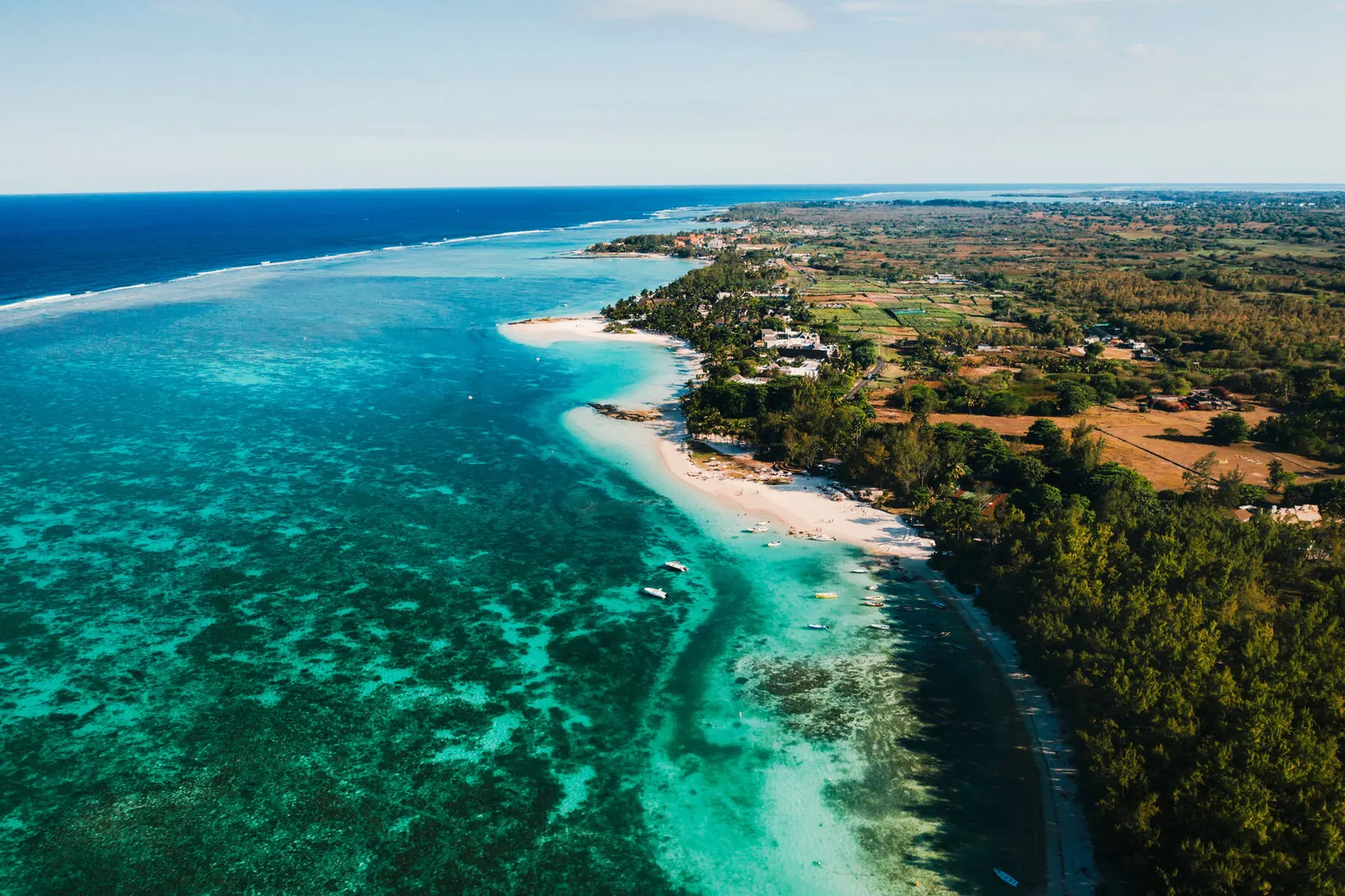
A near-continuous coral reef rings Mauritius, keeping its lagoons glassy while the open Indian Ocean thunders beyond the break. Off Le Morne the island stacks up in layers: turquoise water, casuarina-fringed sand, sugarcane, then the brooding basalt wall of the peninsula's mountain, a reminder that this gentle place is volcanic to its bones.
Mauritius is made for unwinding. It's ready to explore in the Nuvoha app: set your budget and see complete Mauritius trips.
Why visit Mauritius
Mauritius rewards travellers who go beyond the beach towel. The lagoon delivers superb snorkelling, kitesurfing off Le Morne and glass-bottomed drift days over Blue Bay's marine park, while inland the Black River Gorges National Park shelters endemic forest, waterfalls and rare kestrels. Port Louis's Central Market and the UNESCO-listed Aapravasi Ghat tell the island's Creole, Indian, Chinese and French story, and Chamarel's Seven Coloured Earths show off its geology. English and French both work everywhere, and the southern-hemisphere winter stays warm.
What Mauritius feels like
Island time with a Creole soundtrack. Sega music surfaces at beach barbecues, Hindu temple festivals and Chinese pagodas share the calendar, and roadside stalls hand dholl puri wrapped in paper to fishermen and bankers alike. The coasts differ in character: the sheltered west for sunsets, the breezy east for wilder beaches, the north for the liveliest social scene, while the high central plateau keeps its cool, misty tea gardens.
Island landmarks
- Le Morne Brabant: A UNESCO World Heritage basalt peninsula, once a refuge for escaped slaves and now a hiking icon.
- Black River Gorges National Park: The island's largest forest reserve, with viewpoints, waterfalls and endemic birdlife.
- Chamarel Seven Coloured Earths: Dunes of naturally multicoloured volcanic sand close to the Chamarel waterfall.
- Île aux Cerfs: A lagoon islet off the east coast famed for its sandbars and watersports.
- Aapravasi Ghat: The Port Louis immigration depot, a UNESCO site marking the arrival of indentured labourers.
- Pamplemousses Botanical Garden: One of the oldest botanical gardens in the Southern Hemisphere, famous for its giant water lilies.
Regions of the island
- Grand Baie: The north's social hub, a sheltered bay of restaurants, boutiques and boat departures.
- Flic en Flac: A long west-coast beach village facing calm, sunset-lit water.
- Le Morne: The dramatic south-western peninsula beneath its mountain, beloved of kitesurfers.
- Port Louis: The capital: markets, the Caudan Waterfront, Chinatown and a colonial-era citadel.
- Mahébourg and the south-east: The old naval town near Blue Bay, keeping the island's slower, historical pace.
Creole cooking and street snacks
Mauritian food is Creole at heart with Indian, Chinese and French threads running through it. Dholl puri (soft flatbreads filled with curried split peas and pickles) is the beloved street staple; octopus curry, tomato-based rougaille stews and gateaux piments (chilli fritters) crowd the market stalls. Chinese-Mauritian bol renversé turns fried rice upside down, and fresh pineapple comes sliced with chilli salt.
- Dholl puri
- Octopus curry
- Rougaille
- Gateaux piments
- Bol renversé
Travelling the island
The Metro Express light rail links Port Louis with the plateau towns down to Curepipe, but the coasts belong to road transport. Public buses connect most villages, though slowly; taxis are usually hired by the journey or the day at agreed rates, and a hire car is the most flexible way to reach the southern viewpoints. Driving is on the left. Sir Seewoosagur Ramgoolam International Airport lies in the south-east near Mahébourg; with no direct rail link to the resorts, taxis and pre-arranged transfers do the work: allow about 45 minutes to an hour to Port Louis or Flic en Flac and longer to Grand Baie.
Island know-how
- Tipping is discretionary; rounding up in restaurants and leaving something for drivers and guides is appreciated.
- Beachwear stays on the beach: cover up in villages, temples and Port Louis.
- Remove shoes before entering temples and mosques, and keep shoulders covered.
- A bonjour before any request goes a long way in this French-and-Creole-speaking island.
- The east coast is windier and cooler from June to September; the west and north stay more sheltered.
- If driving, watch for sugarcane lorries and unlit stretches of road after dark.
- Take a guide for the Le Morne summit hike; the upper section is a genuine scramble.
- Snorkel Blue Bay Marine Park early in the morning, before the boat traffic builds.
- The markets of Port Louis and Mahébourg are best before noon; bring rupees for the stalls.
- Cyclone season runs roughly January to March: watch the forecasts, though direct hits are rare.
Best for
- Beach time
- Nature
- Unwinding
Key facts
| Country | Mauritius |
|---|---|
| Region | Africa |
| Airports | MRU |
| Trip length fit | Short-trip friendly |
| Editorial | Featured destination |
Mauritius essentials
| Currency | Mauritian Rupee (MUR) |
|---|---|
| Language | English is the official language of parliament; French and Mauritian Creole dominate daily life, and most people switch between all three |
| Time zone | Mauritius Time, UTC+4, no daylight saving |
| Emergency number | 999 (police); 112 also works |
| Driving side | Left |
| Tap water | Generally safe in most areas, though many visitors drink bottled, particularly after heavy rains |
Climate & seasons
| Month | Typical range | Season |
|---|---|---|
| January | 24°C to 30°C | Warm wet summer |
| April | 22°C to 28°C | Humid transition |
| July | 18°C to 24°C | Cooler dry season |
| October | 20°C to 27°C | Milder spring |
Mauritius is one of Nuvoha's winter-sun picks.
Typical stay
- Weekend-friendly
- Short break (2–5 days)
Mauritius works as a weekend break just as well as a longer stay.
Getting there
Mauritius is served via MRU.
- MRU
Is it your kind of trip?
Ideal if…
- time on the coast is the point of the trip
- you want nature within easy reach
- you want to slow down and reset
- you want one of our featured destinations
Maybe not if…
- you want big-city energy around the clock
Compare with
More in Africa
Near Mauritius
Travel style
- Winter sun
- Short-trip friendly
- Beach
- Nature
Frequently asked questions
Which airports serve Mauritius?
Mauritius is served via MRU.
Is Mauritius good for a weekend trip?
Yes, Mauritius works for a weekend as well as a longer stay.
What kind of trip is Mauritius best for?
Mauritius is best for beach and nature trips, popular for unwinding.
When is the sea best for swimming in Mauritius?
Year-round, thanks to the lagoon: the water stays pleasant through the cooler months of June to September and turns bath-warm from November to April. The west coast is calmest, while the east picks up winter trade winds.
Cash or card in Mauritius?
Hotels, restaurants and supermarkets take cards readily, but markets, beach hawkers, buses and small snack stands want Mauritian rupees. ATMs are widespread in the towns; keep small notes for street food and tips.
Do I need to speak French in Mauritius?
No. English is the official language of parliament and schooling, and everyone in tourism speaks it. French and Mauritian Creole dominate daily conversation, so a merci or a Creole bonzour is warmly received.