
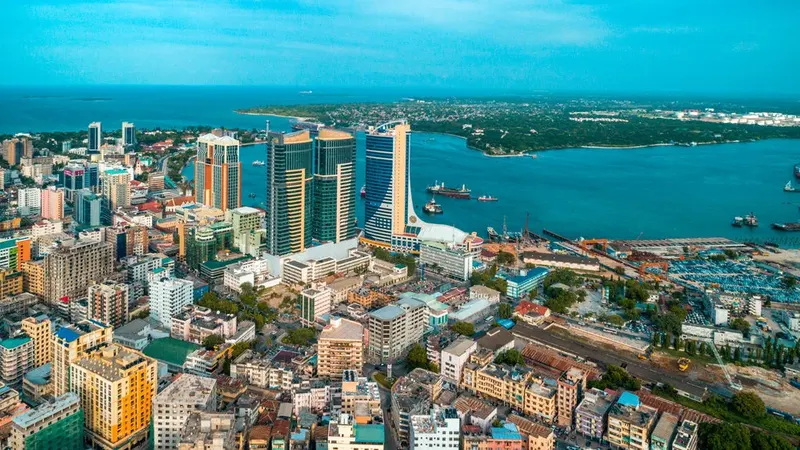
Tanzania's largest city sprawls along the Indian Ocean, a hot, humid port whose name means haven of peace. Dhows still work its harbour, fish markets clatter at dawn, and ferries slip out towards the spice island of Zanzibar. Long a Swahili trading coast where African, Arab and Indian threads mingle, Dar es Salaam is both the commercial heart of the country and the launch point for its southern safaris and beaches.
Dar es Salaam is a quieter alternative. It's ready to explore in the Nuvoha app: set your budget and see complete Dar es Salaam trips.
Why visit Dar es Salaam
Dar es Salaam is Tanzania's front door, a city most travellers pass through and more should pause in. Its markets are the draw: Kariakoo trades everything under one roof, while the Kivukoni fish market on the harbour sells the dhow-caught morning catch. The National Museum charts the country's past, from early-human fossils to the sultans and independence, and the open-air Village Museum reconstructs traditional homesteads. Along the Msasani Peninsula, Coco Beach and the Slipway look out over the ocean, and boats run to the marine reserve of Bongoyo Island for snorkelling. Above all, this is the mainland gateway to Zanzibar, the southern safari parks and Mafia Island.
Markets, museums and the sea
- Kariakoo Market: Dar es Salaam's largest and most frenetic market, sprawling over many streets with food, fabric and everything else.
- Kivukoni Fish Market: A harbourside market where dhows land the morning catch, sold amid noise, ice and haggling.
- National Museum and House of Culture: The country's main museum, spanning early-human fossils, the coastal sultanates and the road to independence.
- Village Museum (Makumbusho): An open-air museum of traditional dwellings from across Tanzania, with dancing and crafts.
- Coco Beach (Oyster Bay): A city beach on the Msasani Peninsula, busy at weekends with families, snacks and sea breezes.
- Bongoyo Island: A marine-reserve islet reached by boat from the peninsula, with clear water for snorkelling and swimming.
Around the city
- City Centre (Posta and Kisutu): The downtown grid of offices, colonial-era churches and the harbour, near the ferry terminal.
- Kivukoni: The waterfront tip by the fish market and State House, where the harbour meets the ocean.
- Msasani Peninsula (Oyster Bay): A leafy coastal district of diplomatic residences, restaurants, Coco Beach and the Slipway.
- Masaki: An upmarket peninsula neighbourhood of embassies, hotels and waterfront dining.
- Kariakoo: The dense, energetic market quarter inland from the centre, the city's commercial engine.
- Kigamboni: A fast-growing area across the harbour, reached by ferry or bridge, with quieter ocean beaches.
The Swahili coast table
Dar es Salaam eats Swahili coastal food, fragrant with the spices of nearby Zanzibar. Rice is central, whether as pilau layered with cardamom and cloves, biryani, or wali wa nazi cooked in coconut milk, and it comes with grilled fish, octopus or mishkaki meat skewers. Street corners sell chapati, mandazi doughnuts and grilled maize, and the ocean supplies prawns and the day's catch. Chilli, lime and coconut season almost everything, and strong spiced chai rounds off the meal.
- Pilau
- Biryani
- Wali wa nazi (coconut rice)
- Mishkaki (grilled skewers)
- Nyama choma
- Mandazi
What Dar es Salaam feels like
Dar es Salaam moves to a coastal, tropical tempo, unhurried in the heat yet always busy. The humidity is constant, the ocean breeze a relief, and the soundtrack is a blend of Swahili chatter, taarab and bongo flava music, and the call to prayer from the many mosques. This is a predominantly Muslim coastal culture layered with Indian and African life, so modest dress is appreciated away from the beaches, and Ramadan reshapes the daytime rhythm. Traffic is heavy and the pavements uneven, but the mood is easy and friendly, from the harbour bustle to the relaxed peninsula suburbs where the day ends watching dhows cross a golden sea.
Getting around
Dar es Salaam is spread out and its traffic is notorious, so plan generous time between places. The nippy three-wheeled bajaji and, for the brave, boda-boda motorbikes weave through the jams, while ride-hailing apps are widely used and remove the fare haggling. The DART bus rapid transit runs a fast, dedicated lane along the main Morogoro Road corridor. For Zanzibar, fast ferries leave from the terminal in the city centre; for the safari parks, light aircraft use the airport. Julius Nyerere International Airport (DAR) sits west of the centre, the country's main gateway. The drive into town can be slow in traffic, so allow extra time, and taxis or ride-hailing apps are the usual link.
Good to know
- This is a mostly Muslim coastal city; dress modestly away from the beach, covering shoulders and knees, especially in markets and older quarters.
- Ask before photographing people, markets or fishing boats, and respect those who would rather not.
- Learn a few words of Swahili: a jambo or asante is always warmly received.
- During Ramadan, eat and drink discreetly by day, as many places close until sunset.
- The cooler, drier months from June to October are the most comfortable, avoiding the long rains of March to May.
- Buy Zanzibar ferry tickets from official counters at the terminal and keep your passport handy for the crossing.
- Use ride-hailing apps to avoid negotiating taxi fares and to keep journeys simple.
- Set out early for the fish market at Kivukoni, when the dhows come in and the light is soft.
- Carry small notes and bottled water, and dress light for the humidity.
- Bongoyo Island makes an easy half-day escape by boat from the Slipway on the peninsula.
Best for
- City breaks
- Quieter travel
Key facts
| Country | Tanzania |
|---|---|
| Region | Africa |
| Airports | DAR |
| Trip length fit | Short-trip friendly |
Dar es Salaam essentials
| Currency | Tanzanian Shilling (TZS); US dollars widely used for safaris and lodges |
|---|---|
| Language | Swahili and English are official; English is standard across the tourism industry |
| Time zone | East Africa Time, UTC+3, no daylight saving |
| Emergency number | 112 |
| Driving side | Left |
| Tap water | Not safe to drink; use bottled or filtered water, including in Zanzibar |
Climate & seasons
| Month | Typical range | Season |
|---|---|---|
| January | 25°C to 32°C | Hot coastal summer |
| April | 24°C to 31°C | Long rains |
| July | 21°C to 29°C | Cooler dry season |
| October | 23°C to 30°C | Warm short rains |
Typical stay
- Weekend-friendly
- Short break (2–5 days)
Dar es Salaam works as a weekend break just as well as a longer stay.
Getting there
Dar es Salaam is served via DAR.
- DAR
Is it your kind of trip?
Ideal if…
- you like walkable city energy
- you like places before everyone else finds them
Maybe not if…
- a beach-first holiday is the priority
Pairs well with
Compare with
| Dar es Salaam | Zanzibar | Johannesburg | |
|---|---|---|---|
| Country | Tanzania | Tanzania | South Africa |
| Region | Africa | Africa | Africa |
| Styles | City | Beach, Nature | City |
| Trip length fit | Weekend-friendly | Weekend-friendly | Weekend-friendly |
| Airports | 1 | 1 | 1 |
More in Africa
Near Dar es Salaam
Travel style
- Short-trip friendly
- City
Frequently asked questions
Which airports serve Dar es Salaam?
Dar es Salaam is served via DAR.
Is Dar es Salaam good for a weekend trip?
Yes, Dar es Salaam works for a weekend as well as a longer stay.
What kind of trip is Dar es Salaam best for?
Dar es Salaam is best for city trips.
Which destinations pair well with Dar es Salaam?
Within multi-city range: Zanzibar (73 km), Mombasa (319 km), Nairobi (668 km).
Is Dar es Salaam the gateway to Zanzibar?
Yes. Fast ferries link the city centre to Zanzibar's Stone Town in around two hours, and there are short flights too. Many travellers spend a night in Dar before or after the island, or use it to connect to the southern safari parks.
Is Dar es Salaam the capital of Tanzania?
No, though it is easy to assume. Dodoma is the official political capital, but Dar es Salaam is by far the largest city, the commercial and cultural heart, and the country's main air and sea gateway.
When is the best time to visit?
The long dry season from June to October is the most comfortable, with lower humidity and little rain. The long rains fall from March to May, and shorter rains around November, though the coast stays warm all year.
How do you get around Dar es Salaam?
Ride-hailing apps are the easiest option for visitors, with bajaji auto-rickshaws for short hops and the DART bus along the main corridor. Traffic is heavy, so allow plenty of time, especially for airport and ferry connections.