
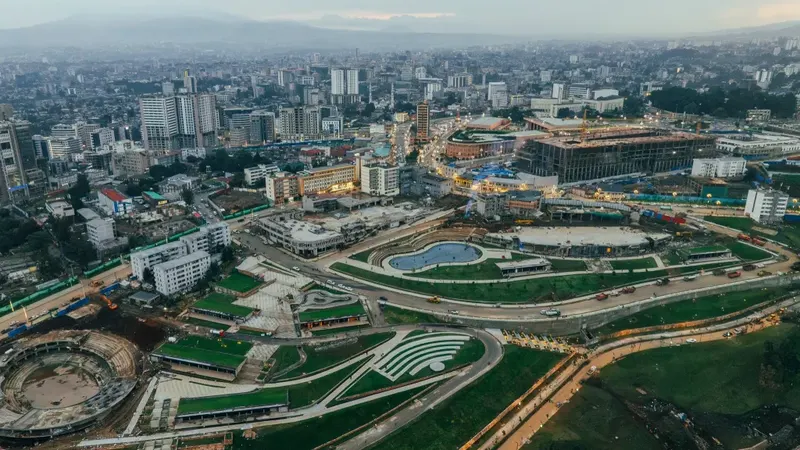
Set high in the Ethiopian highlands at well over two thousand metres, Addis Ababa is Africa's diplomatic capital and the seat of the African Union. Its name means new flower, and the city is a heady mix of grand avenues, sprawling markets and coffee-scented cafes, ringed by the Entoto hills. Home to the fossil called Lucy and the birthplace of coffee culture, Ethiopia's cool, energetic capital rewards the curious with deep history and its own calendar and script.
Addis Ababa is a quieter alternative. It's ready to explore in the Nuvoha app: set your budget and see complete Addis Ababa trips.
Why visit Addis Ababa
Addis Ababa is the gateway to Ethiopia and a destination in its own right. At the National Museum you can meet Lucy, the 3.2-million-year-old ancestor whose bones rewrote human prehistory, while the Ethnological Museum, in Haile Selassie's former palace, unfolds the country's cultures. Holy Trinity Cathedral holds the emperor's tomb, and the sprawling Merkato ranks among the largest open-air markets in Africa. As the home of the African Union, the city carries a diplomatic buzz, and above it all Mount Entoto offers eucalyptus forest, old churches and long views. Above all is the coffee: this is the birthplace of the bean, and the ceremony is a daily ritual not to miss.
History, faith and markets
- National Museum of Ethiopia: Home to Lucy, the 3.2-million-year-old hominin fossil, alongside imperial regalia and Ethiopian art.
- Holy Trinity Cathedral: The grand Orthodox cathedral holding the tomb of Emperor Haile Selassie, with fine stained glass.
- Merkato: One of the largest open-air markets in Africa, a vast, teeming grid of stalls and trade west of the centre.
- Ethnological Museum: Set in Haile Selassie's former palace at the university, a rich showcase of Ethiopia's peoples and beliefs.
- Mount Entoto: The forested ridge above the city, with historic churches, Menelik's first palace and sweeping views.
- Meskel Square: The great civic gathering place, focus of the Meskel festival and the city's parades and celebrations.
Around the city
- Bole: The modern gateway district around the airport, lined with hotels, malls, cafes and Edna Mall.
- Piazza: The historic, Italian-influenced old quarter, with St George's Cathedral, jewellers and vintage cafes.
- Kazanchis: A central business area of hotels and offices, close to the UN and African Union complexes.
- Arat Kilo and Sidist Kilo: The university and museum quarter, home to the palace, the National Museum and monuments.
- Merkato: The sprawling market district west of the centre, the commercial engine of the city.
- Kirkos (Meskel Square): The central district around Meskel Square and the light-rail interchange.
The Ethiopian table
Ethiopian food is like nowhere else, built around injera, a large, spongy sourdough flatbread made from teff, which doubles as plate and cutlery. Onto it go rich stews called wat, from the fiery, berbere-spiced doro wat of chicken and egg to lentil and vegetable versions eaten on Orthodox fasting days. Kitfo offers minced raw beef with spiced butter, tibs brings sizzling sauteed meat, and shiro, a chickpea puree, is everyday comfort. A shared platter is scooped up by hand, and no meal is complete without the coffee ceremony.
- Injera with doro wat
- Kitfo
- Tibs
- Shiro
- Beyaynetu (fasting platter)
- Ethiopian coffee ceremony
What Addis Ababa feels like
Addis Ababa surprises first-time visitors with its cool, thin highland air: the altitude keeps temperatures mild year-round and can leave newcomers a little breathless. It is a city of contrasts, where gleaming new towers and light-rail lines rise beside corrugated-roof lanes and grazing goats, and where the smell of roasting coffee and frankincense drifts from doorways. Ethiopian Orthodox faith runs deep, marked by white-shawled worshippers, fasting days and vivid festivals like Meskel and Timkat. The pace is busy but friendly, the traffic thick, and the coffee ceremony, brewing, pouring and sharing three rounds, sets the social rhythm. Evenings bring live azmari music and the sizzle of shared platters.
Getting around
Addis Ababa spreads widely but is reasonably easy to navigate. Blue-and-white minibus taxis run set routes cheaply, ride-hailing apps are increasingly common and simple for visitors, and the Addis Ababa Light Rail, the first of its kind in sub-Saharan Africa, runs two lines through the city. Regular taxis can be hired for the day. Traffic is heavy and the altitude tiring at first, so pace yourself and allow extra time between places, especially for the airport. Addis Ababa Bole International Airport (ADD) sits within the city in the Bole district, a major hub for connections across Africa and beyond. The centre is a short drive away, served by taxis, ride-hailing apps and the light rail.
Good to know
- Greet people warmly, often with a handshake and time for pleasantries; Ethiopians value courtesy and patience.
- Dress modestly, and at churches cover shoulders and legs, remove shoes at the threshold and expect men and women to sit separately.
- Use the right hand for eating from a shared platter and for giving and receiving.
- Ask before photographing people, priests and religious ceremonies, and respect fasting days on the Orthodox calendar.
- Take it easy for a day on arrival: the altitude of well over two thousand metres can cause breathlessness.
- Pack layers; highland days are mild but evenings turn cool, and the main rains fall from June to September.
- Do not miss a coffee ceremony, from roasting to the third and final pour, a cornerstone of local hospitality.
- Note that the Ethiopian calendar and clock differ from the Western norm, so confirm times carefully.
- Use ride-hailing apps or agree taxi fares in advance, and carry small notes for markets and cafes.
- Explore Merkato with a guide or local friend, as it is vast, crowded and easy to get lost in.
Best for
- City breaks
- Quieter travel
Key facts
| Country | Ethiopia |
|---|---|
| Region | Africa |
| Airports | ADD |
| Trip length fit | Short-trip friendly |
Addis Ababa essentials
| Currency | Ethiopian Birr (ETB) |
|---|---|
| Language | Amharic, written in its own Ge'ez script, is the federal working language; Oromo, Tigrinya, Somali and many others are widely spoken, and English is used in business and tourism |
| Time zone | East Africa Time (UTC+3), no daylight saving |
| Emergency number | 911 (police) and 907 (ambulance) in Addis Ababa; numbers can vary by city |
| Driving side | Right |
| Tap water | Not safe from the tap; bottled water is widely available |
Climate & seasons
| Month | Typical range | Season |
|---|---|---|
| January | 8°C to 23°C | Dry mild season |
| April | 11°C to 24°C | Mild spring |
| July | 11°C to 21°C | Cool rainy season |
| October | 8°C to 22°C | Mild post-rains |
Typical stay
- Weekend-friendly
- Short break (2–5 days)
Addis Ababa works as a weekend break just as well as a longer stay.
Getting there
Addis Ababa is served via ADD.
- ADD
Is it your kind of trip?
Ideal if…
- you like walkable city energy
- you like places before everyone else finds them
Maybe not if…
- a beach-first holiday is the priority
Pairs well with
Compare with
More in Africa
Near Addis Ababa
Travel style
- Short-trip friendly
- City
Frequently asked questions
Which airports serve Addis Ababa?
Addis Ababa is served via ADD.
Is Addis Ababa good for a weekend trip?
Yes, Addis Ababa works for a weekend as well as a longer stay.
What kind of trip is Addis Ababa best for?
Addis Ababa is best for city trips.
Which destinations pair well with Addis Ababa?
Within multi-city range: Nairobi (1,164 km), Jeddah (1,412 km), Mombasa (1,450 km).
Why is Addis Ababa called the diplomatic capital of Africa?
It hosts the headquarters of the African Union and a major United Nations regional office for Africa, along with many embassies and international bodies. That concentration of diplomacy, and its central role in African affairs, gives the city its nickname.
Does the altitude affect visitors?
It can. Addis Ababa sits at well over two thousand metres, so some newcomers feel breathless or tired for a day or two. Take it slowly on arrival, drink plenty of water, and give yourself time to adjust before any strenuous activity.
Is Addis Ababa a good introduction to Ethiopia?
Yes. It is the main international gateway and holds the National Museum, Holy Trinity Cathedral and Merkato, plus the country's widest range of restaurants and coffee culture, making it a natural first stop before the historic north or the south.
What food should I try in Addis Ababa?
Injera, the sourdough teff flatbread, topped with stews called wat, is the essential Ethiopian meal. Try doro wat, kitfo and a vegetarian fasting platter, and take part in a traditional coffee ceremony, which is central to daily life.