
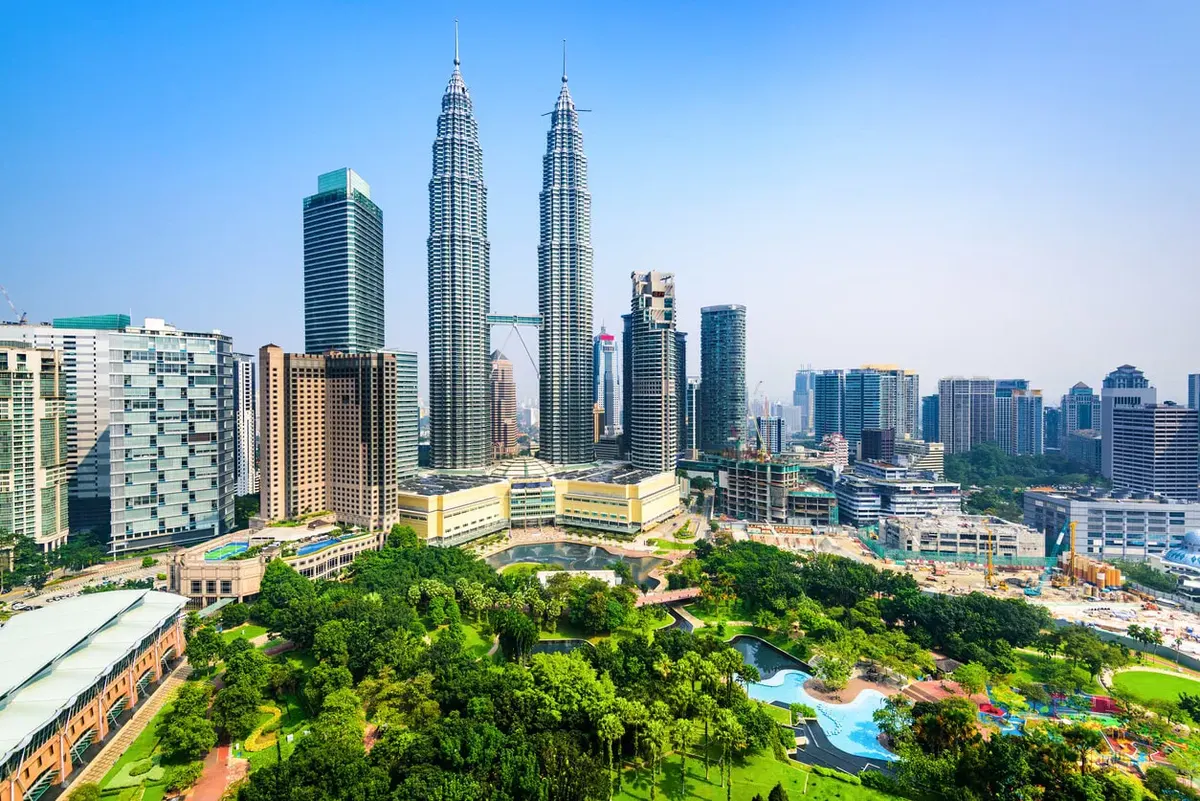
Malaysia comes in two halves separated by the South China Sea: the peninsula, where Kuala Lumpur's twin towers rise above mosques, Chinese shophouses and Indian temple gopurams, and Malaysian Borneo, where some of the oldest rainforest on Earth climbs towards the granite summit of Mount Kinabalu. Between them sits extraordinary eating: Penang's hawker stalls are a pilgrimage in their own right, layering Malay, Chinese and Indian traditions into dishes like char kway teow and asam laksa. Add the tea terraces of the Cameron Highlands, the beaches of Langkawi and the Perhentian Islands, and orangutans in the forests of Sabah and Sarawak, and one visit rarely feels like enough.
Kuala Lumpur is the Malaysia destination on Nuvoha today. Set your budget and Nuvoha builds the complete trip: flights and hotels together.
Why visit Malaysia
- Cities you can explore on foot, from headline sights to quiet neighbourhoods
- Quieter alternatives beyond the obvious stops
Best known for
- Penang street food
- The Petronas Towers
- Bornean rainforest and orangutans
- Langkawi's beaches
- George Town's heritage streets
Peninsula and Borneo
- Kuala Lumpur and Selangor: The capital region, where the Petronas Towers overlook Merdeka Square and the Batu Caves' rainbow staircase. KL is the country's transport hub.
- Penang: An island state whose capital, George Town, is a UNESCO World Heritage Site of shophouses, clan houses and street art, and Malaysia's most celebrated food city.
- Langkawi: An archipelago of 99 islands near the Thai border, known for its beaches, mangrove tours and the SkyBridge above the rainforest canopy. It is a duty-free zone.
- Cameron Highlands: A hill region at around 1,500 metres with tea estates, strawberry farms and mossy-forest walking trails, noticeably cooler than the lowlands.
- Sabah: Northern Borneo, home to Mount Kinabalu, the dive sites of Sipadan and the orangutan rehabilitation centre at Sepilok.
- Sarawak: Borneo's largest state, with the cave systems of Gunung Mulu National Park, longhouse culture and the laid-back riverside capital, Kuching.
Where to go
Malaysia essentials
| Currency | Malaysian Ringgit (MYR) |
|---|---|
| Language | Malay (Bahasa Malaysia); English is widely spoken, especially in cities and on the tourist trail |
| Time zone | Malaysia Time, UTC+8, no daylight saving |
| Emergency number | 999 (112 from mobile phones) |
| Driving side | Left |
| Tap water | Treated, but locals generally boil or filter it; visitors usually stick to bottled or filtered water |
Seasons at a glance in Kuala Lumpur
| Month | Typical range | Season |
|---|---|---|
| January | 23°C to 32°C | Warm humid season |
| April | 24°C to 33°C | Hot wet season |
| July | 23°C to 32°C | Warm humid season |
| October | 23°C to 32°C | Rainier season |
Seasons vary across Malaysia. Each destination page has its own climate table.
More in Asia
More Asia country guides
Frequently asked questions
Which Malaysia destinations can I book with Nuvoha?
Kuala Lumpur, with complete flight and hotel trips built around your budget.
What kind of trips suit Malaysia?
Malaysia works for city breaks.
How do you get between Peninsular Malaysia and Borneo?
By air only: there is no ferry or road link. Flights from Kuala Lumpur reach Kuching in about 1 hour 45 minutes and Kota Kinabalu in around 2 hours 30 minutes, with frequent daily departures.
What plug type does Malaysia use?
The British three-pin Type G, the same as the UK and Singapore, at 240 volts. Travellers from continental Europe and North America need an adapter.
Do I need cash in Malaysia?
Cards and e-wallets cover malls, hotels and chain restaurants, but hawker stalls, night markets and taxis in smaller towns often run on cash. Small notes are the most useful.