
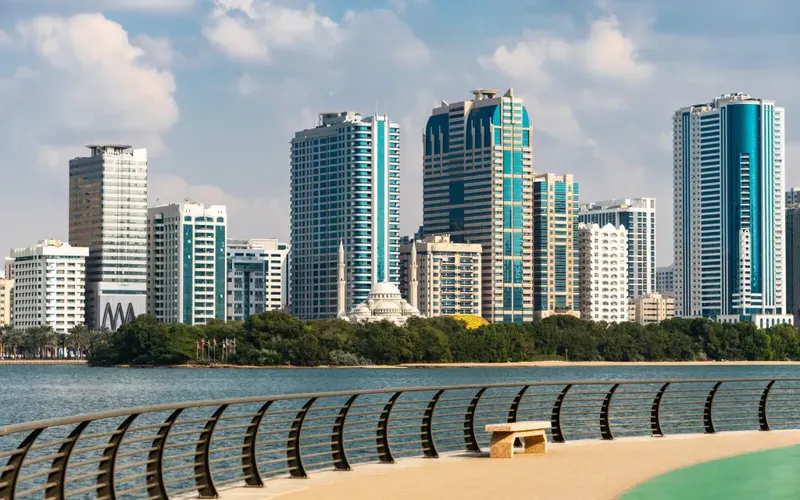
Next door to Dubai but a world apart in mood, Sharjah is the United Arab Emirates at its most cultural and unhurried. This is the emirate of restored coral-stone souqs, a golden-domed museum of Islamic civilisation and a lagoon lit by an evening fountain. Named a capital of Arab and Islamic culture, it keeps its heritage close, stays alcohol-free and family-minded, and rewards visitors who slow down.
Sharjah is a quieter alternative. It's ready to explore in the Nuvoha app: set your budget and see complete Sharjah trips.
Why visit Sharjah
Sharjah makes the case for the Emirates beyond the skyline. The Heart of Sharjah heritage quarter restores wind-tower houses, the Al Hisn fort and Souq Al Arsah, one of the oldest markets in the country, while the blue-tiled Central Souq trades in carpets, gold and antiques. The Sharjah Museum of Islamic Civilisation sits beneath a golden dome on the Corniche, and the Sharjah Art Foundation runs galleries and a respected art biennial. Families gather at Al Majaz Waterfront and Al Qasba canal, and the emirate's east-coast enclaves at Khor Fakkan and Kalba add beaches on the Gulf of Oman. It is close enough to Dubai for an easy day, distinct enough to stand alone.
Souqs, mosques and museums
- Blue Souq (Central Souq): Twin blue-tiled buildings on Khalid Lagoon, packed with jewellers, carpet sellers and antique dealers.
- Al Noor Mosque: The Ottoman-inspired mosque on the Buhaira Corniche, one of the few in the emirate that opens for guided visits by non-Muslims.
- Sharjah Museum of Islamic Civilisation: A former market beneath a golden dome, tracing Islamic science, art and faith across galleries by the Corniche.
- Heart of Sharjah: A restored old-town quarter of coral-stone houses, Souq Al Arsah and the Al Hisn fort, once the ruler's residence.
- Al Qasba: A canal-side leisure strip with the Eye of the Emirates observation wheel, the Maraya Art Centre and waterside cafes.
- Al Majaz Waterfront: A lakeside promenade of gardens and restaurants with a musical fountain that dances after dark on Khalid Lagoon.
Around the emirate
- Al Shuwaiheen (Heart of Sharjah): The historic core near the Creek, holding the restored heritage houses, fort and traditional souqs.
- Al Majaz: A lakeside leisure district on Khalid Lagoon, with the waterfront promenade, parks and the musical fountain.
- Al Qasba: A compact canal quarter of family attractions, the observation wheel and arts venues between the lagoons.
- Al Khan: A coastal area by the lagoon holding the aquarium, the maritime museum and a working fishing harbour.
- Al Nahda: A dense residential district on the Dubai border, busy with towers, shops and cross-emirate commuters.
- Muwaileh (University City): An eastern expansion around the University City campuses, with newer malls and housing.
The Sharjah table
Sharjah's tables lean traditional, and being a dry emirate the focus is squarely on the food. Emirati home cooking appears more readily here than in flashier neighbours: slow-spiced rice, thin saj breads and date sweets. Large Iranian, Levantine, Egyptian and South Asian communities fill the souqs and side streets with kebabs, grilled fish, biryani and fresh juice, and family restaurants along the corniche stay busy late.
- Machboos
- Harees
- Khameer bread
- Luqaimat
- Balaleet
- Grilled Gulf fish
What Sharjah feels like
The rhythm here is calmer and more conservative than in neighbouring Dubai. Sharjah is a dry emirate, so evenings revolve around family outings rather than bars: strolls along the Buhaira Corniche, the musical fountain at Al Majaz, ice creams by the Eye of the Emirates wheel at Al Qasba. The old town smells of oud and grilled meat, the call to prayer carries over the lagoon, and modest dress is the norm. Weekends fill parks and waterfronts with Emirati and expatriate families, and the pace only quickens at the University City and the malls out east. It feels rooted, measured and proud of its heritage.
Getting about
Sharjah runs on cars, and there is no metro. Taxis are metered and easily booked by app, and the practical way between districts. Public buses serve the main areas, but distances are large and the summer heat discourages walking except along the corniches. The emirate borders Dubai directly, and the road between the two is notorious for rush-hour congestion, so time any crossing carefully. Sharjah International Airport (SHJ) lies east of the centre and is the home base of a large low-cost carrier. Dubai International is also close by road, giving the emirate two gateways within easy reach.
Good to know
- Dress modestly in public: Sharjah applies its decency code more strictly than Dubai, so keep shoulders and knees covered.
- The emirate is alcohol-free; do not attempt to bring or buy any, and expect no bars or licensed venues.
- During Ramadan, avoid eating, drinking or smoking in public during daylight hours.
- Ask before photographing people, particularly women and families, and avoid it around mosques at prayer times.
- November to March brings the most comfortable weather for souqs, corniches and the east coast.
- Use a ride-hailing app to sidestep fare haggling and the heavy traffic on the Dubai road.
- Al Noor Mosque runs scheduled guided tours; check the timings and dress fully before you go.
- Set aside an evening for Al Majaz Waterfront, when the fountain show and cooler air draw the crowds.
- The east-coast enclaves of Khor Fakkan and Kalba make a scenic day trip over the Hajar mountains.
- Sharjah keeps its own museums pass, handy if you plan to visit several in the heritage area.
Best for
- City breaks
- Quieter travel
Key facts
| Country | United Arab Emirates |
|---|---|
| Region | Middle East & North Africa |
| Airports | SHJ |
| Trip length fit | Short-trip friendly |
Sharjah essentials
| Currency | UAE Dirham (AED) |
|---|---|
| Language | Arabic is the official language; English is spoken almost everywhere |
| Time zone | Gulf Standard Time (UTC+4), no daylight saving |
| Emergency number | 999 (police), 998 (ambulance), 997 (fire) |
| Driving side | Right |
| Tap water | A safe desalinated supply, though most residents drink bottled or filtered water |
Climate & seasons
| Month | Typical range | Season |
|---|---|---|
| January | 15°C to 25°C | Mild winter |
| April | 22°C to 35°C | Hot spring |
| July | 31°C to 43°C | Very hot summer |
| October | 25°C to 36°C | Hot autumn |
Typical stay
- Weekend-friendly
- Short break (2–5 days)
Sharjah works as a weekend break just as well as a longer stay.
Getting there
Sharjah is served via SHJ.
- SHJ
Is it your kind of trip?
Ideal if…
- you like walkable city energy
- you like places before everyone else finds them
Maybe not if…
- a beach-first holiday is the priority
Pairs well with
Compare with
More in Middle East & North Africa
Near Sharjah
Travel style
- Short-trip friendly
- City
Frequently asked questions
Which airports serve Sharjah?
Sharjah is served via SHJ.
Is Sharjah good for a weekend trip?
Yes, Sharjah works for a weekend as well as a longer stay.
What kind of trip is Sharjah best for?
Sharjah is best for city trips.
Which destinations pair well with Sharjah?
Within multi-city range: Dubai (17 km), Abu Dhabi (132 km), Muscat (340 km).
How is Sharjah different from Dubai?
Sharjah sits right beside Dubai but keeps a quieter, more traditional and family-focused character. It leads the Emirates on museums and heritage, applies stricter dress rules, and is entirely alcohol-free, so it draws visitors more for culture than nightlife.
Can you visit Sharjah as a day trip from Dubai?
Yes. The two cities share a border and the drive is short outside peak hours, though rush-hour traffic on the connecting road can be heavy. Many visitors base themselves in Dubai and come across for the museums, souqs and corniche.
Is alcohol available in Sharjah?
No. Sharjah is a dry emirate, with no bars, clubs or licensed restaurants, and bringing alcohol in is not permitted. Plan for alcohol-free dining, which suits the emirate's family-oriented evenings.
When is the best time to visit Sharjah?
The cooler months from November to March are ideal for walking the souqs and corniches and exploring the east coast. Summers are intensely hot and humid, pushing most activity indoors or into the late evening.