
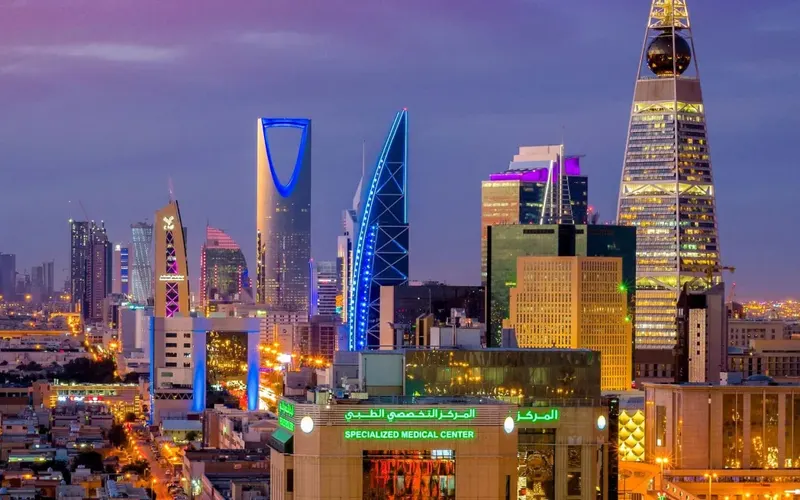
Riyadh rises from a high desert plateau at the centre of the Arabian Peninsula, a capital where mirror-glass towers stand within reach of the mud-brick walls that gave the Al Saud their first stronghold. The skybridge of the Kingdom Centre frames the grid of the city against an immense sky, while the restored quarter of Diriyah keeps the older story in earthen, palm-shaded lanes. The pace is modern, the setting unmistakably Najdi.
Riyadh is a quieter alternative. It's ready to explore in the Nuvoha app: set your budget and see complete Riyadh trips.
Why visit Riyadh
Riyadh rewards travellers curious about the Arabia beyond the coast. Diriyah's UNESCO-listed At-Turaif district traces the birthplace of the first Saudi state through Najdi architecture and museums, while Masmak Fortress anchors the old city where modern Saudi Arabia's story began. The National Museum lays out the peninsula's deep past, and the observation decks of the Kingdom Centre and Al Faisaliah give the sprawl a legible shape. Beyond the ring roads, the Tuwaiq escarpment drops away at the Edge of the World, one of the region's great desert viewpoints, and Wadi Hanifah threads green through the plateau. It is a city rewriting what visitors expect.
Experiences to plan around
- Diriyah and At-Turaif: The UNESCO-listed birthplace of the first Saudi state, its Najdi mud-brick palaces restored beside the open-air dining terraces of Bujairi.
- Kingdom Centre Sky Bridge: A glass span near the top of the city's most recognisable tower, opening onto long views across the plateau.
- Masmak Fortress: A clay-and-mud-brick fort in the old city, tied to the 1902 recapture of Riyadh that set the founding of modern Saudi Arabia in motion.
- National Museum: Part of the King Abdulaziz Historical Centre, tracing Arabia from prehistory to the founding of the state across richly staged galleries.
- Edge of the World: A sheer cliff of the Tuwaiq escarpment northwest of the city, where the desert plain drops away to a vast, empty horizon.
- Wadi Hanifah: A rehabilitated valley of parks, pools and palm groves running the length of the city, a green counterpoint to the towers.
The city's quarters
- Diriyah: The historic northwest quarter around At-Turaif, where restored Najdi architecture meets heritage museums and open-air dining.
- Olaya: The commercial spine, home to the Kingdom Centre and Al Faisaliah towers, hotels and the city's densest cluster of shopping.
- Al Murabba: An older district north of downtown holding the National Museum, Murabba Palace and the King Abdulaziz Historical Centre.
- King Abdullah Financial District: A purpose-built cluster of striking modern architecture in the north, linked by elevated walkways and served by the new metro.
- Diplomatic Quarter: A leafy, low-rise enclave of embassies, walking trails and gardens, unusually green and calm for the city.
- Deera: The old central district around Masmak Fortress and Souq Al Zal, where traditional markets sell dates, textiles and Bedouin silver.
The Najdi table
Najdi cooking is built for desert life: slow-cooked meat, wheat and rice seasoned with dried lime, cardamom and cloves. Meals often begin with dates and gahwa (lightly spiced Arabic coffee) and centre on a shared platter. Riyadh's growth has drawn cooks from every region of the kingdom and far beyond, so Hejazi, Levantine, Yemeni and South Asian kitchens sit alongside the local table, and a lively cafe culture has taken root across the newer districts.
- Kabsa
- Jareesh
- Margoug
- Mandi
- Gahwa with dates
What Riyadh feels like
Riyadh runs to a desert rhythm. Days can be fierce with heat and light, so life shifts to the evenings, when families gather in the parks, the malls fill and the restaurants of Bujairi Terrace hum beneath Diriyah's floodlit walls. The mood is at once conservative and fast-changing: new galleries, cafes and entertainment districts open against a backdrop of long-standing custom. Distances are large and the skyline is spread thin, so the city reveals itself in pockets rather than a single centre. In the cooler months the air turns crisp after dark, and the surrounding desert feels close at hand.
Getting from A to B
Riyadh has long run on cars, and ride-hailing apps are the simplest way to cross a city built for driving. A new metro network has opened, its lines connecting the financial district, Olaya and the wider centre and giving the city a car-free option for the first time. Distances are considerable and summer heat discourages walking, though the Diplomatic Quarter, Wadi Hanifah and the Diriyah lanes reward it in the cooler months. King Khalid International Airport lies north of the city, around a thirty to forty-five minute drive from the central districts depending on traffic. Ride-hailing apps and taxis are the usual link into town.
Practical pointers
- Dress modestly in public; loose clothing covering shoulders and knees is expected of everyone, and many women wear an abaya, though it is no longer required of visitors.
- Alcohol is prohibited throughout Saudi Arabia, and there are no bars or licensed venues.
- Some shops and restaurants pause briefly at the five daily prayer times, so plan around the call to prayer.
- During Ramadan, avoid eating, drinking or smoking in public during daylight hours.
- Ask before photographing people, and avoid photographing government or military sites.
- November to March brings the most comfortable weather, with warm days and cool evenings; high summer is intensely hot.
- The Edge of the World lies about a two-hour drive northwest, with a rough final stretch that needs a four-wheel drive or a guided tour.
- Reserve Diriyah and museum visits ahead where possible, as timed entry is common.
- A Saudi tourist eVisa is available to many nationalities online; check your eligibility before travelling.
- The Saudi weekend falls on Friday and Saturday, with many businesses opening later on Friday after midday prayers.
- Bottled water is the local habit, and it is worth carrying some in the dry desert air.
Best for
- City breaks
- Quieter travel
Key facts
| Country | Saudi Arabia |
|---|---|
| Region | Middle East & North Africa |
| Airports | RUH |
| Trip length fit | Short-trip friendly |
Riyadh essentials
| Currency | Saudi Riyal (SAR) |
|---|---|
| Language | Arabic; English is widely spoken in cities, hotels and restaurants |
| Time zone | Arabia Standard Time, UTC+3, no daylight saving |
| Emergency number | 911 |
| Driving side | Right |
| Tap water | Desalinated and generally safe in cities, though most residents and visitors drink bottled water |
Climate & seasons
| Month | Typical range | Season |
|---|---|---|
| January | 9°C to 21°C | Mild winter |
| April | 20°C to 34°C | Hot spring |
| July | 29°C to 43°C | Very hot summer |
| October | 21°C to 35°C | Hot autumn |
Typical stay
- Weekend-friendly
- Short break (2–5 days)
Riyadh works as a weekend break just as well as a longer stay.
Getting there
Riyadh is served via RUH.
- RUH
Is it your kind of trip?
Ideal if…
- you like walkable city energy
- you like places before everyone else finds them
Maybe not if…
- a beach-first holiday is the priority
Pairs well with
Compare with
More in Middle East & North Africa
Near Riyadh
Travel style
- Short-trip friendly
- City
Frequently asked questions
Which airports serve Riyadh?
Riyadh is served via RUH.
Is Riyadh good for a weekend trip?
Yes, Riyadh works for a weekend as well as a longer stay.
What kind of trip is Riyadh best for?
Riyadh is best for city trips.
Which destinations pair well with Riyadh?
Within multi-city range: Dammam (353 km), Kuwait City (491 km), Doha (491 km).
Do I need a visa to visit Riyadh?
Many nationalities can apply for Saudi Arabia's tourist eVisa online, or obtain a visa on arrival, while others apply through an embassy. Check your eligibility and the current requirements before you travel.
When is the best time to visit Riyadh?
The cooler months from November to March are the most comfortable, with warm days and cool nights. Summers are extremely hot, so outdoor sights such as the Edge of the World are far easier out of season.
Can women travel to Riyadh independently?
Yes. Women can travel, stay and move around independently, and the abaya is no longer required of visitors, though modest dress is expected in public. Ride-hailing apps make getting around straightforward.
Is Riyadh a good base for the Edge of the World?
Yes. The Edge of the World is a day trip from the city, roughly two hours each way, with a rough final approach best tackled by four-wheel drive or on an organised tour.