
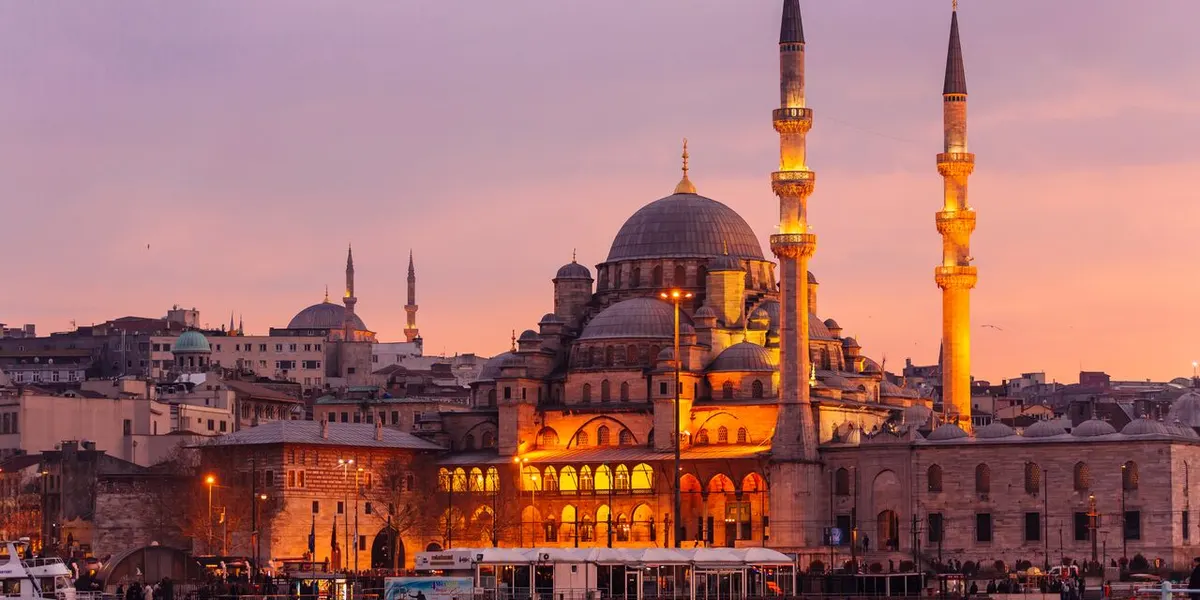
Gulls escort every ferry across the Bosphorus, riding the wind between Europe and Asia while tea-sellers work the decks below. That twenty-minute crossing stitches together a city that has served as capital to Romans, Byzantines and Ottomans, and its skyline of domes and minarets carries all three.
Istanbul is a quieter alternative. It's ready to explore in the Nuvoha app: set your budget and see complete Istanbul trips.
Why visit Istanbul
Fifteen centuries of imperial capital sit within walking distance of each other: Hagia Sophia's vast dome, the Blue Mosque's cascade of smaller ones, Topkapi's courtyards, a Roman cistern held up by recycled columns. Then there is the living city: the Grand Bazaar's thousands of shops, meyhane dinners in Beyoglu, fish sandwiches by the Galata Bridge, and the ferry-commuting energy of Kadikoy on the Asian shore. Few places offer this much history and this much appetite in the same afternoon.
Monuments on both shores
- Hagia Sophia: Built as a cathedral in 537 under Justinian, its dome engineering went unmatched for nearly a thousand years; it now serves as a mosque.
- Sultanahmet (Blue) Mosque: Named for its tens of thousands of blue Iznik tiles, it faces Hagia Sophia across a shared park.
- Topkapi Palace: Home of the Ottoman sultans for almost four hundred years, its courtyards, Harem and treasury overlook the meeting of the waters.
- Grand Bazaar: One of the world's oldest covered markets: some four thousand shops along dozens of vaulted streets, trading since the fifteenth century.
- Basilica Cistern: A sixth-century underground reservoir resting on a forest of 336 columns, two of them carved with Medusa heads.
- A Bosphorus ferry: Public ferries cross the strait between Europe and Asia past Ottoman waterfront mansions: the classic run is Eminonu to Kadikoy.
Neighbourhoods on two continents
- Sultanahmet: The old imperial core on the peninsula, holding Hagia Sophia, the Blue Mosque, Topkapi and the surviving obelisks of the Hippodrome.
- Beyoglu and Galata: Across the Golden Horn, the nineteenth-century quarter climbs from the Galata Tower up pedestrian Istiklal Avenue and its heritage tram.
- Kadikoy: The Asian side's food-market heart, with the Moda shoreline loop and a fierce neighbourhood identity.
- Balat and Fener: Steep lanes of painted Ottoman houses along the Golden Horn, historically the city's Greek and Jewish quarters.
- Besiktas and Ortakoy: Bosphorus-front districts below the first bridge, known for the waterside Ortakoy Mosque and stuffed-potato kumpir stalls.
From meze to kunefe
Eat across the whole day: a simit from a red cart, a proper Turkish breakfast of cheeses, olives and honey, lentil soup at lunch, then a meyhane evening of shared meze and grilled fish. Kebap culture runs from Adana skewers to Iskender drenched in butter and tomato. Sweet endings matter (baklava, kunefe with molten cheese) with tea in tulip glasses arriving endlessly, whether ordered or not.
- Meze spreads at a meyhane
- Balik ekmek (grilled fish sandwich)
- Iskender kebap
- Kunefe (hot cheese pastry in syrup)
- Simit with cay
What Istanbul feels like
Home to some sixteen million people, the city moves at full tilt: ferry horns, simit carts, the call to prayer overlapping from a dozen minarets. Sultanahmet is given over to sightseeing by day; Beyoglu and Karakoy carry the evenings; Kadikoy and Moda feel younger and more local. The hills are steep, the tea is constant, and the hospitality is genuine: expect conversation, and accept the second glass.
Crossing the city and the strait
Pick up an Istanbulkart on arrival: the rechargeable card covers trams, metro, funiculars, buses, the Marmaray rail tunnel under the Bosphorus and the public ferries. The T1 tram links Sultanahmet's sights with the Galata Bridge and Kabatas, while the antique Tunel funicular, running since 1875, spares you the climb to Beyoglu. The ferries are the great everyday pleasure here: take them whenever a route allows. Istanbul Airport, on the European side, connects to the metro network via the M11 line; Sabiha Gokcen on the Asian side links in on the M4. Both are far from the historic centre, so allow generous transfer time.
Advice worth packing
- In mosques, cover shoulders and knees, carry a headscarf if you are a woman, and remove shoes at the door; avoid visiting during the five daily prayers.
- Tipping is customary in restaurants: a modest amount left in cash is the norm, and hamam attendants and porters appreciate a small token.
- Accepting an offered tea is a small courtesy that opens doors, particularly while shopping.
- Haggle in the bazaars but not in ordinary shops: keep it good-humoured, and bargain seriously only if you intend to buy.
- Carry the Istanbulkart even for a single day: it works on the ferries, which double as the city's best sightseeing.
- The big Sultanahmet sights queue worst mid-morning; go at opening time or late afternoon.
- The hills are real: take the Tunel or the Kabatas funicular uphill and save your walking for the descent.
- Cards are accepted almost everywhere, but keep small cash for bazaar stalls, street food and public toilets.
- Give Kadikoy at least half a day: the market streets alone justify the ferry across.
- Friday midday prayers make mosque visits impractical; plan that hour around museums or lunch.
Best for
- City breaks
- Quieter travel
Key facts
| Country | Turkey |
|---|---|
| Region | Europe |
| Airports | IST |
| Trip length fit | Short-trip friendly |
Istanbul essentials
| Currency | Turkish Lira (TRY) |
|---|---|
| Language | Turkish; English is common in Istanbul and the coastal resorts |
| Time zone | Turkey Time (UTC+3), no daylight saving |
| Emergency number | 112 (all emergencies) |
| Driving side | Right |
| Tap water | Officially treated, but most locals and visitors drink bottled water |
Climate & seasons
| Month | Typical range | Season |
|---|---|---|
| January | 3°C to 9°C | Cold damp winter |
| April | 8°C to 17°C | Mild spring |
| July | 21°C to 29°C | Warm summer |
| October | 13°C to 20°C | Mild autumn |
Typical stay
- Weekend-friendly
- Short break (2–5 days)
Istanbul works as a weekend break just as well as a longer stay.
Getting there
Istanbul is served via IST.
- IST
Is it your kind of trip?
Ideal if…
- you like walkable city energy
- you like places before everyone else finds them
Maybe not if…
- a beach-first holiday is the priority
Pairs well with
Compare with
More in Europe
Near Istanbul
Travel style
- Short-trip friendly
- City
Frequently asked questions
Which airports serve Istanbul?
Istanbul is served via IST.
Is Istanbul good for a weekend trip?
Yes, Istanbul works for a weekend as well as a longer stay.
What kind of trip is Istanbul best for?
Istanbul is best for city trips.
Which destinations pair well with Istanbul?
Within multi-city range: Bodrum (457 km), Dalaman (507 km), Mykonos (518 km).
Do I need to dress differently in Istanbul?
Ordinary city clothes are fine almost everywhere: Istanbul is used to visitors. Mosques require covered shoulders and knees, with headscarves for women, so carrying a light scarf solves it. Smarter dress is appreciated in upmarket restaurants.
Is Istanbul walkable?
Within districts, very: Sultanahmet, Beyoglu and Kadikoy each reward hours on foot. Between districts, the distances and hills add up fast, so combine walking with trams, funiculars and ferries. Pavements can be uneven; sturdy shoes help.
Can I pay by card everywhere?
Cards and contactless are standard in restaurants, museums and shops, and the Istanbulkart handles all public transport. Keep some lira in cash for bazaar bargaining, simit carts, public toilets and smaller neighbourhood eateries.