
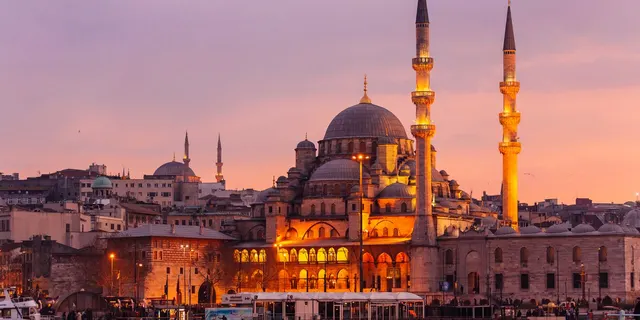
Stand on Istanbul's Galata Bridge and you are watching two continents trade ferries. Turkey is the only country whose largest city spans both Europe and Asia. The land beyond is vast and varied: fairy chimneys and cave churches in Cappadocia, the white travertine terraces of Pamukkale, Greco-Roman Ephesus near the Aegean, and the turquoise coves of the Lycian coast. Byzantine and Ottoman layers overlap everywhere, most famously in the Hagia Sophia. Tea arrives in tulip-shaped glasses roughly every hour, breakfast is an event of many small plates, and bargaining in the bazaar is expected sport. Domestic flights are the practical way to cover the distances between regions.
Turkey on Nuvoha spans 4 destinations: Antalya, Bodrum, Dalaman, Istanbul. Set your budget and Nuvoha builds the complete trip: flights and hotels together.
Why visit Turkey
- Cities you can explore on foot, from headline sights to quiet neighbourhoods
- Coastline worth building a trip around
- Quieter alternatives beyond the obvious stops
- Easy to combine two cities in a single trip
Best known for
- The Hagia Sophia and Blue Mosque
- Cappadocia's balloon flights
- The Grand Bazaar
- Turkish breakfast and tea culture
- Turquoise Coast sailing
Across two continents
- Marmara: Istanbul's region straddling two continents, plus the early Ottoman capital Bursa and the Gallipoli battlefields.
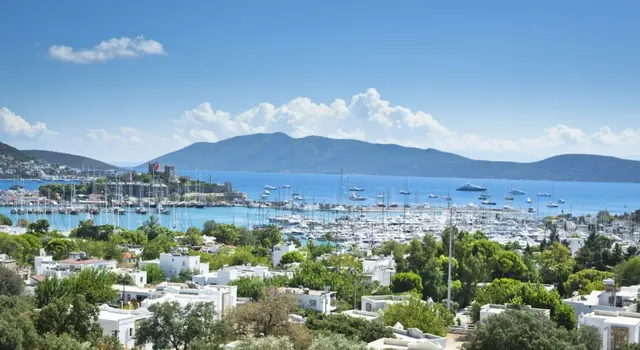
- Aegean Coast: The ruins of Ephesus and hilltop Pergamon, and whitewashed resort towns such as Bodrum and Çeşme.
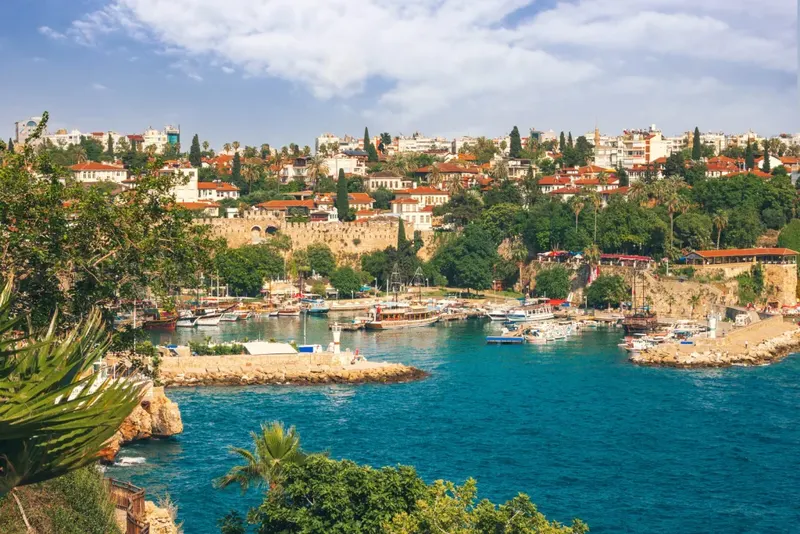
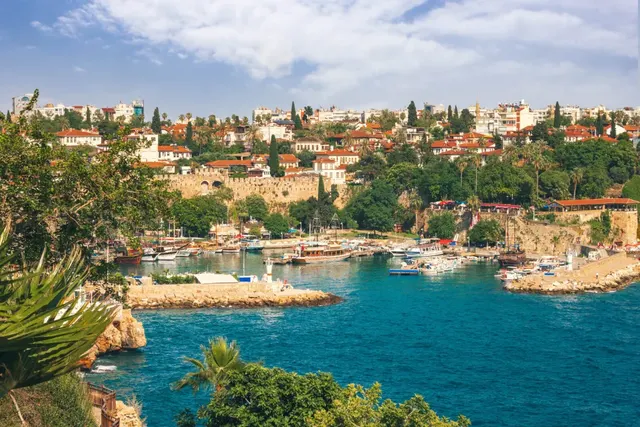
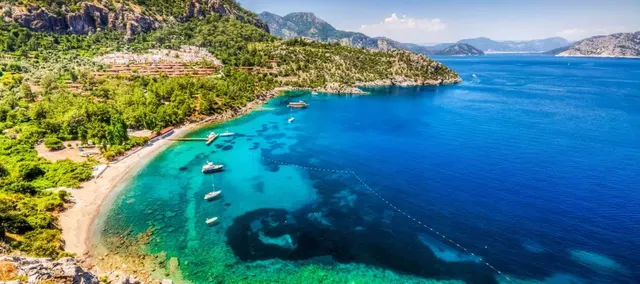
- Turquoise Coast: The Mediterranean shore of the Lycian Way trail, Antalya's Roman-era harbour and coves from Kaş to Ölüdeniz's lagoon.
- Central Anatolia: Cappadocia's cave dwellings and dawn balloon flights, the capital Ankara, and Konya, home of the whirling dervishes.
- Black Sea: Green tea-growing hills and the cliff-face Sumela Monastery near Trabzon, a rainier, forested Turkey that few visitors see.
Where to go
Groundwork
| Currency | Turkish Lira (TRY) |
|---|---|
| Language | Turkish; English is common in Istanbul and the coastal resorts |
| Time zone | Turkey Time (UTC+3), no daylight saving |
| Emergency number | 112 (all emergencies) |
| Driving side | Right |
| Tap water | Officially treated, but most locals and visitors drink bottled water |
Seasons at a glance in Antalya
| Month | Typical range | Season |
|---|---|---|
| January | 6°C to 15°C | Mild coastal winter |
| April | 11°C to 22°C | Warm spring |
| July | 23°C to 34°C | Hot dry summer |
| October | 15°C to 27°C | Warm autumn |
Seasons vary across Turkey. Each destination page has its own climate table.
How travellers explore Turkey
Bodrum and Dalaman sit about 117 km apart, an easy pairing in one trip.
Antalya and Dalaman sit about 180 km apart, an easy pairing in one trip.
More in Europe
More Europe country guides
Frequently asked questions
Which Turkey destinations can I book with Nuvoha?
Antalya, Bodrum, Dalaman, Istanbul, each with complete flight and hotel trips built around your budget.
What kind of trips suit Turkey?
Turkey works for beach holidays and city breaks, and its cities pair well for multi-stop itineraries.
How do you get between Turkey's regions?
Domestic flights are the workhorse: Istanbul to Cappadocia's airports at Kayseri or Nevşehir takes about 80 minutes. High-speed rail links Istanbul with Ankara and Konya, and coastal buses are comfortable and frequent.
Are cards accepted in Turkey?
Widely in cities and resorts, but bazaars, taxis and smaller towns favour cash, so keep lira on hand and exchange modest amounts as you go.
What plug type does Turkey use?
Types C and F, the round two-pin European sockets, at 230 volts. UK and North American visitors need an adapter.