
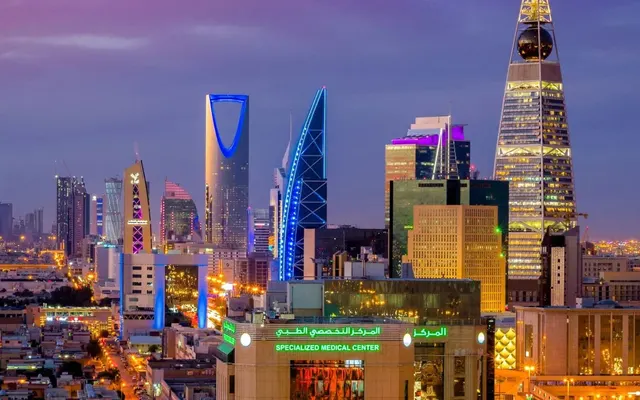
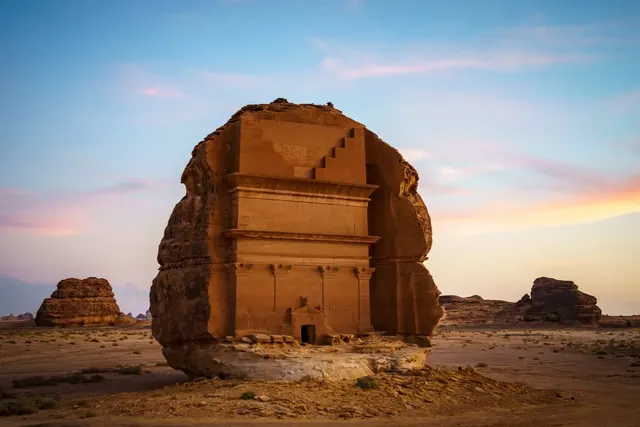
Monumental tomb facades stand carved into golden sandstone at Hegra, near AlUla: the southern reach of the Nabataean civilisation that built Petra, and Saudi Arabia's first UNESCO World Heritage Site. The kingdom occupies most of the Arabian Peninsula, and its scale surprises first-time visitors: coral reefs along a 1,800-kilometre Red Sea coast, juniper-clad mountains around Abha in the south-west, the vast Empty Quarter desert, and cities reinventing themselves at speed. Jeddah's old town, Al-Balad, keeps its coral-stone merchant houses and latticed wooden balconies, while Riyadh pairs the mud-brick heritage of Diriyah with a fast-growing dining and arts scene. Mecca and Medina, Islam's holiest cities, are open to Muslim visitors only.
Saudi Arabia on Nuvoha spans 5 destinations: Dammam, Jeddah, Medina, Riyadh, AlUla. Set your budget and Nuvoha builds the complete trip: flights and hotels together.
Why visit Saudi Arabia
- Cities you can explore on foot, from headline sights to quiet neighbourhoods
- Nature within easy reach of your base
- Featured destinations to build a trip around
- Quieter alternatives beyond the obvious stops
- Easy to combine two cities in a single trip
Best known for
- Hegra's Nabataean tombs at AlUla
- Al-Balad, Jeddah's old coral-stone town
- Red Sea diving
- Diriyah and the Edge of the World
- The Asir mountains
Across the kingdom
- Hejaz: The Red Sea region holding Jeddah, Mecca and Medina. Jeddah's Al-Balad district is a UNESCO-listed quarter of coral-stone tower houses.
- AlUla: An oasis valley in the north-west surrounded by sandstone canyons, home to the Nabataean tombs of Hegra and the old mud-brick town of AlUla.
- Riyadh and Najd: The capital region on the central plateau. Diriyah's restored At-Turaif district was the seat of the first Saudi state; the Edge of the World escarpment lies a day trip away.
- Asir: Highlands in the south-west around Abha, with terraced villages, cool summers and the country's highest peaks. Rijal Almaa is known for its stone-and-slate tower houses.
- Eastern Province: The Gulf coast around Dammam and Al Khobar, plus the palm groves of Al-Ahsa Oasis, one of the largest oases in the world and a UNESCO site.
Where to go
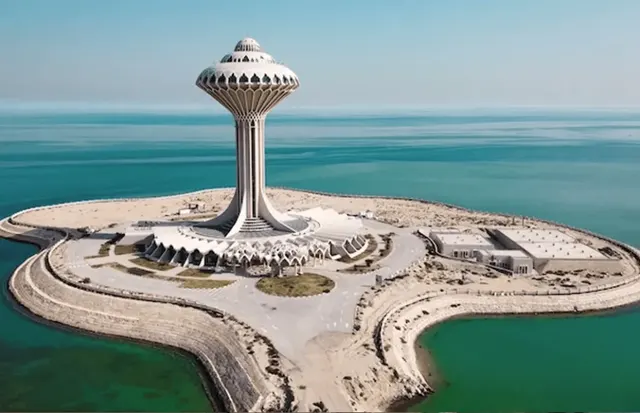
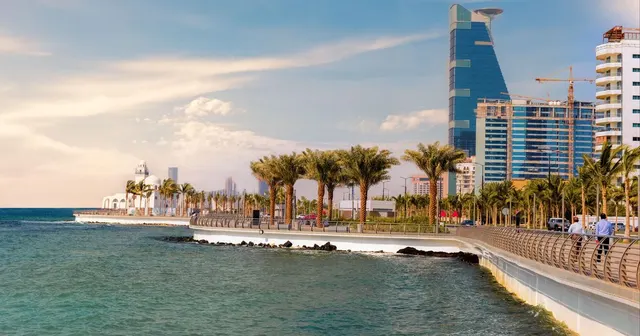
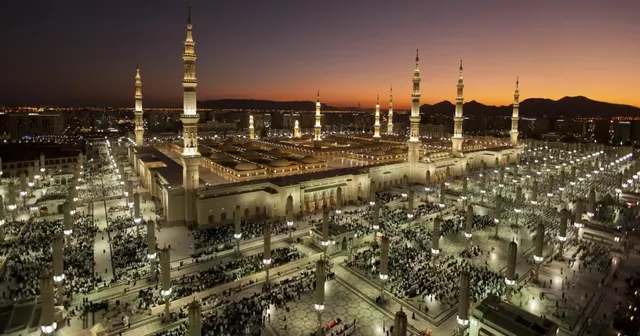
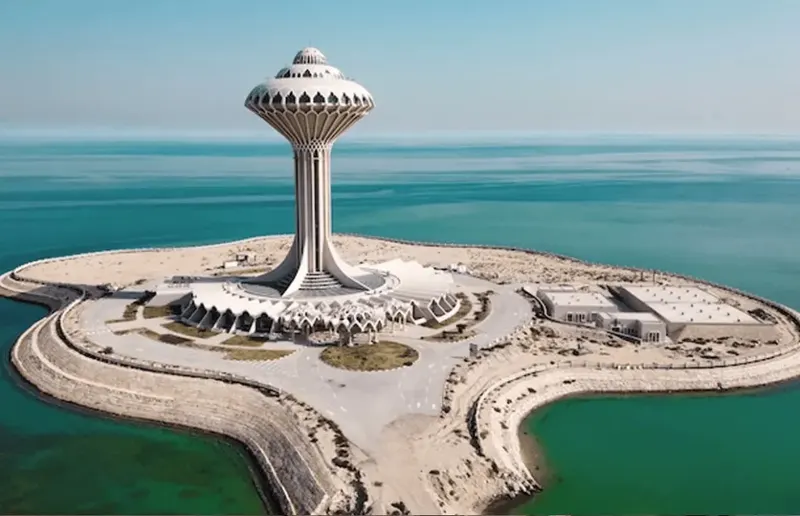
Saudi Arabia essentials
| Currency | Saudi Riyal (SAR) |
|---|---|
| Language | Arabic; English is widely spoken in cities, hotels and restaurants |
| Time zone | Arabia Standard Time, UTC+3, no daylight saving |
| Emergency number | 911 |
| Driving side | Right |
| Tap water | Desalinated and generally safe in cities, though most residents and visitors drink bottled water |
Seasons at a glance in Dammam
| Month | Typical range | Season |
|---|---|---|
| January | 10°C to 22°C | Mild winter |
| April | 21°C to 35°C | Hot spring |
| July | 30°C to 43°C | Very hot summer |
| October | 24°C to 36°C | Hot autumn |
Seasons vary across Saudi Arabia. Each destination page has its own climate table.
How travellers explore Saudi Arabia
Medina and AlUla sit about 293 km apart, an easy pairing in one trip.
Jeddah and Medina sit about 326 km apart, an easy pairing in one trip.
More in Middle East & North Africa
More Middle East & North Africa country guides
Frequently asked questions
Which Saudi Arabia destinations can I book with Nuvoha?
Dammam, Jeddah, Medina, Riyadh, AlUla, each with complete flight and hotel trips built around your budget.
What kind of trips suit Saudi Arabia?
Saudi Arabia works for city breaks and nature trips, and its cities pair well for multi-stop itineraries.
Which Saudi Arabia destinations does Nuvoha feature?
Jeddah is featured on Nuvoha.
How do you travel between Saudi cities?
Domestic flights link Jeddah, Riyadh, AlUla and Dammam in one to two hours. The Haramain high-speed railway connects Jeddah with Medina and Mecca, and long-distance roads are modern and well maintained.
What are the main arrival hubs?
King Abdulaziz International in Jeddah and King Khalid International in Riyadh handle most long-haul arrivals. AlUla has its own airport with connections from both, plus some regional international routes.
Is Saudi Arabia card-friendly?
Very: contactless payment is the norm in cities, from malls to coffee kiosks. Cash is still useful in traditional souqs and smaller towns, and ATMs are easy to find.