
With more than 7,600 islands, the Philippines is a country you assemble from boat rides and short flights, rarely all at once. The capital, Manila, opens onto Luzon, where Spanish-era churches, the active volcano of Taal and the mountain rice terraces of Banaue share a single island. Southward lie the Visayas, a cluster of reef-fringed islands around Cebu and Bohol, and then Palawan, whose limestone cliffs rise straight from the sea at El Nido and Coron. English is spoken almost everywhere, a legacy that makes the archipelago unusually easy to travel, and the welcome is warm enough to count as a national trademark. Divers come for some of the richest marine life on Earth; everyone else comes for the beaches.
Manila is the Philippines destination on Nuvoha today. Set your budget and Nuvoha builds the complete trip: flights and hotels together.
Why visit Philippines
- Cities you can explore on foot, from headline sights to quiet neighbourhoods
- Quieter alternatives beyond the obvious stops
Best known for
- Island-hopping and white-sand beaches
- World-class diving and coral reefs
- The rice terraces of Banaue
- El Nido and Coron's limestone lagoons
- Bohol's Chocolate Hills and tarsiers
- A warm welcome and lechon feasts
Island by island
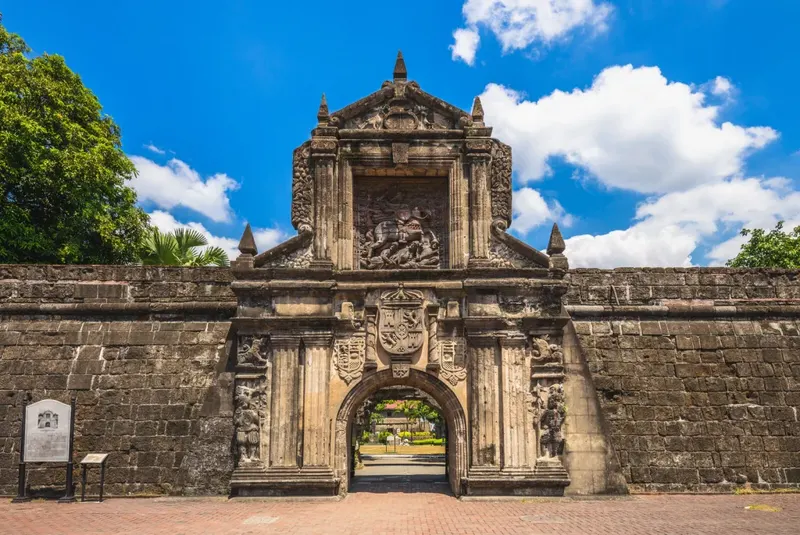
- Manila and Luzon: The largest island holds the capital, Manila, the walled quarter of Intramuros, the near-perfect cone of Mayon and, to the north, the historic streets of Vigan and the volcano of Taal in its lake.
- The Cordilleras: A cool mountain region in northern Luzon where the rice terraces of Banaue and Batad step up the hillsides, the town of Sagada keeps its hanging coffins, and Baguio serves as the summer capital.
- The Visayas: A cluster of central islands ringed by reefs: Cebu's beaches and diving, Bohol's Chocolate Hills and saucer-eyed tarsiers, and the sugar landscapes of Negros.
- Boracay: A small island in the west famous above all for White Beach, a long stretch of powder sand backed by shallow turquoise water.
- Palawan: A long, thin island of limestone drama, from the lagoons of El Nido and the wartime wrecks of Coron to the Puerto Princesa Underground River, a UNESCO site.
- Mindanao: The big southern island, home to Davao and Mount Apo, the country's highest peak, with the surf breaks of Siargao off its north-eastern tip.
Where to go
Philippines essentials
| Currency | Philippine Peso (PHP) |
|---|---|
| Language | Filipino, based on Tagalog, and English are both official, and English is very widely spoken |
| Time zone | Philippine Standard Time (UTC+8), no daylight saving |
| Emergency number | 911 |
| Driving side | Right |
| Tap water | Best avoided from the tap; bottled and purified water are sold everywhere |
Seasons at a glance in Manila
| Month | Typical range | Season |
|---|---|---|
| January | 23°C to 30°C | Warm dry season |
| April | 25°C to 34°C | Hot dry season |
| July | 25°C to 31°C | Wet season |
| October | 24°C to 31°C | Humid rainy season |
Seasons vary across Philippines. Each destination page has its own climate table.
More in Asia
More Asia country guides
Frequently asked questions
Which Philippines destinations can I book with Nuvoha?
Manila, with complete flight and hotel trips built around your budget.
What kind of trips suit Philippines?
Philippines works for city breaks.
How do you travel around the Philippines?
Because the country is so spread out, most long hops are by plane, with Manila and Cebu the main hubs and dozens of island airports beyond. Ferries and outrigger boats link neighbouring islands, and jeepneys, tricycles and vans handle short distances on land.
What plug type do the Philippines use?
Types A, B and C at 220 volts. The flat pins match North American plugs, but the voltage is closer to Europe's, so check that your device handles 220 volts before plugging it in.
Do I need cash in the Philippines?
Yes, especially away from the cities. Cards and the GCash mobile wallet work in malls, hotels and larger restaurants, but boat fares, market stalls and rural islands run on pesos, so carry small notes.
When is the best time to visit?
The dry season, roughly November to May, is the reliable window for beaches and diving. The wetter months from June to October bring heavier rain and the risk of typhoons, though the exact timing shifts from island to island.