
Smoke rises off the grills of Jemaa el-Fnaa at dusk while storytellers, musicians and orange-juice sellers claim their patches of Marrakesh's great square, a scene that has repeated itself for centuries. Morocco folds an unusual amount of geography into its corner of north-west Africa: Atlantic surf at Essaouira and Taghazout, the snow-holding High Atlas above Marrakesh, the blue-washed lanes of Chefchaouen in the Rif, and the orange dunes of Erg Chebbi on the Sahara's edge. The imperial cities (Fez, Meknes, Marrakesh and Rabat) hold some of the world's most intact medieval medinas, where tanneries, tilework and riad courtyards carry on behind plain doors. Mint tea, poured from a height, punctuates everything.
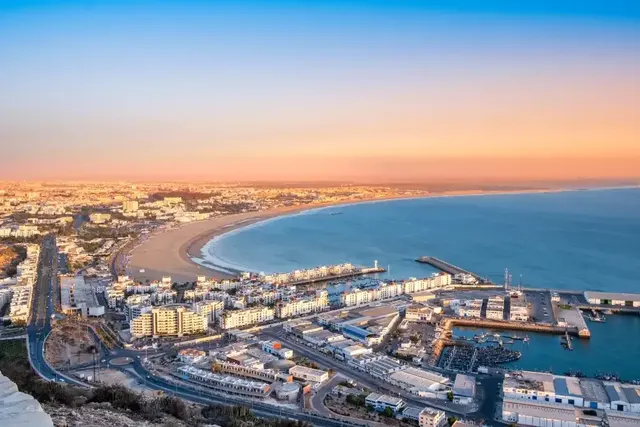
Morocco on Nuvoha spans 3 destinations: Casablanca, Agadir, Marrakesh. Set your budget and Nuvoha builds the complete trip: flights and hotels together.
Why visit Morocco
- Cities you can explore on foot, from headline sights to quiet neighbourhoods
- Coastline worth building a trip around
- Quieter alternatives beyond the obvious stops
- Easy to combine two cities in a single trip
Best known for
- The medinas of Fez and Marrakesh
- Sahara dune camps
- Chefchaouen's blue streets
- High Atlas trekking
- Tagines and mint tea
Four corners of Morocco
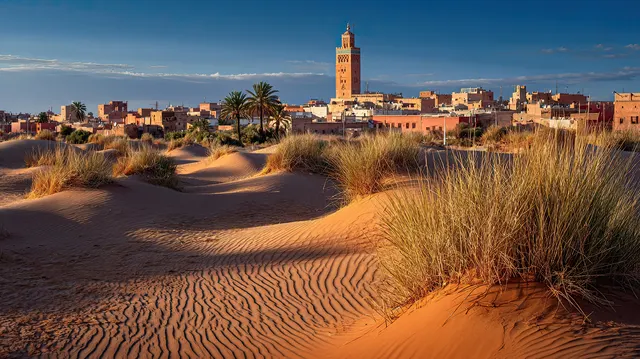
- Marrakesh and the High Atlas: The red city and its palm groves sit below North Africa's highest range; Mount Toubkal (4,167 m) and the Ourika and Imlil valleys are within a day's reach.
- Fez and Meknes: Fez el-Bali is often called the world's largest car-free urban area, a maze of madrasas, tanneries and souks; Meknes and Roman Volubilis lie nearby.
- The Sahara: The dunes of Erg Chebbi near Merzouga and Erg Chigaga beyond Zagora are reached via the Draa Valley and the kasbah of Aït Benhaddou, a UNESCO site.
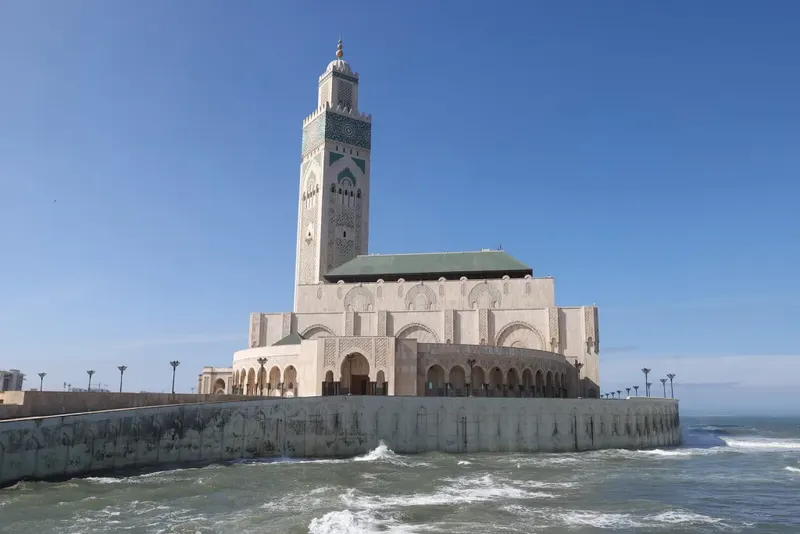
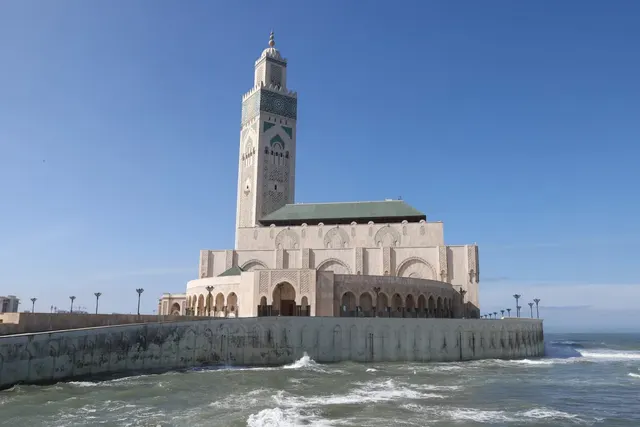
- Atlantic Coast: Essaouira's fortified medina and fishing port catch a steady trade wind loved by kitesurfers; Casablanca holds the vast Hassan II Mosque; Rabat is the capital.
- The North and the Rif: Chefchaouen's blue-painted old town climbs the Rif mountains, while Tangier looks across the Strait of Gibraltar towards Spain.
Where to go
Morocco essentials
| Currency | Moroccan Dirham (MAD) |
|---|---|
| Language | Arabic and Amazigh (Berber) are official; French is widely spoken, and English is increasingly common in tourist areas |
| Time zone | UTC+1 year-round, except during Ramadan when clocks move back to UTC+0 |
| Emergency number | 19 (police in cities); 15 (ambulance and fire) |
| Driving side | Right |
| Tap water | Treated in major cities, but most visitors drink bottled or filtered water |
Seasons at a glance in Casablanca
| Month | Typical range | Season |
|---|---|---|
| January | 8°C to 18°C | Mild winter |
| April | 12°C to 22°C | Warm spring |
| July | 20°C to 27°C | Warm dry summer |
| October | 16°C to 24°C | Mild autumn |
Seasons vary across Morocco. Each destination page has its own climate table.
How travellers explore Morocco
Agadir and Marrakesh sit about 198 km apart, an easy pairing in one trip.
Casablanca and Marrakesh sit about 200 km apart, an easy pairing in one trip.
More in Middle East & North Africa
More Middle East & North Africa country guides
Frequently asked questions
Which Morocco destinations can I book with Nuvoha?
Casablanca, Agadir, Marrakesh, each with complete flight and hotel trips built around your budget.
What kind of trips suit Morocco?
Morocco works for city breaks and beach holidays, and its cities pair well for multi-stop itineraries.
How easy is it to travel between Moroccan cities?
Easier than many expect. Al Boraq, Africa's first high-speed train, links Tangier and Casablanca in about two hours; comfortable trains and CTM or Supratours coaches connect Marrakesh, Fez and most other cities.
Should I carry cash in Morocco?
Yes. The souks, taxis and smaller restaurants run largely on dirhams, and haggling is expected in markets. Cards work in riads, supermarkets and mid-range restaurants; ATMs are plentiful in cities.
What plug type does Morocco use?
European two-round-pin sockets, Types C and E, at 220 volts. UK and North American travellers need an adapter; continental European plugs fit directly.