
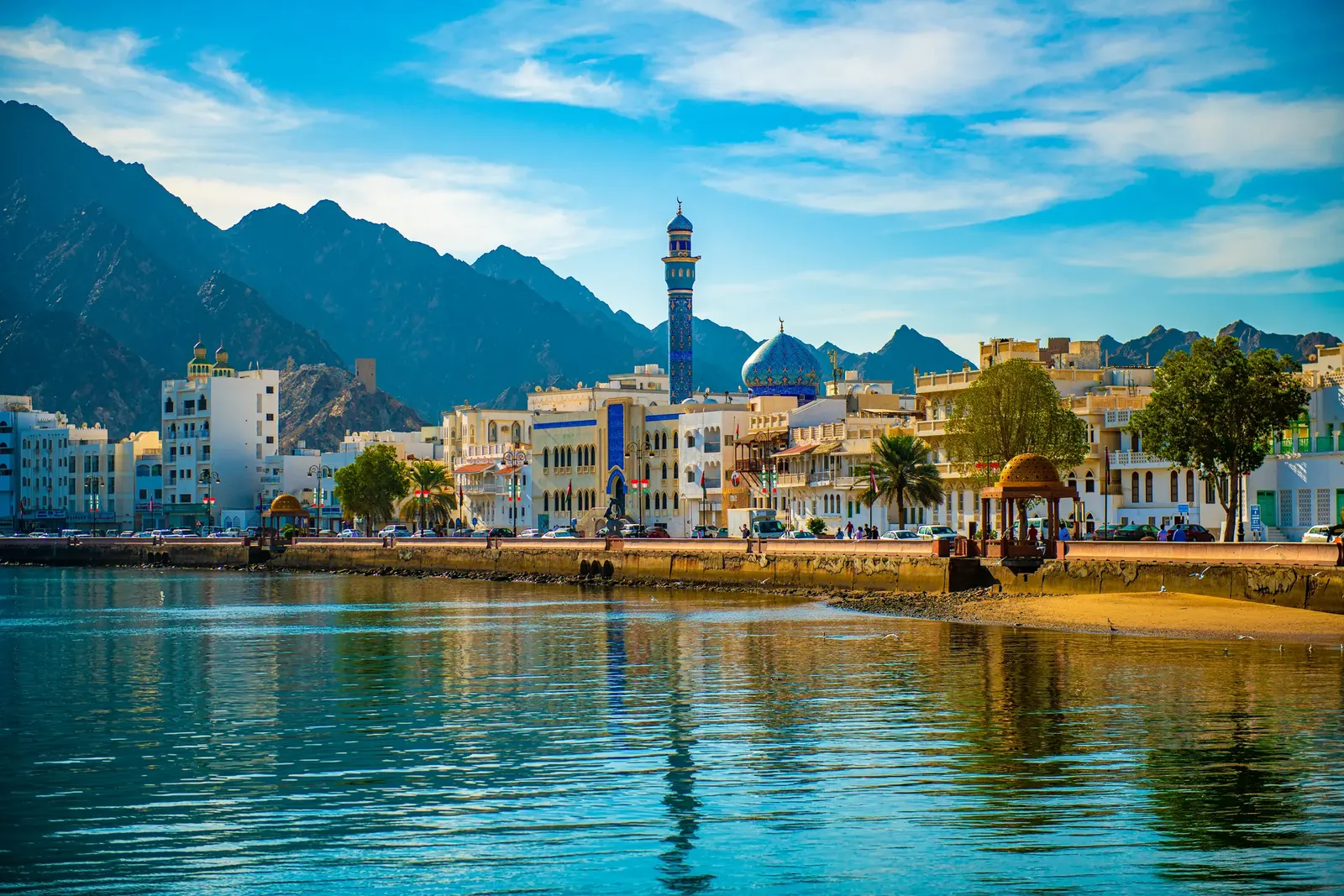
Behind Muscat, the Hajar Mountains rise bare and sudden from the Gulf of Oman, their canyons hiding wadis where emerald pools sit beneath date palms: Wadi Shab and Wadi Bani Khalid among the most loved. Oman rewards travellers who like their Arabia understated: low-rise, whitewashed Muscat with its grand Sultan Qaboos Mosque and old Muttrah souq; some 500 forts and watchtowers, from Nizwa's round tower to UNESCO-listed Bahla; and the dunes of the Sharqiya Sands rolling to the horizon. In the far south, Salalah turns green each summer when the khareef monsoon drifts in off the Indian Ocean, the same coast that once shipped frankincense across the ancient world. Green turtles still nest on the beaches at Ras al Jinz.
Muscat is the Oman destination on Nuvoha today. Set your budget and Nuvoha builds the complete trip: flights and hotels together.
Why visit Oman
- Cities you can explore on foot, from headline sights to quiet neighbourhoods
- Quieter alternatives beyond the obvious stops
Best known for
- Wadi Shab's turquoise pools
- Nizwa and Bahla forts
- The Sharqiya Sands
- Salalah's green khareef season
- Frankincense heritage in Dhofar
Mountains, desert and monsoon coast
- Muscat and the coast: The capital stretches along the shore between mountains and sea, from the Sultan Qaboos Grand Mosque to the harbourside corniche and souq of Muttrah.
- The Hajar Mountains and Nizwa: Jebel Akhdar's terraced villages and Jebel Shams, Oman's highest peak beside the 'Grand Canyon of Arabia', rise near Nizwa's fort and Friday goat market.
- Sharqiya Sands: A sea of apricot-coloured dunes south of Muscat, home to Bedouin camps; the coastal turtle reserve at Ras al Jinz lies beyond.
- Dhofar: The southern region around Salalah, transformed by the khareef mists from June to September; the Land of Frankincense sites are UNESCO-listed.
- Musandam: An exclave on the Strait of Hormuz, separated from the rest of Oman by the UAE, where sheer cliffs drop into fjord-like inlets cruised by dhow.
Where to go
Oman essentials
| Currency | Omani Rial (OMR) |
|---|---|
| Language | Arabic; English is widely spoken in cities and the tourism trade |
| Time zone | Gulf Standard Time, UTC+4, no daylight saving |
| Emergency number | 9999 |
| Driving side | Right |
| Tap water | Desalinated and officially safe in cities; most people drink bottled water |
Seasons at a glance in Muscat
| Month | Typical range | Season |
|---|---|---|
| January | 18°C to 26°C | Mild winter |
| April | 26°C to 35°C | Hot spring |
| July | 31°C to 39°C | Very hot summer |
| October | 27°C to 35°C | Hot autumn |
Seasons vary across Oman. Each destination page has its own climate table.
More in Middle East & North Africa
More Middle East & North Africa country guides
Frequently asked questions
Which Oman destinations can I book with Nuvoha?
Muscat, with complete flight and hotel trips built around your budget.
What kind of trips suit Oman?
Oman works for city breaks.
Do I need a 4x4 to explore Oman?
For the classic circuit (Muscat, Nizwa, the coast), a normal car on sealed roads is fine. A 4x4 becomes essential for the Sharqiya Sands, Jebel Shams' upper tracks and some wadi approaches.
How do you reach Salalah from Muscat?
Most visitors fly: it is roughly 90 minutes, against a 1,000-kilometre drive that takes around ten hours. Salalah also receives some direct international flights, especially during the khareef season.
What plug type does Oman use?
The British three-pin Type G at 240 volts, so UK plugs fit directly. Visitors from Europe, North America and Asia should pack a standard UK-style adapter.