
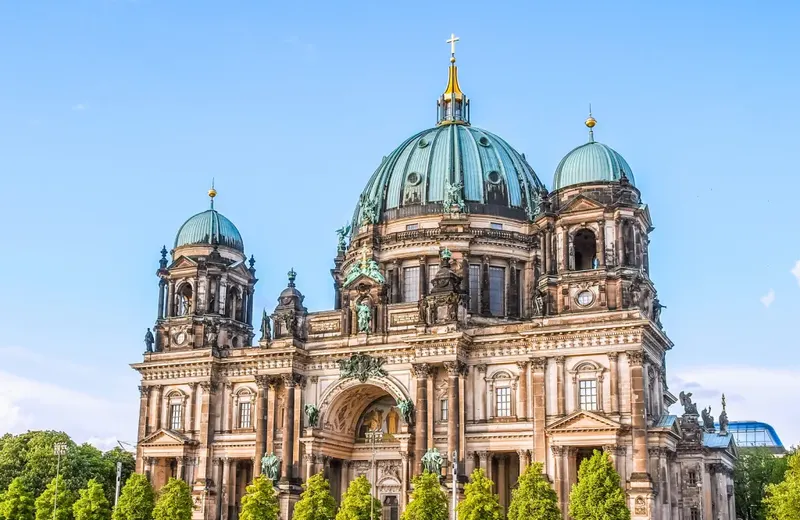
Germany rewards travellers who treat it as sixteen states rather than one country, because that is how it behaves: each Land keeps its own dialect, beer and civic pride. The south rises into Bavaria and the Alps, with Munich, fairytale Neuschwanstein and the Christmas markets that fill Advent squares with mulled wine and woodsmoke. The Rhine and Moselle wind past terraced vineyards and hilltop castles; the Black Forest hides spa towns and cuckoo clocks; and the flat north runs to the Hanseatic ports of Hamburg and the Baltic beaches. Berlin, endlessly reinvented since the Wall fell, sets its own tempo entirely. Fast ICE trains stitch the cities together, and history is never far below the surface.
Germany on Nuvoha spans 2 destinations: Berlin, Munich. Set your budget and Nuvoha builds the complete trip: flights and hotels together.
Why visit Germany
- Cities you can explore on foot, from headline sights to quiet neighbourhoods
- Quieter alternatives beyond the obvious stops
- Easy to combine two cities in a single trip
Best known for
- Fairytale castles like Neuschwanstein
- Christmas markets
- Beer gardens and Oktoberfest
- The castle-lined Rhine
- The Black Forest
- Berlin's history and nightlife
Germany, state by state
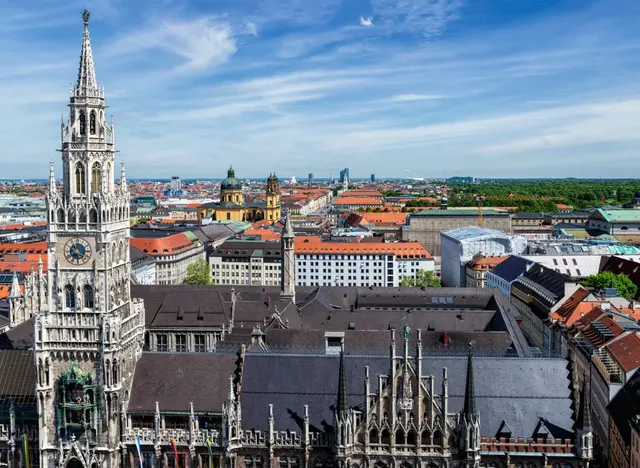
- Bavaria: The Alpine south, with Munich and its beer halls, fairytale Neuschwanstein, the medieval walls of Nuremberg and Rothenburg, and ski and hiking country around Garmisch.
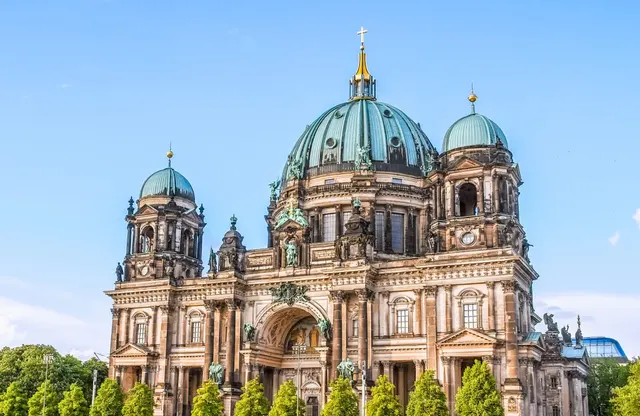
- Berlin and Brandenburg: The reinvented capital of galleries, nightlife and Cold War history, ringed by the lakes and forests of Brandenburg and the palaces of Potsdam's Sanssouci.
- The Rhine and Moselle: Castle-topped vineyard gorges between Cologne's great cathedral and Frankfurt, where Riesling towns like Bacharach and Cochem line the riverbanks.
- The Black Forest and the south-west: Baden-Wurttemberg's wooded hills, the spa town of Baden-Baden and cuckoo-clock villages, with student Heidelberg and carmaker Stuttgart nearby.
- Hamburg and the north: The Hanseatic port cities of Hamburg, Bremen and Lubeck, opening onto North Sea and Baltic beaches and islands such as Sylt and Rugen.
- Saxony and the east: Dresden's rebuilt baroque and Leipzig's music and art scene, near the sandstone pinnacles of Saxon Switzerland along the Elbe.
Where to go
Know before you go
| Currency | Euro (EUR) |
|---|---|
| Language | German; English is widely spoken in cities and among younger people |
| Time zone | Central European Time (UTC+1, UTC+2 in summer) |
| Emergency number | 112 (general emergency); 110 for police |
| Driving side | Right |
| Tap water | Safe to drink; tap water is reliably potable nationwide |
Seasons at a glance in Berlin
| Month | Typical range | Season |
|---|---|---|
| January | -2°C to 4°C | Cold winter |
| April | 5°C to 15°C | Fresh spring |
| July | 15°C to 25°C | Warm summer |
| October | 7°C to 14°C | Cool autumn |
Seasons vary across Germany. Each destination page has its own climate table.
How travellers explore Germany
Berlin and Munich sit about 463 km apart, an easy pairing in one trip.
More in Europe
More Europe country guides
Frequently asked questions
Which Germany destinations can I book with Nuvoha?
Berlin, Munich, each with complete flight and hotel trips built around your budget.
What kind of trips suit Germany?
Germany works for city breaks, and its cities pair well for multi-stop itineraries.
How do you travel between German cities?
The ICE high-speed network is the backbone: Berlin to Munich takes about four hours, Cologne to Frankfurt just over one. Regional trains and long-distance coaches fill in the gaps, and the autobahns make driving straightforward, though city centres increasingly favour public transport.
When are the Christmas markets and Oktoberfest?
Christmas markets run through Advent, from late November until just before Christmas, in almost every town square. Munich's Oktoberfest, despite the name, runs from mid-September to the first weekend of October.
Do I need cash in Germany?
More than you might expect. Germany remains fond of cash, and smaller restaurants, bakeries and shops may not take cards, though acceptance is steadily improving. Carry some euros alongside a card, and use the widely available ATMs.
What plug type does Germany use?
Types C and F, the round two-pin European style, at 230 volts. Travellers from the UK and North America need an adapter.