
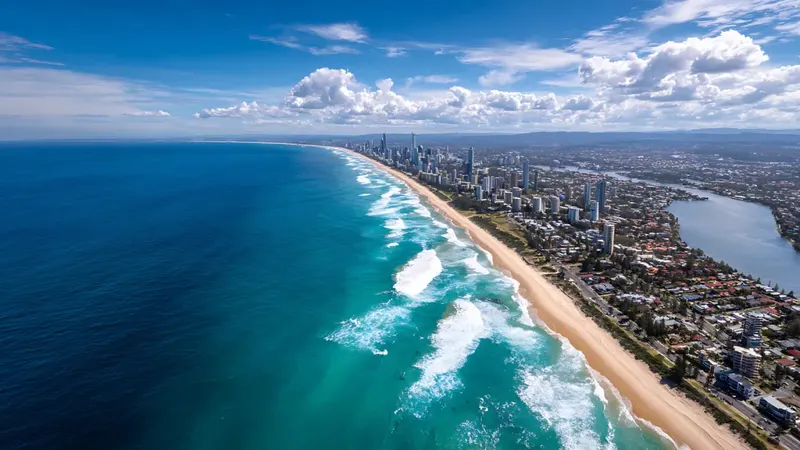
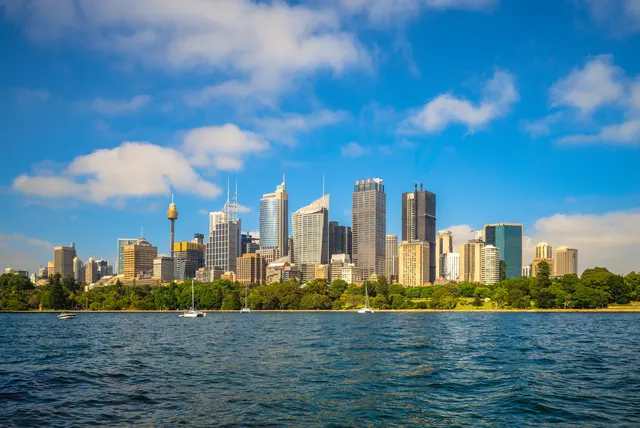
It takes about five hours to fly from Sydney to Perth (roughly London to Cairo), which is the first thing to understand about Australia: the scale. Most of the population lives on the coastal rim, leaving the red interior to desert, cattle stations and the sacred bulk of Uluru. The east coast strings together surf beaches, the Great Barrier Reef and ancient rainforest; Melbourne answers Sydney's harbour glamour with laneway coffee culture; Tasmania keeps cool-climate wilderness for walkers. Wildlife needs no zoo here: kangaroos, kookaburras and wombats turn up on ordinary walks. The seasons run opposite to the northern hemisphere, so Christmas belongs to the beach.
Australia on Nuvoha spans 4 destinations: Gold Coast, Melbourne, Perth, Sydney. Set your budget and Nuvoha builds the complete trip: flights and hotels together.
Why visit Australia
- Cities you can explore on foot, from headline sights to quiet neighbourhoods
- Coastline worth building a trip around
- Quieter alternatives beyond the obvious stops
Best known for
- The Sydney Opera House and Harbour Bridge
- The Great Barrier Reef
- Surf beaches
- Distinctive wildlife
- The Outback and Uluru
States and territories
- New South Wales: Sydney's harbour and Opera House, the eucalyptus canyons of the Blue Mountains and a long surf coastline including Byron Bay.
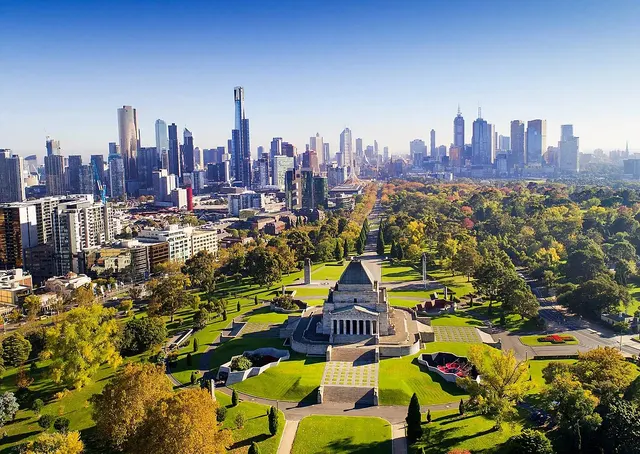
- Victoria: Melbourne's laneways and coffee culture, the Great Ocean Road and the Twelve Apostles sea stacks.
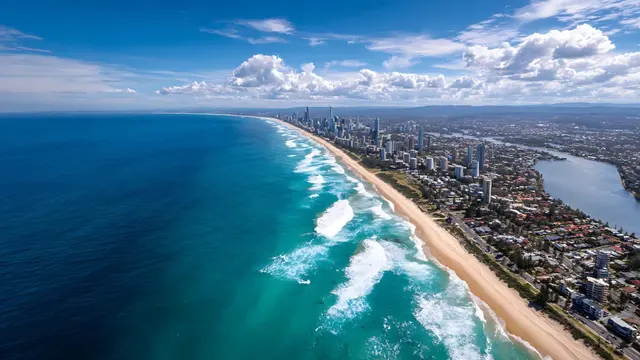
- Queensland: The Great Barrier Reef, the Daintree Rainforest and a chain of holiday coasts from the Gold Coast north to tropical Cairns.
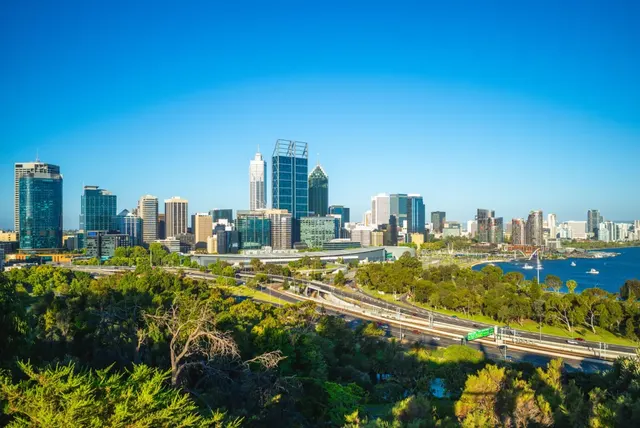
- Western Australia: Perth on the Swan River, quokkas on Rottnest Island and the Margaret River wine country, vast and lightly populated.
- Tasmania: The island state of cool-climate wilderness: Cradle Mountain, Freycinet's Wineglass Bay and Hobart's MONA gallery.
- Northern Territory: Uluru and Kata Tjuta rising from the Red Centre, with Kakadu's wetlands and ancient rock art in the Top End.
Where to go
Know before you go
| Currency | Australian Dollar (AUD) |
|---|---|
| Language | English |
| Time zone | Three main zones: Sydney and Melbourne on UTC+10 (UTC+11 in summer), Adelaide on UTC+9:30, Perth on UTC+8; daylight saving varies by state |
| Emergency number | 000 (112 also works from mobiles) |
| Driving side | Left |
| Tap water | Safe to drink in all cities and towns |
Seasons at a glance in Gold Coast
| Month | Typical range | Season |
|---|---|---|
| January | 21°C to 29°C | Warm humid summer |
| April | 17°C to 27°C | Mild autumn |
| July | 11°C to 22°C | Dry mild winter |
| October | 17°C to 27°C | Warm spring |
Seasons vary across Australia. Each destination page has its own climate table.
How travellers explore Australia
Gold Coast and Sydney sit about 679 km apart, an easy pairing in one trip.
Melbourne and Sydney sit about 706 km apart, an easy pairing in one trip.
More in Oceania
More Oceania country guides
Frequently asked questions
Which Australia destinations can I book with Nuvoha?
Gold Coast, Melbourne, Perth, Sydney, each with complete flight and hotel trips built around your budget.
What kind of trips suit Australia?
Australia works for beach holidays and city breaks, and its cities pair well for multi-stop itineraries.
How do you get between Australian cities?
Distances are serious, so domestic flights do most of the work: Sydney to Melbourne is one of the world's busiest air routes at about 90 minutes. The scenic alternatives are long-distance rail or a coastal road trip.
What plug type does Australia use?
Type I, the angled flat-pin plug shared with New Zealand, at 230 volts. Visitors from the UK, Europe and North America all need adapters.
Is Australia cash-free?
Very nearly, in the cities: contactless payment is standard everywhere from cafés to taxis, and some venues no longer handle cash at all. A small cash reserve is still handy in remote areas.