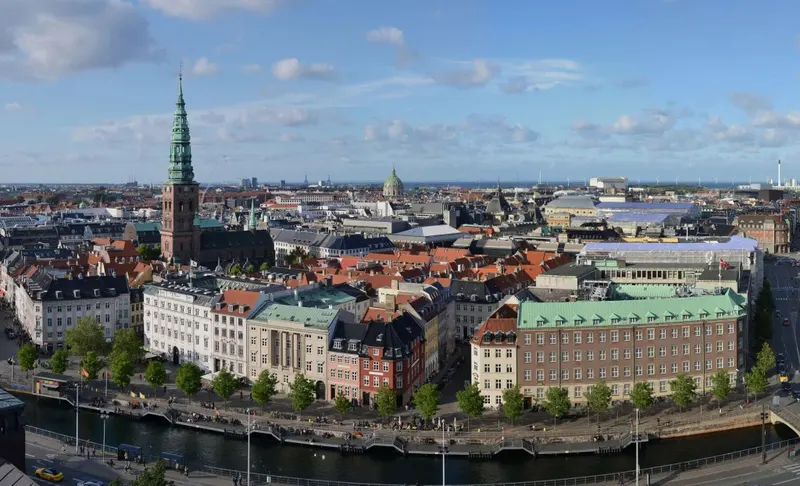
Denmark packs a kingdom into a small, flat, bicycle-friendly space: the Jutland peninsula reaching up from Germany, plus more than 400 islands, of which Zealand and Funen hold most of the life. Copenhagen sets the tone with its harbour baths, New Nordic kitchens and the candlelit ease the Danes call hygge, then hands over to castle-dotted countryside, wide North Sea beaches and the painterly light of Skagen at the northern tip. This is the land that gave the world Lego, Hans Christian Andersen and some of the most talked-about restaurants anywhere. Distances are short and the trains reliable, so a long weekend can still take in a capital, a castle and a stretch of coast without any rush.
Copenhagen is the Denmark destination on Nuvoha today. Set your budget and Nuvoha builds the complete trip: flights and hotels together.
Why visit Denmark
- Cities you can explore on foot, from headline sights to quiet neighbourhoods
- Quieter alternatives beyond the obvious stops
Best known for
- Copenhagen's harbour and Nyhavn
- Hygge and cafe culture
- Tivoli Gardens
- Cycling cities
- Viking history
- The home of Lego at Billund
Islands and peninsula
- Copenhagen and Zealand: The largest island holds the capital, with Nyhavn's coloured houses, the Tivoli Gardens and the Little Mermaid statue, plus Kronborg Castle at Helsingor and the Viking ships and cathedral of Roskilde.
- Funen (Fyn): The garden island between Zealand and Jutland, centred on Odense, birthplace of Hans Christian Andersen, and dotted with manor houses and the moated Renaissance castle of Egeskov.
- Jutland (Jylland): The mainland peninsula reaching to Germany, home to lively Aarhus and its ARoS art museum, the family parks around Billund, and the UNESCO-listed tidal flats of the Wadden Sea.
- Skagen and the north: Denmark's northern tip, where the Skagerrak and Kattegat seas meet on the sandbar at Grenen, under the clear light that once drew a whole colony of painters.
- Bornholm: A sunny Baltic island east of the rest of the country, known for its round churches, cliffs and coves, smokehouses and a lively community of craft makers.
- The Faroe Islands and Greenland: Self-governing nations within the Danish realm, far out in the North Atlantic: the Faroes for green sea-cliffs and Greenland for icebergs, fjords and vast Arctic wilderness.
Where to go
Denmark essentials
| Currency | Danish Krone (DKK) |
|---|---|
| Language | Danish; English is very widely spoken, especially in the cities |
| Time zone | Central European Time (UTC+1, UTC+2 in summer) |
| Emergency number | 112 (all emergencies) |
| Driving side | Right |
| Tap water | Safe to drink; among the cleanest tap water in the world |
Seasons at a glance in Copenhagen
| Month | Typical range | Season |
|---|---|---|
| January | -1°C to 4°C | Cold winter |
| April | 4°C to 12°C | Cool spring |
| July | 14°C to 22°C | Mild summer |
| October | 8°C to 13°C | Windy autumn |
Seasons vary across Denmark. Each destination page has its own climate table.
More in Europe
More Europe country guides
Frequently asked questions
Which Denmark destinations can I book with Nuvoha?
Copenhagen, with complete flight and hotel trips built around your budget.
What kind of trips suit Denmark?
Denmark works for city breaks.
How do you get around Denmark?
Frequent trains link Copenhagen with Odense and the Jutland cities, and the Oresund Bridge carries trains straight on to Malmo in Sweden. Copenhagen has a driverless metro, and cycling is a genuine way of life, with hire bikes and safe lanes in every city.
Do I need cash in Denmark?
Rarely. Denmark is close to cashless, with cards and the local MobilePay accepted almost everywhere, from cafes to market stalls. A contactless card is all most visitors ever use.
What plug type does Denmark use?
The Danish Type K three-pin socket, at 230 volts, though the common European Type C and E two-pin plugs also fit. Visitors from the UK and North America need an adapter.
Is Denmark in the Schengen Area, and does it use the euro?
Denmark is part of the Schengen Area, so it shares the common European travel zone. It kept its own currency, though: everyday spending is in Danish kroner, not euros, even where some tourist spots accept euro cash.