
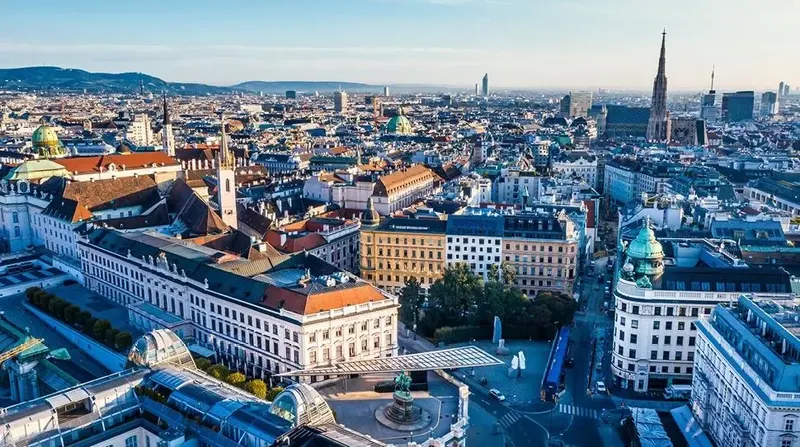
For a small country, Austria carries an outsized past: this was the seat of the Habsburgs, whose empire once ran much of Europe from Vienna's palaces and coffee houses. West of the capital the land climbs steadily into the Alps, and the map fills with what Austria does best: baroque Salzburg under its fortress, the mirror-still lakes of the Salzkammergut around Hallstatt, and the ski valleys and summer trails of Tyrol. Styria adds green hills and vineyards in the south-east, while Carinthia keeps warm bathing lakes near the Italian border. Winters belong to skiing and Advent markets; summers to hiking, lake swimming and open-air music. Trains and mountain railways reach even remote valleys, and the tap water runs Alpine-clear.
Vienna is the Austria destination on Nuvoha today. Set your budget and Nuvoha builds the complete trip: flights and hotels together.
Why visit Austria
- Cities you can explore on foot, from headline sights to quiet neighbourhoods
Best known for
- Imperial Vienna and its coffee houses
- Alpine skiing and hiking
- Mozart's Salzburg
- The lakes of the Salzkammergut
- Advent Christmas markets
- Sachertorte and pastries
From Vienna to the Alps
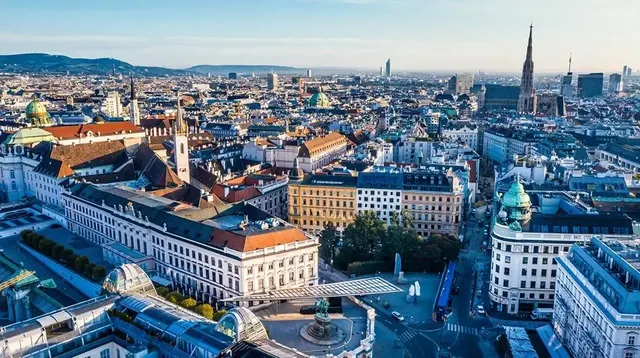
- Vienna: The imperial capital of the Habsburgs, with the Hofburg and Schonbrunn palaces, the Ringstrasse, world-class galleries and a coffee-house culture all its own.
- The Danube Valley: East of the Alps the river threads the Wachau, a terraced-vineyard gorge of apricot orchards, the great abbey of Melk and the wine town of Durnstein.
- Salzburg and the Salzkammergut: Mozart's baroque city beneath its hilltop fortress, opening into a lake district of mirror-still water and postcard villages such as Hallstatt and St Wolfgang.
- Tyrol: The high western Alps around Innsbruck, with the ski resorts of the Arlberg and Otztal in winter and long hiking trails through the peaks in summer.
- Styria: The green south-east, where Graz keeps a handsome old town and the rolling hills of the Southern Styrian wine road run down towards the Slovenian border.
- Carinthia: Austria's sunny south, a land of warm bathing lakes such as the Worthersee, ringed by mountains near the Italian and Slovenian borders.
Where to go
Austria essentials
| Currency | Euro (EUR) |
|---|---|
| Language | German (Austrian German); English is common in cities and tourist areas |
| Time zone | Central European Time (UTC+1, UTC+2 in summer) |
| Emergency number | 112 (general emergency); 140 for Alpine rescue |
| Driving side | Right |
| Tap water | Safe to drink; much of it is pristine Alpine spring water |
Seasons at a glance in Vienna
| Month | Typical range | Season |
|---|---|---|
| January | -2°C to 4°C | Cold winter |
| April | 8°C to 17°C | Mild spring |
| July | 17°C to 28°C | Warm summer |
| October | 9°C to 16°C | Cool autumn |
Seasons vary across Austria. Each destination page has its own climate table.
More in Europe
More Europe country guides
Frequently asked questions
Which Austria destinations can I book with Nuvoha?
Vienna, with complete flight and hotel trips built around your budget.
What kind of trips suit Austria?
Austria works for city breaks.
How do you get around Austria?
Austrian Federal Railways link the cities comfortably, with Vienna to Salzburg in about two and a half hours and scenic mountain lines beyond. If you drive on the motorways you must display a vignette toll sticker, sold digitally or at petrol stations and border shops.
When is the best time to visit Austria?
It splits by interest. December to March is ski and Advent-market season in the Alps; June to September brings hiking, lake swimming and festivals such as the Salzburg Festival. Spring and autumn are quieter and mild in the cities.
Cash or card in Austria?
Cards and contactless are accepted in cities, hotels and larger restaurants, but Austria still leans on cash for small cafes, bakeries, markets and mountain huts. Carry some euros, especially away from the main towns.
What plug type does Austria use?
Types C and F, the round two-pin European sockets, at 230 volts. UK and North American visitors need an adapter.